• Fri frakt över 249 kr
  • •
  • Snabba leveranser
  • •
  • Billiga böcker
Kundservice

Du är på sajten för privatpersoner.

Företag, bibliotek eller offentlig verksamhet?

Du handlar på classic.bokus.com, där alla dina funktioner finns intakta.
Till classic.bokus.com
Bokus logotyp. Gå till startsidan.
  • Erbjudanden
  • Nyheter
  • Student
  • Topplistor
  • Barn & ungdom
  • Bokus Play
  • E-böcker
  • Pocketböcker
  • Spel & pussel

10% rabatt på allt med kod NYSTART10 →

Sidfot

Mina sidor

    Hjälp

    • Kundservice
    • Vanliga frågor och svar
    • Frakt och leverans
    • Retur vid ångerrätt
    • Reklamera vara
    • Betalning
    • Köpvillkor
    • Allmänna villkor
    • Information om webbplatsens tillgänglighet

    Om Bokus

    • Om oss
    • Pressrum
    • För studenter
    • För företag
    • För bibliotek och offentlig verksamhet
    • För leverantörer
    • Hållbarhet

    Populärt

    • Aktuella erbjudanden
    • Presentkort
    • Studentlitteratur
    • Nya böcker
    • Topplistor
    • Signerade böcker
    • Engelska böcker

    Inspiration

    • Boktips
    • BookTok
    • Populära bokserier
    • Barnbokskaraktärer
    • Populära författare
    Logotyp för Bokus
    Följ oss på Facebook (extern länk)Följ oss på Instagram (extern länk)Följ oss på YouTube (extern länk)Följ oss på TikTok (extern länk)
    bokus @ CookiesAnpassa cookiesIntegritetspolicyKöpvillkor
    Till Citymail hemsida (extern länk)Till Budbee hemsida (extern länk)Till Postnord hemsida (extern länk)Till Schenker hemsida (extern länk)Till Early Bird hemsida (extern länk)Till Walleys hemsida (extern länk)
    1. Skönlitteratur
    2. Litteraturvetenskap
    3. Litteraturvetenskap

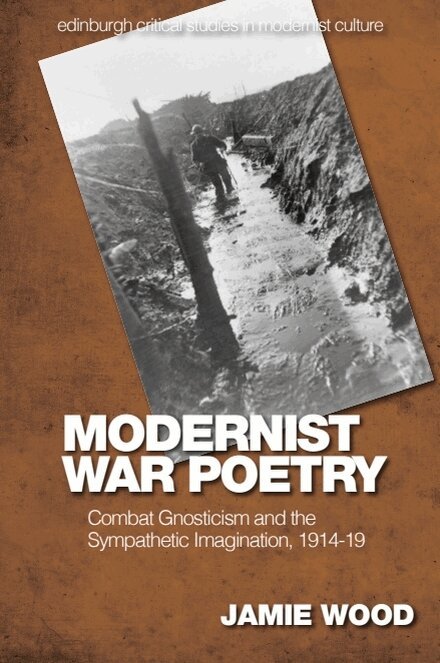
    Modernist War Poetry

    Combat Gnosticism and the Sympathetic Imagination, 1914–19

    AvJamie Wood

    Häftad, Engelska, 2024

    Del i serien Edinburgh Critical Studies in Modernist Culture

    638 kr

    Beställningsvara. Skickas inom 3-6 vardagar. Fri frakt över 249 kr.

    Fler format och utgåvor

    Inbunden

    1 301 kr

    Beskrivning

    This study examines the work of the principle architects of Anglo-American modernist poetics T.S. Eliot, H.D., Ezra Pound, Gertrude Stein, Edward Thomas and Wallace Stevens and their response to the challenge of combatant war poetries. It argues that these civilian poets sought to negotiate directly with the combatant's gnosticism, specifically with the combatant's assertion that only those present at a catastrophe could properly represent its horrors. The modernists rightly identified that gnosticism was a threat to their own representational claims on an increasingly traumatic modernity. How was the imagination to be salvaged in order that it could still feel into the wounded experience of others? In response to this challenge, the modernists drafted their own imagined war poems, developing in the process several different and contradictory poetic systems. Whereas scholarship ordinarily tells the story of intra-war modern poetry as a series of different schools the trench lyric, the home front elegy and the modernist long poem each moving in a different direction, this study brings those traditions back together into one history by treating them as idiosyncratic responses to the same aesthetic problem.

    Produktinformation

    • Utgivningsdatum:2024-08-15
    • Mått:156 x 234 x 15 mm
    • Vikt:395 g
    • Format:Häftad
    • Språk:Engelska
    • Serie:Edinburgh Critical Studies in Modernist Culture
    • Antal sidor:272
    • Upplaga:24113
    • Förlag:Edinburgh University Press
    • ISBN:9781474497756

    Utforska kategorier

    • Litteraturvetenskap inom Skönlitteratur

    Mer om författaren

    Dr Jamie Wood is an independent scholar focused on Anglo-American literary modernism between 1910 and 1950. He is particularly interested in the genealogy of high modernist aesthetics, the trauma of modernity and the interconnection between literature and finance capitalism. He is the author of several journal articles published in Biography (2018), College Literature (2018), Modernist Cultures (2015) and Modernism/modernity (2010), and of articles in edited collections published or forthcoming by Edinburgh University, Cambridge University Press, Oxford University Press and the Société Française. He has written extensively on the work of Wyndham Lewis and George Orwell, and in 2014 was the winner of the British Association of Modernist Studies Essay Prize for work on F.T. Marinetti’s visit to London in 1910.

    Recensioner i media

    This book is literary scholarship at its very best. The research is immaculate, the thinking profound and the style masterly. It magnificently illustrates developing poetic thought in relation to the First World War, experience and the imagination, guiding the reader authoritatively through the months of 1914 to 1920 to produce a brilliant micro-literary history.

    Innehållsförteckning

    • TimelinesAcknowledgmentsIntroductionThe problem with combat gnosticismModernisms and the warCombat gnosticism as threat Argument, structure, scope1. Early Modernist Responses to Combatant Poetry: 1914–Spring 1915Modernist poetics on the eve of warRidicule and the new patriotic verseTheorising afterwardnessThe first modernist war poetries: D.H. Lawrence, Ford Madox Ford, Wallace Stevens, W.B. YeatsEzra Pound’s Cathay: the poem in nature2. Reassessing Disaster: 1915Rupert Brooke, modernist piñataMay Sinclair’s combatant impressionImagining trenches at St. Eloi: T.E. Hulme/Ezra PoundGnosis and a model of shockDissenting modernisms: Mina Loy, H.D.3. The Three Lives of Gnosticism: 1916–Summer 1917One, combat gnosticism: Henri Barbusse, C.R.W. Nevinson, Isaac RosenbergThe gnosticism of Gertrude SteinThe ends of the ImageTwo, combat agnosticism: H.D. and Edward ThomasModernist doubtsThree, non-combat gnosticism: Wallace Stevens and citation4. An Emergent Critique of War Experience: Autumn 1917–Spring 1919Transmutations into poetryT.S. Eliot’s war, F.H. Bradley’s legacyTom, Maurice and the corridor into The Waste LandJohn Middleton Murry’s critique of crying aloudRedefining age and wisdom, countering The New Elizabethans5. The Form and Practice of Modernist Distaste: Summer–Autumn 1919America and the war in PoetryA counter verse of the present moment‘All Life in a Life’ and T.S. Eliot’s racial slurA theory of non-combat gnosticism: ‘Tradition and the Individual Talent’Impersonality in practice: ‘Gerontion’ConclusionBibliographyIndex