• Fri frakt över 249 kr
  • •
  • Snabba leveranser
  • •
  • Billiga böcker
Kundservice

Du är på sajten för privatpersoner.

Företag, bibliotek eller offentlig verksamhet?

Du handlar på classic.bokus.com, där alla dina funktioner finns intakta.
Till classic.bokus.com
Bokus logotyp. Gå till startsidan.
  • Erbjudanden
  • Nyheter
  • Student
  • Topplistor
  • Barn & ungdom
  • Bokus Play
  • E-böcker
  • Pocketböcker
  • Spel & pussel

Må bättre, för mindre! Upp till 50% rabatt på hälsoböcker

Sidfot

Mina sidor

    Hjälp

    • Kundservice
    • Vanliga frågor och svar
    • Frakt och leverans
    • Retur vid ångerrätt
    • Reklamera vara
    • Betalning
    • Köpvillkor
    • Allmänna villkor
    • Information om webbplatsens tillgänglighet

    Om Bokus

    • Om oss
    • Pressrum
    • För studenter
    • För företag
    • För bibliotek och offentlig verksamhet
    • För leverantörer
    • Hållbarhet

    Populärt

    • Aktuella erbjudanden
    • Presentkort
    • Studentlitteratur
    • Nya böcker
    • Topplistor
    • Signerade böcker
    • Engelska böcker

    Inspiration

    • Boktips
    • BookTok
    • Populära bokserier
    • Barnbokskaraktärer
    • Populära författare
    Logotyp för Bokus
    Följ oss på Facebook (extern länk)Följ oss på Instagram (extern länk)Följ oss på YouTube (extern länk)Följ oss på TikTok (extern länk)
    bokus @ CookiesAnpassa cookiesIntegritetspolicyKöpvillkor
    Till Citymail hemsida (extern länk)Till Budbee hemsida (extern länk)Till Postnord hemsida (extern länk)Till Schenker hemsida (extern länk)Till Early Bird hemsida (extern länk)Till Walleys hemsida (extern länk)
    1. Skönlitteratur
    2. Litteraturvetenskap
    3. Litteraturvetenskap

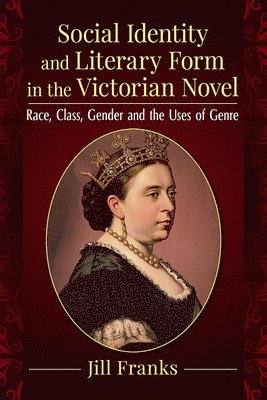
    Social Identity and Literary Form in the Victorian Novel

    Race, Class, Gender and the Uses of Genre

    AvJill Franks

    Häftad, Engelska, 2022

    416 kr

    Beställningsvara. Skickas inom 5-8 vardagar. Fri frakt över 249 kr.

    Beskrivning

    Enormous social changes during the Victorian era inspired some of the finest novels in the English language. In the final decades of the century, rigid application of gender rules and class hierarchies began to relax. Consciousness of the injustice of class- and gender-based discrimination was growing. Meanwhile, bias against nonwhite peoples was worsening. The British used scientific racism to justify their relentless expansion in Africa and Asia.Viewing Victorian literature through the lens of these social changes gives the modern reader a fresh way to interpret the novels and to appreciate their relevance to contemporary issues. Nineteenth-century novelists deployed realism, satire, and the bildungsroman to resist or support leading ideologies of their time, including the separate spheres doctrine and British supremacism. Each chapter is an elaboration of the author's university lectures about Victorian classics. The tone is scholarly yet conversational, directed to the undergraduate student as well as the general reader or Victoriaphile. The text presents concepts in interdisciplinary cultural studies, discusses the uses of genre for rhetorical and social purposes, and exposes paradoxes of the era. The coherent style, abundant examples, discussion questions, and literary glossary make this book a valuable supplement for readers of the Victorian novel.

    Produktinformation

    • Utgivningsdatum:2022-08-12
    • Mått:152 x 229 x 14 mm
    • Vikt:381 g
    • Format:Häftad
    • Språk:Engelska
    • Antal sidor:280
    • Förlag:McFarland & Co Inc
    • ISBN:9781476687261

    Utforska kategorier

    • Litteraturvetenskap inom Skönlitteratur

    Mer om författaren

    Jill Franks teaches English literature and film at the University of Massachusetts Amherst.

    Recensioner i media

    “Drawing on history, literature, and intersectionality, Franks has written a book that functions as both an overview of major Victorian novels and an explication of how Victorian values shaped identity. ...recommended”—Choice

    Innehållsförteckning

    • Table of ContentsPrefaceIntroduction—The Victorian Age: Progress and ParadoxI. Wuthering Heights (1847)1. Heathcliff’s Social Climbing2. Masculine Privilege, Absent Mothers, Merging Lovers: Gender Roles and Love RelationshipsII. Jane Eyre (1847)3. Judging People by Color, Physiognomy, and Phrenology4. Wide Sargasso Sea—Dark Secrets of the Caribbean: Hatred, Murder, MadnessIII. Vanity Fair (1848)5. Race and Empire6. Aporia, Metafiction, and the NarratorIV. North and South (1854)7. Roman Daughter and Milquetoast Father8. Regional and Class PrejudiceV. A Tale of Two Cities (1859)9. London versus Paris: Is This a Competition?10. Allegory and Personification11. Law and JusticeVI. Great Expectations (1861)12. Little Pip’s Outsized Guilt13. Jack Maggs—Magwitch Writes Back14. Refining Fire and Doppelgänger Devils15. ­Anti-Semitism, Casual Racism, and PedagogyVII. Middlemarch (1871)16. Angel of Destruction or Spacious Mind?17. Mrs. Cadwallader, Busybody18. What Is a Gentleman?19. Dorothea and Lydgate’s Unrealized PotentialVIII. Far from the Madding Crowd (1874)20. Bathsheba’s Feminism21. The Role of the Rustics22. Hardy’s Life and LovesIX. The Strange Case of Dr. Jekyll and Mr. Hyde (1886)23. Jekyll’s Downfall—Sadism or Repression?24. Dr. Jekyll and Mary Reilly: Abuse, Trauma, and GenderX. Tess of the D’Urbervilles (1891)25. Hardy’s Modernity and Cosmic Irony26. Pagan versus Christian ValuesXI. The Odd Women (1893)27. The Challenge of Writing a Novel of Ideas28. The Skewed Income Scale: Intersections of Gender and ClassAppendix A: Discussion QuestionsAppendix B: Glossary of Literary and Historical TermsAcknowledgmentsIndex