• Fri frakt över 249 kr
  • •
  • Snabba leveranser
  • •
  • Billiga böcker
Kundservice

Du är på sajten för privatpersoner.

Företag, bibliotek eller offentlig verksamhet?

Du handlar på classic.bokus.com, där alla dina funktioner finns intakta.
Till classic.bokus.com
Bokus logotyp. Gå till startsidan.
  • Erbjudanden
  • Nyheter
  • Student
  • Topplistor
  • Barn & ungdom
  • Bokus Play
  • E-böcker
  • Pocketböcker
  • Spel & pussel

10% rabatt på allt med kod: NYSTART10 →

Sidfot

Mina sidor

    Hjälp

    • Kundservice
    • Vanliga frågor och svar
    • Frakt och leverans
    • Retur vid ångerrätt
    • Reklamera vara
    • Betalning
    • Köpvillkor
    • Allmänna villkor
    • Information om webbplatsens tillgänglighet

    Om Bokus

    • Om oss
    • Pressrum
    • För studenter
    • För företag
    • För bibliotek och offentlig verksamhet
    • För leverantörer
    • Hållbarhet

    Populärt

    • Aktuella erbjudanden
    • Presentkort
    • Studentlitteratur
    • Nya böcker
    • Topplistor
    • Signerade böcker
    • Engelska böcker

    Inspiration

    • Boktips
    • BookTok
    • Populära bokserier
    • Barnbokskaraktärer
    • Populära författare
    Logotyp för Bokus
    Följ oss på Facebook (extern länk)Följ oss på Instagram (extern länk)Följ oss på YouTube (extern länk)Följ oss på TikTok (extern länk)
    bokus @ CookiesAnpassa cookiesIntegritetspolicyKöpvillkor
    Till Citymail hemsida (extern länk)Till Budbee hemsida (extern länk)Till Postnord hemsida (extern länk)Till Schenker hemsida (extern länk)Till Early Bird hemsida (extern länk)Till Walleys hemsida (extern länk)
    1. Språk och ordböcker
    2. Språkvetenskap och lingvistik

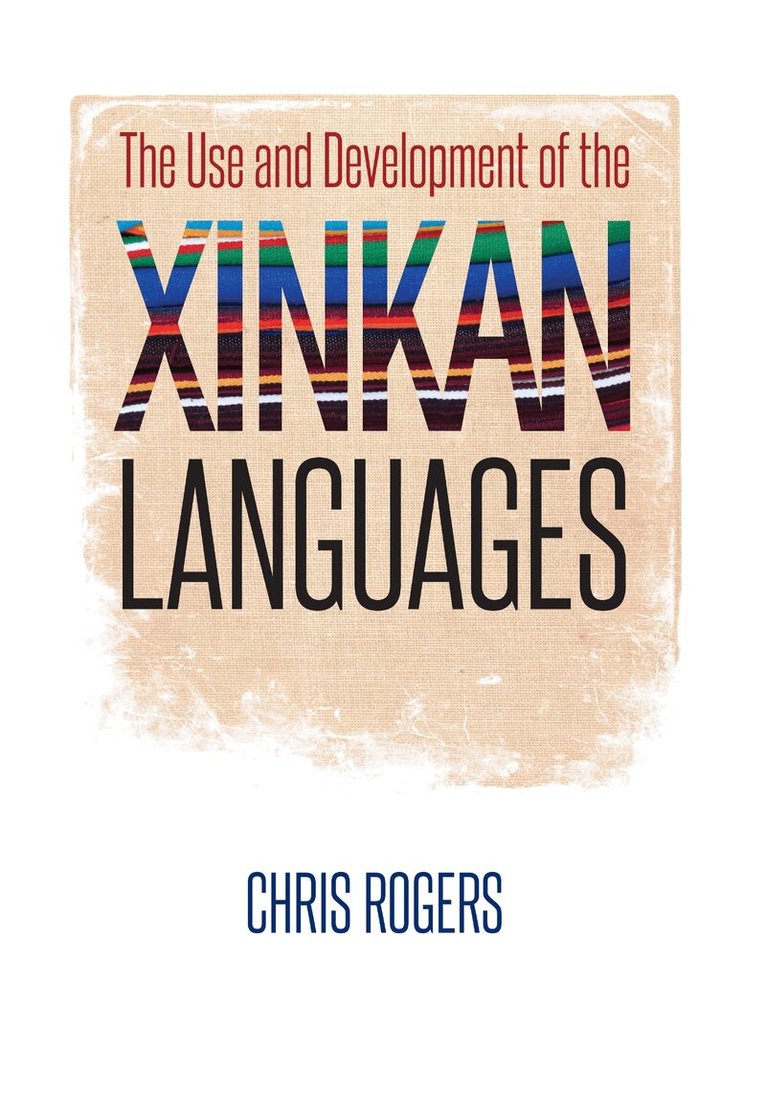
    Use and Development of the Xinkan Languages

    AvChris Rogers

    Häftad, Engelska, 2016

    Del i serien Recovering Languages and Literacies of the Americas

    331 kr

    Beställningsvara. Skickas inom 5-8 vardagar. Fri frakt över 249 kr.

    Fler format och utgåvor

    Inbunden

    1 036 kr

    Beskrivning

    Once spoken only in Santa Rosa Department, Guatemala, the Xinkan language family is unique within Mesoamerica, comprising four closely related languages that are unrelated to any of the other language groups used within the region. Descriptions of Xinkan date to 1770 but are typically only sketches or partial word lists. Not even the community of indigenous people who identify as Xinka today-the last speakers-have had access to a reliable descriptive source on their ancestral tongue. Preserving this endangered communication system in accurate, thorough detail, The Use and Development of the Xinkan Languages presents a historical framework, internal classifications, and both synchronic and diachronic descriptions, incorporating all elements of grammar based on extensive unpublished data collected in the 1970s by Lyle Campbell and Terrence Kaufman.This valuable contribution is enhanced by author Chris Rogers’s emphasis on contextualizing the findings. Introducing the languages, Rogers presents important information regarding the social and cultural milieu of the speakers. He also traces a phonological reconstruction of Proto-Xinkan and reconstructs historical morphology and syntax. These revelations are of particular interest because the development of Xinka and the many aspects of Xinka morphosyntax have not been well understood. A sample text, “Na Mulha Uy,” is included as well. Solving numerous complex, centuries-old linguistic puzzles, The Use and Development of the Xinkan Languages unlocks new potential for the rediscovery of a rich cultural history.

    Produktinformation

    • Utgivningsdatum:2016-06-28
    • Mått:178 x 254 x 23 mm
    • Vikt:594 g
    • Format:Häftad
    • Språk:Engelska
    • Serie:Recovering Languages and Literacies of the Americas
    • Antal sidor:278
    • Förlag:University of Texas Press
    • ISBN:9781477308325

    Utforska kategorier

    • Språkvetenskap och lingvistik inom Språk och ordböcker

    Mer om författaren

    CHRIS ROGERS is a visiting professor of linguistics at Brigham Young University. He has served as Director of the Center for American Indian Languages at the University of Utah and has conducted extensive linguistic fieldwork in Mexico, Guatemala, Argentina, Peru, Brazil, and Venezuela.This book is a part of the Recovering Languages and Literacies of the Americas publication initiative, funded by a grant from the Andrew W. Mellon Foundation.

    Innehållsförteckning

    • LIST OF FIGURESLIST OF TABLESACKNOWLEDGMENTSLIST OF ABBREVIATIONSCHAPTER 1. INTRODUCTION TO THE LANGUAGES AND THEIR SPEAKERS 1.1. THE XINKAN LINGUISTIC CONTEXT1.2. PAST WORK WITH THE XINKAN LANGUAGES1.3. THE XINKAN SOCIAL AND CULTURAL CONTEXT1.4. ORGANIZATION OF THE GRAMMAR 1.4.1. Description of data sourcesPART I. THE USE OF THE XINKAN LANGUAGES: SYNCHRONIC GRAMMAR CHAPTER 2. PHONOLOGY 2.1. VOWELS 2.1.1. Vowel length2.1.2. Vowel Harmony2.2. CONSONANTS 2.2.1. GuazacapÁn2.2.2. Chiquimulilla2.2.3. Jumaytepeque2.2.4. Yupiltepeque2.2.5. Consonant distribution2.3. PHONOLOGICAL ALTERNATIONS 2.3.1. Glottalization2.3.2. Voicing of stop following a nasal2.3.3. Nasal assimilation2.3.4. Lenition to [h]2.3.5. Vowel raising2.3.6. Glottal-stop epenthesis2.3.7. Consonant dissimilation2.3.8. Guazacapan Consonant deletion2.4. SYLLABLE STRUCTURE2.5. STRESS2.6. ORTHOGRAPHYCHAPTER 3. MORPHOLOGY 3.1. NOUNS 3.1.1. Possession3.1.2. Number3.1.3. Diminutive constructions3.2. ADJECTIVES 3.2.1. Adjectives as modifiers of nouns3.2.2. Adjectives modified by ki ‘very’3.2.3. Comparative and Superlative Constructions3.3. DETERMINERS 3.3.1. Articles3.3.2. Demonstratives3.3.3. Quantifiers3.4. NOUN PHRASES3.5. PRONOUNS 3.5.1. Independent personal pronouns3.5.2. Dependent pronouns3.6. VERBS 3.6.1. Verb classes and transitivity3.6.2. Subject agreement3.6.3. Grammatical aspect3.6.4. Imperative form3.6.5. Constrastive construction in GuazacpÁn3.6.6. Tense3.6.7. Grammatical Voice3.6.8. Mood and modality3.7. RELATIONAL NOUNS3.8. VERBAL PARTICLES 3.8.1. p’e/p’eh directional3.8.2. wa optative3.8.3. Negative imperative particle in GuazacapÁn3.8.4. Verbs borrowed from Spanish3.9. NOMINAL PARTICLES 3.9.1. kumu ‘as’3.9.2. ti’i- / t’i- direct object3.9.3. ‘i- reflexive in GuazacapÁn3.9.4. ki’3.9.5. kiki-/kih3.10. QUESTION WORDS3.11. CONJUNCTIONS3.12. DERIVATIONAL MORPHOLOGY 3.12.1. Noun derivations3.12.2. Adjective derivations3.12.3. Verbal derivationCHAPTER 4. SYNTAX 4.1. SYNTACTIC ALIGNMENT 4.1.1. Grammatical relations4.1.2. Semantic relations4.1.3. Antipassive and verb agreement4.2. SIMPLE SENTENCE FORMATION 4.2.1. Sentences with verbs4.2.2. Copular sentences4.3. QUESTION FORMATION 4.3.1. Yes/no questions4.3.2. Content questions (wh-questions)4.4. PREPOSING4.5. NEGATION4.6. COMPLEX SENTENCE FORMATION 4.6.1. Conjoined clauses4.6.2. Serial verb constructions4.6.3. Relative clauses4.6.4. Complement clauses4.6.5. Adverbial clauses4.6.6. Conditional clausesCHAPTER 5. TEXT 5.1. NA MULHA UYPART II THE DEVELOPMENT OF THE XINKAN LANGUAGES: DIACHRONIC GRAMMAR CHAPTER 6. HISTORICAL PHONOLOGY 6.1. INTRODUCTION6.2. COMMENTARY ON THE RECONSTRUCTION OF PROTO-XINKAN6.3. PROTO-XINKAN PHONOLOGICAL RECONSTRUCTION 6.3.1Consonants6.3.2. Vowel changes6.4. SUMMARY OF SOUND CHANGES6.5. SUBGROUPING6.6. CONCLUSIONCHAPTER 7. HISTORICAL MORPHOLOGY 7.1. PRONOUNS AND PRONOMINAL AFFIXES 7.1.1. Pronouns7.1.2. Pronominal affixes7.2. BOUND MORPHOLOGYCHAPTER 8. HISTORICAL SYNTAX 8.1OVERVIEW OF SYNTACTIC RECONSTRUCTION8.2. XINKAN SYNTACTIC RECONSTRUCTION 8.2.1. Syntactic alignment8.2.2. Verb classes8.2.3. Word order8.2.4. Nominal syntax reconstructionCHAPTER 9. LOOKING FORWARDAPPENDIXREGULAR VERB CONJUGATIONIRREGULAR VERB CONJUGATIONBIBLIOGRAPHYTYPOLOGICAL INDEXTOPICAL INDEXNOTES