• Fri frakt över 249 kr
  • •
  • Snabba leveranser
  • •
  • Billiga böcker
Kundservice

Du är på sajten för privatpersoner.

Företag, bibliotek eller offentlig verksamhet?

Du handlar på classic.bokus.com, där alla dina funktioner finns intakta.
Till classic.bokus.com
Bokus logotyp. Gå till startsidan.
  • Erbjudanden
  • Nyheter
  • Student
  • Topplistor
  • Barn & ungdom
  • Bokus Play
  • E-böcker
  • Pocketböcker
  • Spel & pussel

10% rabatt på allt med kod: NYSTART10 →

Sidfot

Mina sidor

    Hjälp

    • Kundservice
    • Vanliga frågor och svar
    • Frakt och leverans
    • Retur vid ångerrätt
    • Reklamera vara
    • Betalning
    • Köpvillkor
    • Allmänna villkor
    • Information om webbplatsens tillgänglighet

    Om Bokus

    • Om oss
    • Pressrum
    • För studenter
    • För företag
    • För bibliotek och offentlig verksamhet
    • För leverantörer
    • Hållbarhet

    Populärt

    • Aktuella erbjudanden
    • Presentkort
    • Studentlitteratur
    • Nya böcker
    • Topplistor
    • Signerade böcker
    • Engelska böcker

    Inspiration

    • Boktips
    • BookTok
    • Populära bokserier
    • Barnbokskaraktärer
    • Populära författare
    Logotyp för Bokus
    Följ oss på Facebook (extern länk)Följ oss på Instagram (extern länk)Följ oss på YouTube (extern länk)Följ oss på TikTok (extern länk)
    bokus @ CookiesAnpassa cookiesIntegritetspolicyKöpvillkor
    Till Citymail hemsida (extern länk)Till Budbee hemsida (extern länk)Till Postnord hemsida (extern länk)Till Schenker hemsida (extern länk)Till Early Bird hemsida (extern länk)Till Walleys hemsida (extern länk)
    1. Kultur
    2. Arkitektur

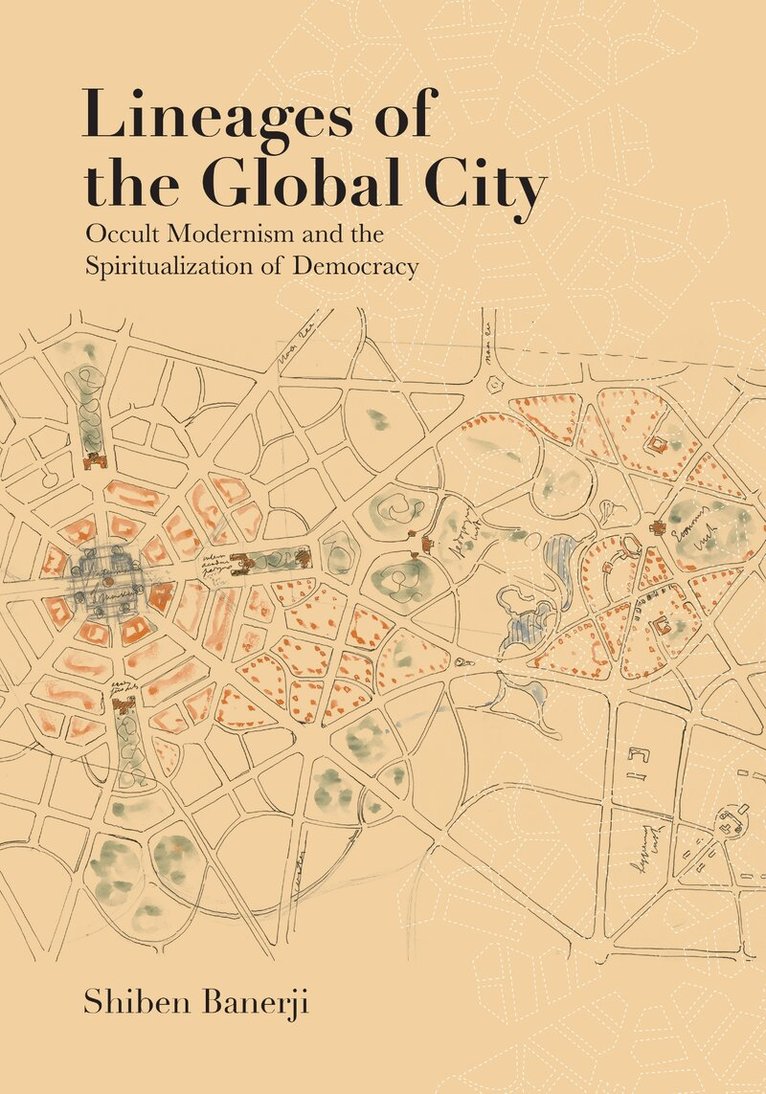
    Lineages of the Global City

    Occult Modernism and the Spiritualization of Democracy

    AvShiben Banerji

    Inbunden, Engelska, 2025

    Del i serien Lateral Exchanges: Architecture, Urban Development, and Transnational Practices

    514 kr

    Beställningsvara. Skickas inom 5-8 vardagar. Fri frakt över 249 kr.

    Beskrivning

    The forgotten history of the occult foundations of the early twentieth-century global city.War, revolution, genocide, rebellion, slump. The economic and political turmoil of the early twentieth century seemed destined to rip asunder the ties that bound colonizers and the colonized to one another. The upheaval represented an opportunity, and not just to nationalists who imagined new homelands or to socialists who dreamed of international brotherhood. For modernists in the orbit of various occultisms, the crisis of empire also represented an opportunity to reveal humanity’s fundamental unity and common fate. Lineages of the Global City recounts a continuous, if also contentious, transnational exchange among modernists and occultists across the Americas, Europe, South Asia, and Australia between 1905 and 1949. At stake were the feelings and affect of a new global subject who would perceive themselves as belonging to humanity as a unified whole, and the urban environment that would foster their subjectivity. The interventions in this debate, which drew in the period’s most renowned modernists, took the form of a succession of plans for cities, suburbs, and communes, as well as experiments in building, drawing, printmaking, filmmaking, and writing. Weaving together postcolonial, feminist, and Marxist insight on subject formation, Shiben Banerji advances a new way of understanding modernist urban space as the design of subjective effects.

    Produktinformation

    • Utgivningsdatum:2025-07-08
    • Mått:178 x 254 x 36 mm
    • Vikt:853 g
    • Format:Inbunden
    • Språk:Engelska
    • Serie:Lateral Exchanges: Architecture, Urban Development, and Transnational Practices
    • Antal sidor:336
    • Förlag:University of Texas Press
    • ISBN:9781477331408

    Utforska kategorier

    • Arkitektur inom Kultur
    • Arkitekturhistoria inom Kultur

    Mer om författaren

    Shiben Banerji is an associate professor in the Department of Art History, Theory, and Criticism at the School of the Art Institute of Chicago.

    Recensioner i media

    This is a beautifully researched and realized work of scholarship, which unveils a remarkable archive of urban images that connect occultism, modernism, globality, and architecture. It will be of great value to historians, architects, planners, and scholars of cultural modernity due to its powerful argument for the cosmological underpinnings of modern urban thought. - Arjun Appadurai, New York University, author of The Future as Cultural Fact: Essays on the Global Condition In the contemporary era of climate crisis, growing concerns about the exploitation of nature, resurgent nationalism, and what is looking to be a new global political and economic order that will impact not just nations but also cities, this provocative book will spark considerable debate about what kinds of urban habitats we want to build and whether historical models relegated to the dustbin of twentieth-century architectural history can indeed offer new food for thought in these turbulent times. - Diane E. Davis, Harvard Graduate School of Design; CIFAR Fellow and Project Co-Director, Humanity's Urban Future

    Innehållsförteckning

    • Prologue Chapter 1. Summoning Global Subjects: A Methodological Note Chapter 2. Unifying Science, 1905–1913: De Bazel’s World Capital and Andersen’s World-Centre Chapter 3. Financializing Debt, 1927–1933: Otlet and Le Corbusier’s CitÉ Mondiale Chapter 4. Saving Empire, 1924–1933: Besant’s World-Empire Chapter 5. Conserving Nature, 1920–1935: Griffin’s Castlecrag Chapter 6. Globalizing Democracy, 1938–1949: Mahony’s Magic of America Epilogue Acknowledgments Notes Index