• Fri frakt över 249 kr
  • •
  • Snabba leveranser
  • •
  • Billiga böcker
Kundservice

Du är på sajten för privatpersoner.

Företag, bibliotek eller offentlig verksamhet?

Du handlar på classic.bokus.com, där alla dina funktioner finns intakta.
Till classic.bokus.com
Bokus logotyp. Gå till startsidan.
  • Erbjudanden
  • Nyheter
  • Student
  • Topplistor
  • Barn & ungdom
  • Bokus Play
  • E-böcker
  • Pocketböcker
  • Spel & pussel

Må bättre, för mindre! Upp till 50% rabatt på hälsoböcker

Sidfot

Mina sidor

    Hjälp

    • Kundservice
    • Vanliga frågor och svar
    • Frakt och leverans
    • Retur vid ångerrätt
    • Reklamera vara
    • Betalning
    • Köpvillkor
    • Allmänna villkor
    • Information om webbplatsens tillgänglighet

    Om Bokus

    • Om oss
    • Pressrum
    • För studenter
    • För företag
    • För bibliotek och offentlig verksamhet
    • För leverantörer
    • Hållbarhet

    Populärt

    • Aktuella erbjudanden
    • Presentkort
    • Studentlitteratur
    • Nya böcker
    • Topplistor
    • Signerade böcker
    • Engelska böcker

    Inspiration

    • Boktips
    • BookTok
    • Populära bokserier
    • Barnbokskaraktärer
    • Populära författare
    Logotyp för Bokus
    Följ oss på Facebook (extern länk)Följ oss på Instagram (extern länk)Följ oss på YouTube (extern länk)Följ oss på TikTok (extern länk)
    bokus @ CookiesAnpassa cookiesIntegritetspolicyKöpvillkor
    Till Citymail hemsida (extern länk)Till Budbee hemsida (extern länk)Till Postnord hemsida (extern länk)Till Schenker hemsida (extern länk)Till Early Bird hemsida (extern länk)Till Walleys hemsida (extern länk)
    1. Data och IT
    2. Systemvetenskap och AI

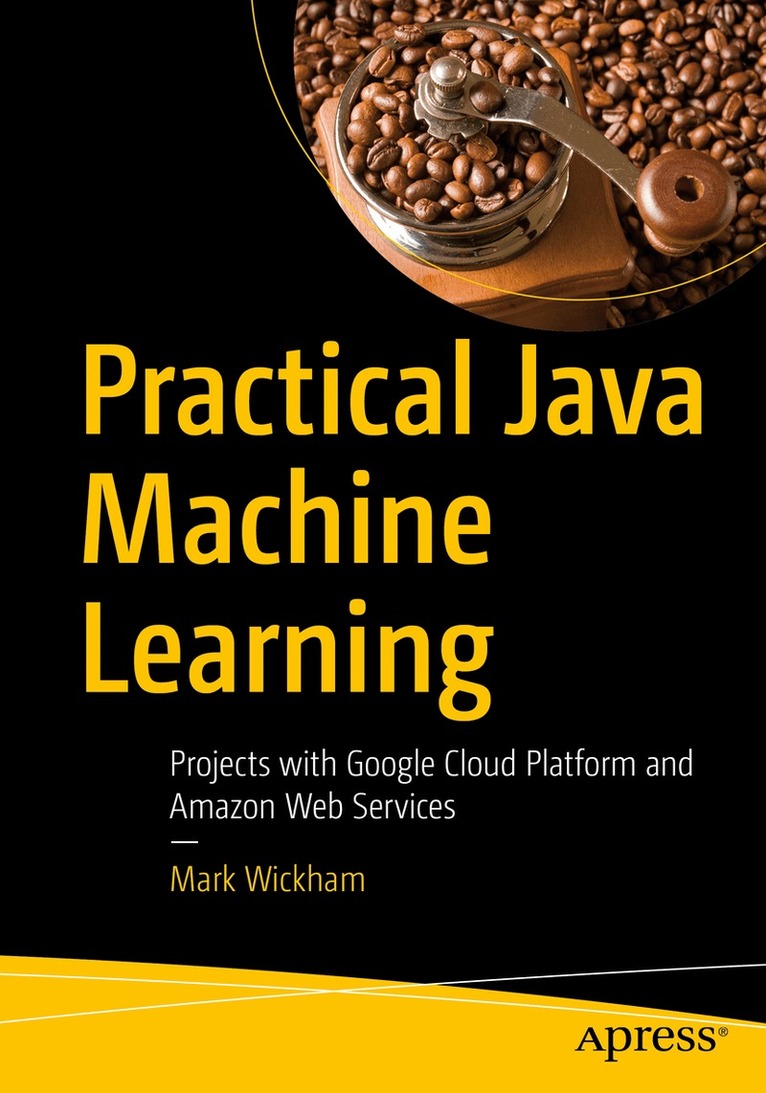
    Practical Java Machine Learning

    Projects with Google Cloud Platform and Amazon Web Services

    AvMark Wickham

    Häftad, Engelska, 2018

    517 kr

    Beställningsvara. Skickas inom 10-15 vardagar. Fri frakt över 249 kr.

    Fler format och utgåvor

    E-bok

    732 kr

    Beskrivning

    Build machine learning (ML) solutions for Java development. This book shows you that when designing ML apps, data is the key driver and must be considered throughout all phases of the project life cycle. Practical Java Machine Learning helps you understand the importance of data and how to organize it for use within your ML project. You will be introduced to tools which can help you identify and manage your data including JSON, visualization, NoSQL databases, and cloud platforms including Google Cloud Platform and Amazon Web Services.Practical Java Machine Learning includes multiple projects, with particular focus on the Android mobile platform and features such as sensors, camera, and connectivity, each of which produce data that can power unique machine learning solutions. You will learn to build a variety of applications that demonstrate the capabilities of the Google Cloud Platform machine learning API, including data visualizationfor Java; document classification using the Weka ML environment; audio file classification for Android using ML with spectrogram voice data; and machine learning using device sensor data.After reading this book, you will come away with case study examples and projects that you can take away as templates for re-use and exploration for your own machine learning programming projects with Java.What You Will LearnIdentify, organize, and architect the data required for ML projectsDeploy ML solutions in conjunction with cloud providers such as Google and AmazonDetermine which algorithm is the most appropriate for a specific ML problemImplement Java ML solutions on Android mobile devicesCreate Java ML solutions to work with sensor dataBuild Java streaming based solutionsWho This Book Is ForExperienced Java developers who have not implemented machine learning techniques before.

    Produktinformation

    • Utgivningsdatum:2018-10-24
    • Mått:178 x 254 x 31 mm
    • Vikt:822 g
    • Format:Häftad
    • Språk:Engelska
    • Antal sidor:392
    • Förlag:APress
    • ISBN:9781484239506

    Utforska kategorier

    • Systemvetenskap och AI inom Data och IT
    • Webbprogrammering inom Data och IT

    Mer om författaren

    Mark Wickham is an active developer and has been a developer for many years, mostly in Java.  He is passionate about exploring advances in artificial intelligence and machine learning using Java. New software approaches, applied to the ever expanding volume of data we now have available to us, enables us to create Java solutions which were not before conceivable. He is a frequent speaker at developer conferences. His popular classes cover practical topics such as connectivity, push messaging, and audio/video.  Mark has led software development teams for Motorola, delivering infrastructure solutions to global telecommunications customers. While at Motorola, Mark also led product management and product marketing teams in the Asia Pacific region. Mark has been involved in software and technology for more than 30 years and began to focus on the Android platform in 2009, creating private cloud and tablet based solutions for the enterprise. Mark majored in Computer Science andPhysics at Creighton University, and later obtained an MBA from the University of Washington and the Hong Kong University of Science and Technology. Mark is also active as a freelance video producer, photographer, and enjoys recording live music.  Previously Mark wrote Practical Android (Apress, 2018).

    Recensioner i media

    “The book is focused on readers who have some background in Java development and want to learn how to use Java frameworks for machine learning. … The book does a good job of explaining these topics to beginners by briefly describing the different kinds of algorithms and their application. … Java developers could use this book as a first approach to machine learning algorithms.” (Santiago Vidal, Computing Reviews, October 11, 2019)

    Innehållsförteckning

    • 1. Introduction.- 2. Data: The Fuel for Machine Learning.- 3. Leveraging Cloud Platforms.- 4. Algorithms: The Brains of Machine Learning.- 5. Java Machine Learning Environments.- 6. Integrating Models.