• Fri frakt över 249 kr
  • •
  • Snabba leveranser
  • •
  • Billiga böcker
Kundservice

Du är på sajten för privatpersoner.

Företag, bibliotek eller offentlig verksamhet?

Du handlar på classic.bokus.com, där alla dina funktioner finns intakta.
Till classic.bokus.com
Bokus logotyp. Gå till startsidan.
  • Erbjudanden
  • Nyheter
  • Student
  • Topplistor
  • Barn & ungdom
  • Bokus Play
  • E-böcker
  • Pocketböcker
  • Spel & pussel

10% rabatt på allt med kod NYSTART10 →

Sidfot

Mina sidor

    Hjälp

    • Kundservice
    • Vanliga frågor och svar
    • Frakt och leverans
    • Retur vid ångerrätt
    • Reklamera vara
    • Betalning
    • Köpvillkor
    • Allmänna villkor
    • Information om webbplatsens tillgänglighet

    Om Bokus

    • Om oss
    • Pressrum
    • För studenter
    • För företag
    • För bibliotek och offentlig verksamhet
    • För leverantörer
    • Hållbarhet

    Populärt

    • Aktuella erbjudanden
    • Presentkort
    • Studentlitteratur
    • Nya böcker
    • Topplistor
    • Signerade böcker
    • Engelska böcker

    Inspiration

    • Boktips
    • BookTok
    • Populära bokserier
    • Barnbokskaraktärer
    • Populära författare
    Logotyp för Bokus
    Följ oss på Facebook (extern länk)Följ oss på Instagram (extern länk)Följ oss på YouTube (extern länk)Följ oss på TikTok (extern länk)
    bokus @ CookiesAnpassa cookiesIntegritetspolicyKöpvillkor
    Till Citymail hemsida (extern länk)Till Budbee hemsida (extern länk)Till Postnord hemsida (extern länk)Till Schenker hemsida (extern länk)Till Early Bird hemsida (extern länk)Till Walleys hemsida (extern länk)
    1. Historia och arkeologi
    2. Historia

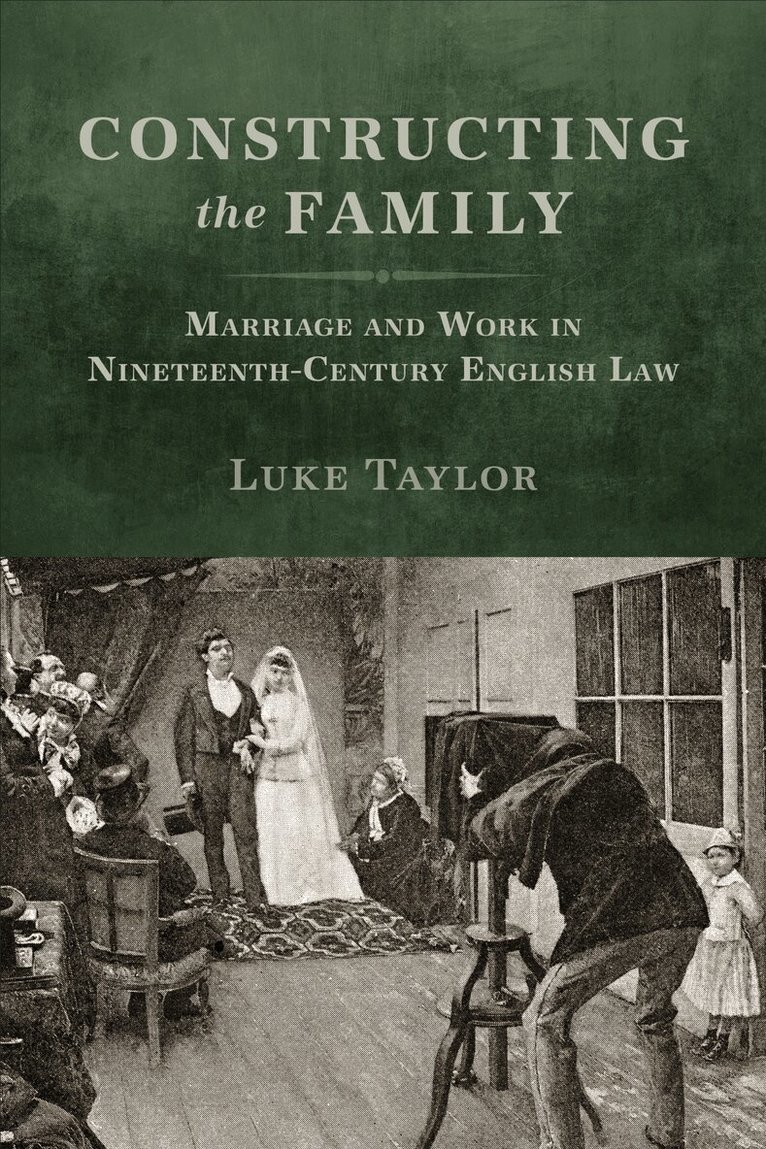
    Constructing the Family

    Marriage and Work in Nineteenth-Century English Law

    AvLuke Taylor

    E-bok
    Engelska, 2022

    978 kr

    Läs direkt i Bokus Reader – eller ladda ned till din enhet

    Fler format och utgåvor

    E-bok

    488 kr

    Inbunden

    797 kr

    Beskrivning

    In nineteenth-century England, legal conceptions of work and family changed in fundamental ways. Notably, significant legal moves came into play that changed the legal understanding of the family.

    Constructing the Family examines the evolution of the legal-discursive framework governing work and family relations. Luke Taylor considers the intersecting intellectual and institutional forces that contributed to the dissolution of the household, the establishment of separate spheres of work and family, and the emergence of modern legal and social ideas concerning work and family. He shows how specific legal-institutional moves contributed to the creation of the family’s categorical status in the social and legal order and a distinct and exceptional body of rules – Family Law – for its governance.

    Shedding light on the historical processes that contributed to the emergence of English Family Law, Constructing the Family shows how work and family became separate regulatory domains, and in so doing reveals the contingent nature of the modern legal family.

    Produktinformation

    • Utgivningsdatum:2022-11-01
    • Språk:Engelska
    • Antal sidor:424
    • Filformat:EPUB
    • Kopieringsskydd:LCP
    • ISBN:9781487544942
    • Förlag:University of Toronto Press

    Utforska kategorier

    • Historia inom Historia och arkeologi

    Mer om författaren

    Luke Taylor is an assistant professor in the Lincoln Alexander School of Law at Toronto Metropolitan University.

    Innehållsförteckning

    • List of Figures and TablesAcknowledgmentsIntroductionChapter 1: Ideology and Population Management A. IdeologyB. Population ManagementChapter 2: The Invention of Family Law in English Scholarly Legal ThoughtI. IntroductionII. Blackstone, Legal Science, and the Productive HouseholdA. The "private œconomical relations"B. Master and ServantC. Husband and WifeD. Blackstone and Nineteenth-Century Legal ThoughtIII. Household and Marriage in the Early Nineteenth CenturyIV. The Influence of JurisprudenceA. The Analyst: John AustinB. The Historicist: Friedrich Carl von SavignyV. The Influence of Statutory DevelopmentsA. Divorce and the Legal Character of MarriageB. Decriminalization and the Legal Character of WorkVI. Classical Legal Thought in England: Abstracting Contract and Subtracting MarriageA. Consolidating Contract by Distinguishing Marriage: Pollock and AnsonB. Translating CLT into Taxonomy: HollandVII. The Emergence of English Domestic Relations LawVIII. The Emergence of Family LawA. Cementing the Family/Work and Status/Contract Distinctions: SalmondB. Family Law and Employment Law Emerge and DivergeC. Family Law in the Textbook TraditionIX. ConclusionChapter 3: Law and the Disarticulation of Work from Family LifeI. IntroductionII. Property, Poverty, and Wage LabourA. Property: Enclosure, Households, and WorkB. Poverty: The Discipline of Work III. Wage Labour, Contract, and the Subordination of WorkersA. The Philosophical Basis of Coercion under ContractB. Punishment and PerformanceIV. ConclusionChapter 4: Women and Youth, Work and FamilyI. IntroductionII. Women, Work, and the Domestic SphereA. Paid Domestic LabourB. Unpaid Domestic LabourIII. Youth, Work, and the Paths of ApprenticeshipA. Early Modern Apprenticeship LawB. Household to Employment: The Transformation of Traditional ApprenticeshipC. Household to Family: The Transformation of Parish ApprenticeshipIV. ConclusionChapter 5: Legislating MarriageI. IntroductionII. Civilizing MarriageA. Lord Hardwicke’s ActB. Lord Lyndhurst’s ActC. Civil Marriage ActIII. Incentivizing MarriageA. Poor LawsB. Compensation Statutes IV. Stabilizing MarriageA. Divorce B. Married Women’s PropertyV. ConclusionChapter 6: The Public Importance of Marriage in English Common LawI. IntroductionII. Stretching the Bounds of Contract: The Action for Breach of Promise to Marry A. Heart Balm for Women (Only)B. "It would be indelicate to expect that she should consent in words"C. Expectations of Emotional HarmIII. The Status of Marriage in the Conflict of LawsA. Marriage, Contract, and Deference to Lex Loci CelebrationisB. Dissolution, Domicile and State ControlC. Domicile and Marital ValidityD. Dissolving the Status of MarriageIV. ConclusionConclusionMarriage, Family, and Work: Past and PresentBibliographyCasesStatutesBooks, Chapters, and ArticlesGovernment Reports and DocumentsNewspapers, Non-legal Periodicals, and BlogsParliamentary Debates