• Fri frakt över 249 kr
  • •
  • Snabba leveranser
  • •
  • Billiga böcker
Kundservice

Du är på sajten för privatpersoner.

Företag, bibliotek eller offentlig verksamhet?

Du handlar på classic.bokus.com, där alla dina funktioner finns intakta.
Till classic.bokus.com
Bokus logotyp. Gå till startsidan.
  • Erbjudanden
  • Nyheter
  • Student
  • Topplistor
  • Barn & ungdom
  • Bokus Play
  • E-böcker
  • Pocketböcker
  • Spel & pussel

10% rabatt på allt med kod NYSTART10 →

Sidfot

Mina sidor

    Hjälp

    • Kundservice
    • Vanliga frågor och svar
    • Frakt och leverans
    • Retur vid ångerrätt
    • Reklamera vara
    • Betalning
    • Köpvillkor
    • Allmänna villkor
    • Information om webbplatsens tillgänglighet

    Om Bokus

    • Om oss
    • Pressrum
    • För studenter
    • För företag
    • För bibliotek och offentlig verksamhet
    • För leverantörer
    • Hållbarhet

    Populärt

    • Aktuella erbjudanden
    • Presentkort
    • Studentlitteratur
    • Nya böcker
    • Topplistor
    • Signerade böcker
    • Engelska böcker

    Inspiration

    • Boktips
    • BookTok
    • Populära bokserier
    • Barnbokskaraktärer
    • Populära författare
    Logotyp för Bokus
    Följ oss på Facebook (extern länk)Följ oss på Instagram (extern länk)Följ oss på YouTube (extern länk)Följ oss på TikTok (extern länk)
    bokus @ CookiesAnpassa cookiesIntegritetspolicyKöpvillkor
    Till Citymail hemsida (extern länk)Till Budbee hemsida (extern länk)Till Postnord hemsida (extern länk)Till Schenker hemsida (extern länk)Till Early Bird hemsida (extern länk)Till Walleys hemsida (extern länk)
    1. Historia och arkeologi
    2. Arkeologi

    Interpretation of Archaeological Spatial Patterning

    AvEllen M. Kroll,T. Douglas Price

    Häftad, Engelska, 2013

    Del i serien Interdisciplinary Contributions to Archaeology

    1 783 kr

    Beställningsvara. Skickas inom 10-15 vardagar. Fri frakt över 249 kr.

    Beskrivning

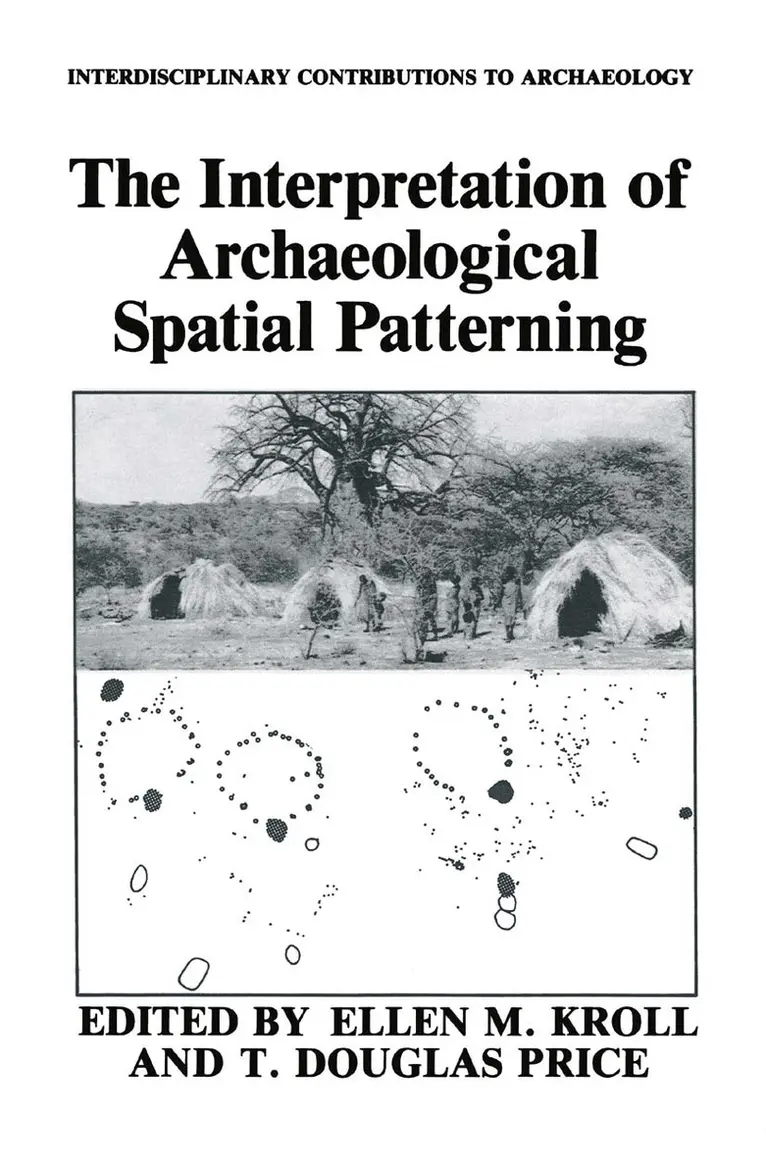
    Investigations of archaeological intrasite spatial patterns have generally taken one of two directions: studies that introduced and explored methods for the analysis of archaeological spatial patterns or those that described and analyzed the for­ mation of spatial patterns in actuaiistic-ethnographic, experimental, or natu­ ral-contexts. The archaeological studies were largely quantitative in nature, concerned with the recognition and definition of patterns; the actualistic efforts were often oriented more toward interpretation, dealing with how patterns formed and what they meant. Our research group on archaeological spatial analysis at the University of Wisconsin-Madison has been working for several years on both quantitative and interpretive problems. Both lines of investigation are closely related and are important complements. In order to demonstrate the convergence of archaeological and actualistic studies for the understanding of intrasite spatial patterns, we organized a sympo­ sium at the 52nd Annual Meeting of the Society of American Archaeology in Toronto, Canada, in May 1987. The symposium, titled "The Interpretation of Stone Age Archaeological Spatial Patterns," was organized into two sessions. The six papers presented in the morning session, five of which comprise Part I of this volume, focused on ethnoarchaeological and experimental research. Michael Schiffer was the discussant for this half of the symposium. Our intention for the ethnoarchaeological contributions to the symposium and volume was the delin­ eation of some of the significant accomplishments achieved thus far by actualistic studies regarding the formation of spatial patterns.

    Produktinformation

    • Utgivningsdatum:2013-05-29
    • Mått:155 x 235 x 19 mm
    • Vikt:505 g
    • Format:Häftad
    • Språk:Engelska
    • Serie:Interdisciplinary Contributions to Archaeology
    • Antal sidor:316
    • Förlag:Springer-Verlag New York Inc.
    • ISBN:9781489926043

    Utforska kategorier

    • Arkeologi inom Historia och arkeologi

    Innehållsförteckning

    • I. Spatial Analysis of Ethnoarchaeological Sites.- 1 • Site Structure, Kinship, and Sharing in Aboriginal Australia: Implications for Archaeology.- 2 • The Relationship between Nobility Strategies and Site Structure.- 3 • Distribution of Refuse-Producing Activities at Hadza Residential Base Camps: Implications for Analyses of Archaeological Site Structure.- 4 • Variability in Camp Structure and Bone Food Refuse Patterning at Kua San Hunter-Gatherer Camps.- 5 • Linking Ethnoarchaeological Interpretation and Archaeological Data: The Sensitivity of Spatial Analytical Methods to Postdepositional Disturbance.- II. Spatial Analysis of Archaeological Sites.- 6 • Interpreting Spatial Patterns at the Grotte XV: A Multiple-Method Approach.- 7 • Left in the Dust: Contextual Information in Model-Focused Archaeology.- 8 • Tool Use and Spatial Patterning: Complications and Solution.- 9 • Beyond the Formation of Hearth-Associated Artifact Assemblages.- III. Postscript: The End of Spatial Analysis.