• Fri frakt över 249 kr
  • •
  • Snabba leveranser
  • •
  • Billiga böcker
Kundservice

Du är på sajten för privatpersoner.

Företag, bibliotek eller offentlig verksamhet?

Du handlar på classic.bokus.com, där alla dina funktioner finns intakta.
Till classic.bokus.com
Bokus logotyp. Gå till startsidan.
  • Erbjudanden
  • Nyheter
  • Student
  • Topplistor
  • Barn & ungdom
  • Bokus Play
  • E-böcker
  • Pocketböcker
  • Spel & pussel

10% rabatt på allt med kod NYSTART10 →

Sidfot

Mina sidor

    Hjälp

    • Kundservice
    • Vanliga frågor och svar
    • Frakt och leverans
    • Retur vid ångerrätt
    • Reklamera vara
    • Betalning
    • Köpvillkor
    • Allmänna villkor
    • Information om webbplatsens tillgänglighet

    Om Bokus

    • Om oss
    • Pressrum
    • För studenter
    • För företag
    • För bibliotek och offentlig verksamhet
    • För leverantörer
    • Hållbarhet

    Populärt

    • Aktuella erbjudanden
    • Presentkort
    • Studentlitteratur
    • Nya böcker
    • Topplistor
    • Signerade böcker
    • Engelska böcker

    Inspiration

    • Boktips
    • BookTok
    • Populära bokserier
    • Barnbokskaraktärer
    • Populära författare
    Logotyp för Bokus
    Följ oss på Facebook (extern länk)Följ oss på Instagram (extern länk)Följ oss på YouTube (extern länk)Följ oss på TikTok (extern länk)
    bokus @ CookiesAnpassa cookiesIntegritetspolicyKöpvillkor
    Till Citymail hemsida (extern länk)Till Budbee hemsida (extern länk)Till Postnord hemsida (extern länk)Till Schenker hemsida (extern länk)Till Early Bird hemsida (extern länk)Till Walleys hemsida (extern länk)
    1. Kultur
    2. Musikböcker
    3. Musikvetenskap

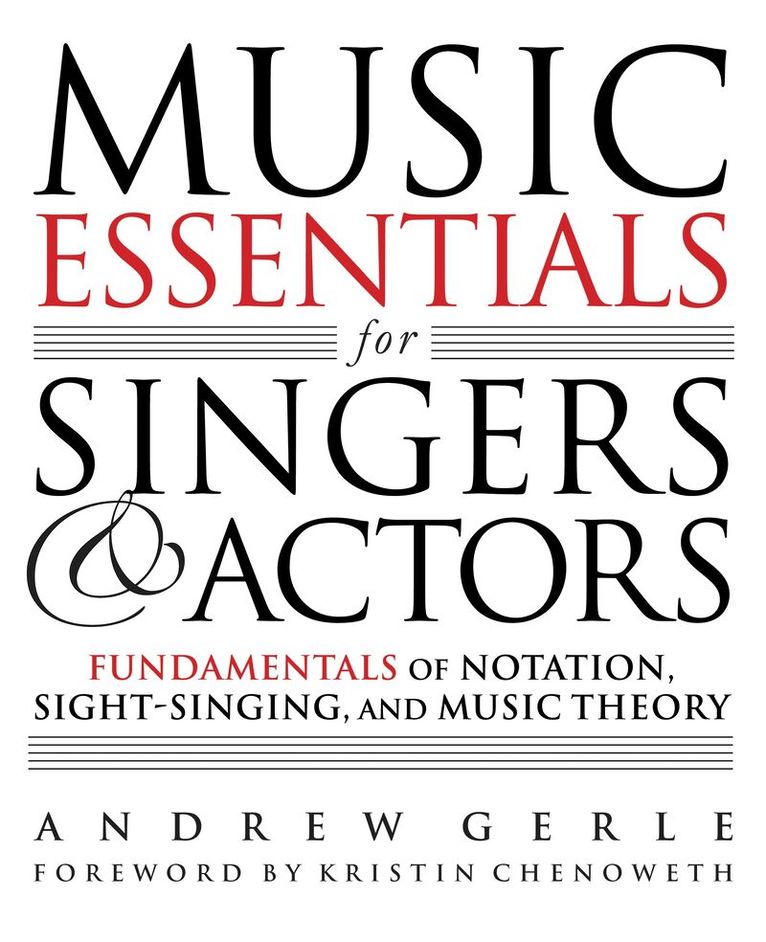
    Music Essentials for Singers and Actors

    Fundamentals of Notation, Sight-Singing and Music Theory

    AvAndrew Gerle

    Häftad, Engelska, 2018

    515 kr

    Beställningsvara. Skickas inom 5-8 vardagar. Fri frakt över 249 kr.

    Beskrivning

    Singers and actors who can learn music quickly and accurately have an enormous advantage in today's increasingly competitive field. With ÊMusic Essentials for Singers and ActorsÊ award-winning composer and music director Andrew Gerle has written a music theory text especially for singers focused exclusively on topics and techniques that will help them in the rehearsal room and on stage.ÞGerle leads readers step by step through every aspect of written music using over one hundred real-world examples from Broadway scores. His common-sense methodical approach demystifies abstract concepts and his unique 1-STARRT method teaches singers to read musical words instead of single notes enabling confident sight-singing of any score. Drawing on his years of experience as a Broadway vocal coach Gerle also shows readers how to use music theory to think like a composer analyzing scores for dramatic clues to create a more detailed and powerful performance. Each chapter is accompanied by downloadable audio examples and exercises to lock in newly learned concepts.

    Produktinformation

    • Utgivningsdatum:2018-08-01
    • Mått:193 x 234 x 20 mm
    • Vikt:694 g
    • Format:Häftad
    • Språk:Engelska
    • Antal sidor:336
    • Förlag:Hal Leonard Corporation
    • Medarbetare:Kristin Chenoweth
    • ISBN:9781495073762

    Utforska kategorier

    • Musikvetenskap inom Kultur

    Mer om författaren

    Andrew Gerle is an award-winning composer/lyricist, music director, arranger, and pianist. He has lived in New York City for over twenty years, working on dozens of Broadway, Off-Broadway, regional, and touring productions. He is also the author of The Enraged Accompanist's Guide to the Perfect Audition, and teaches musical theater performance, theory, and composition at Yale University and the Manhattan School of Music.

    Innehållsförteckning

    • Foreword by Kristen ChenowethAuthor’s Note1. WillkommenA Little Brains, a Little Talent: the ingredients for a careerRacing with the Clock: how to make the most of your rehearsal timeSide by Side: an artistic collaboration with the writerThe Sound of Music: the elements of musical notationWhat More Do I Need?: required tools of the trade2. I Got Rhythm: fundamentalsThe Rhythm of Life: how we divide timeYou Can’t Stop the Beat: first definitions, quarter notesJust in Time: time signatures, note shapesThe Speed Test: metronomes and their useBreathe: rests3. In Short: smaller note valuesTonight at Eight: the eighth noteWe Go Together: beamsA Little Bit Off: off-beats and “and”sI’m Old Fashioned: vocal notation in older scoresPretty Little Picture: musical “words” and syncopationSmall World: the sixteenth note4. Hold On: ties and dotsMarried: tiesStay with Me: dots5. Play a Simple Melody: the piano keyboard, notes, clefs, and stavesI Love a Piano: finding notes on the keyboardI Could Write a Book: writing notes on the staffMe, Who Am I?: clefs, letter names, and the grand staffYou Will Be Found: matching notes on the piano with notes on the staff6. I’ve Got Your Number: intervals and scale degreesGo the Distance: basic interval sizes and namesHome: the tonic and scale degreesSteppin’ Out with My Baby: singing with scale degreesDo-Re-Mi: the Kodály method7. You Do Something to Me: accidentals, key signatures, and transpositionI am Changing: accidentals and the black keys of the pianoRing of Keys: the major scale, key signatures, and the circle of fifthsThey Just Keep Moving the Line: transposing songs8. So Big/So Small: identifying and singing every interval type9.Fascinatin’ Rhythm: cut time, triplets, swing; compound, composite and irregular metersTwo by Two: cut timeSqueeze me: triplets and grace notesBy Threes: compound meterIt Don’t Mean a Thing: swing notationUnusual Way: irregular and composite metersChange Don’t Come Easy: shifting meters10. Let It Sing: combining your ear and your eye for increased fluencyDoin’ What Comes Natur’lly: diatonic versus chromatic melodiesDo You Want to Build a Snowman?: triads and inversionsFar from the Home I Love: strategies for chromatic melodies11. Changing My Major: minor keysThree Friends: the minor scalesSing Happy: minor scales in contextShow Me the Key: distinguishing between minor and major keysSisters: minor, diminished, and augmented triads12. I Know Things Now: combining multiple techniques to form a coherent strategy for readingWhat Comes Next?: reading ahead1-STARRT at the Very Beginning: a method for analyzing and annotating any new song13. No One Is Alone: singing with other performersHere I Am: finding your starting noteI’m a Part of That: consonance and dissonance with the piano accompaniment; piano/conductor scoresDo You Hear the People Sing?: choral singing and score layouts14. The Writing on the Wall: musical markings, repeat structure, and other score “road maps”Be Italian: tempo markingsLoud: dynamic and articulation markingsStop, Time: pauses and held notesSpeak Low: other expressive markings and spoken textBack to Before: repeats, D.C., D.S., and codasAh, But Underneath: underscoring and vampsOn the Street Where You Live: rehearsal numbers and lettersDo It Again: AABA form and other song structures15. Hey, Look Me Over: close score reading for dramatic and character analysisMama, Look Sharp: every mark is a choiceThe Wrong Note Rag: analyzing dissonance and contour to color your performanceWatch What Happens: dramatic inspiration from the piano accompanimentA Change in Me: reading key changes and altered notes for textual insight16. I Have Confidence: continuing to practice and consolidate your techniqueI Can See It: eye-training exercisesA Trip to the Library: the joys of reading music alone and with others