• Fri frakt över 249 kr
  • •
  • Snabba leveranser
  • •
  • Billiga böcker
Kundservice

Du är på sajten för privatpersoner.

Företag, bibliotek eller offentlig verksamhet?

Du handlar på classic.bokus.com, där alla dina funktioner finns intakta.
Till classic.bokus.com
Bokus logotyp. Gå till startsidan.
  • Erbjudanden
  • Student
  • Topplistor
  • Barn & ungdom
  • Bokus Play
  • E-böcker
  • Ljudböcker
  • Pocketböcker
  • Spel och pussel

Pocketfynda! Hundratals böcker för 49 kr/st →

Sidfot

Mina sidor

    Hjälp

    • Kundservice
    • Vanliga frågor och svar
    • Frakt och leverans
    • Retur vid ångerrätt
    • Reklamera vara
    • Betalning
    • Köpvillkor
    • Allmänna villkor
    • Information om webbplatsens tillgänglighet

    Om Bokus

    • Om oss
    • Pressrum
    • För studenter
    • För företag
    • För bibliotek och offentlig verksamhet
    • För leverantörer
    • Hållbarhet

    Populärt

    • Aktuella erbjudanden
    • Presentkort
    • Studentlitteratur
    • Nya böcker
    • Topplistor
    • Signerade böcker
    • Engelska böcker

    Inspiration

    • Boktips
    • BookTok
    • Barnbokskaraktärer
    • Populära författare
    Logotyp för Bokus
    Följ oss på Facebook (extern länk)Följ oss på Instagram (extern länk)Följ oss på YouTube (extern länk)Följ oss på TikTok (extern länk)
    bokus @ CookiesAnpassa cookiesIntegritetspolicyKöpvillkor
    Till Citymail hemsida (extern länk)Till Budbee hemsida (extern länk)Till Postnord hemsida (extern länk)Till Schenker hemsida (extern länk)Till Early Bird hemsida (extern länk)Till Walleys hemsida (extern länk)
    1. Samhälle och politik
    2. Samhälle och kultur
    3. Sociala och etiska frågor

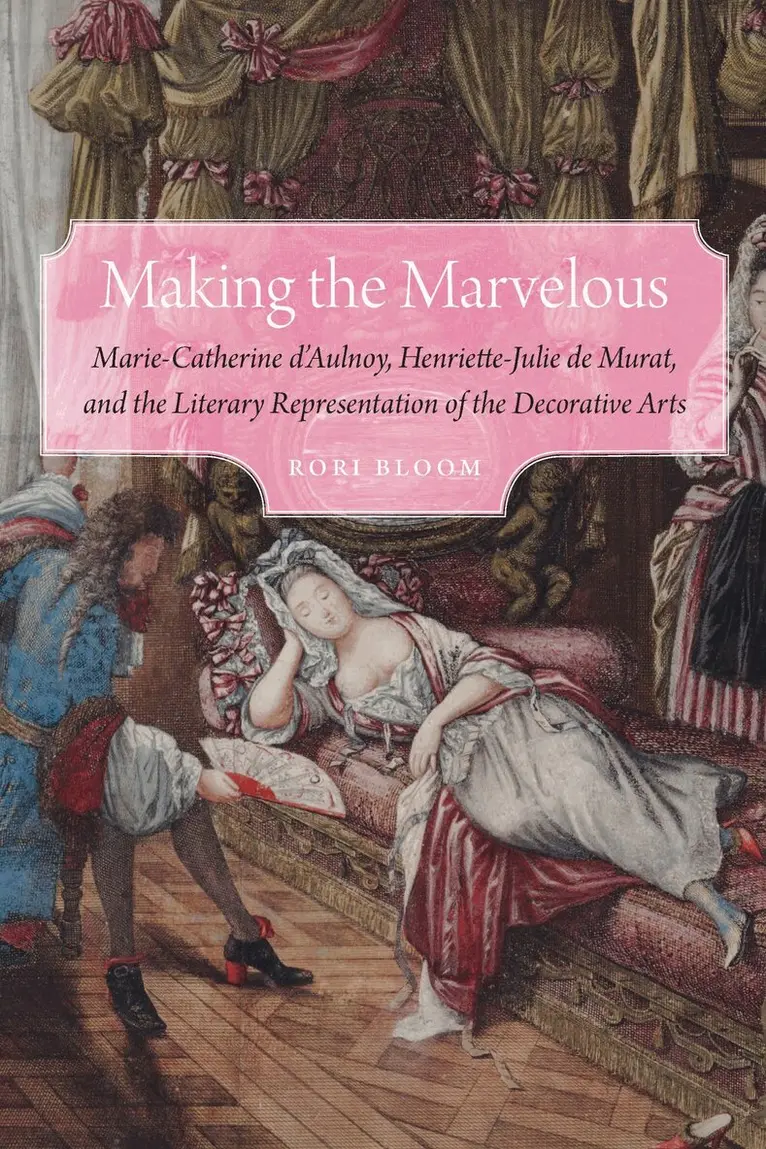
    Making the Marvelous

    Marie-Catherine D'Aulnoy, Henriette-Julie De Murat, and the Literary Representation of the Decorative Arts

    AvRori Bloom

    Inbunden, Engelska, 2022

    Del i serien Early Modern Cultural Studies

    834 kr

    Beställningsvara. Skickas inom 10-15 vardagar. Fri frakt över 249 kr.

    Beskrivning

    At a moment when France was coming to new prominence in the production of furniture and fashion, the fairy tales of Marie-Catherine d’Aulnoy (1652–1705) and Henriette-Julie de Murat (1670–1716) gave pride of place to richly detailed descriptions of palaces, gardens, clothing, and toys. Through close readings of these authors’ descriptive prose, Rori Bloom shows how these practitioners of a supposedly minor genre made a major contribution as chroniclers and critics of the decorative arts in Old Regime France. Identifying these authors’ embrace of the pretty and the playful as a response to a frequent critique of fairy tales as childish and feminine, Making the Marvelous demonstrates their integration of artisan’s work, child’s play, and the lady’s toilette into a complex vision of creativity. D’Aulnoy and Murat changed the stakes of the fairy tale, Bloom argues: instead of inviting their readers to marvel at the magic that changes rags to riches, they enjoined them to acknowledge the skill that transforms raw materials into beautiful works of art.

    Produktinformation

    • Utgivningsdatum:2022-06-01
    • Mått:152 x 229 x undefined mm
    • Format:Inbunden
    • Språk:Engelska
    • Serie:Early Modern Cultural Studies
    • Antal sidor:250
    • Förlag:University of Nebraska Press
    • ISBN:9781496222671

    Utforska kategorier

    • Sociala och etiska frågor inom Samhälle och politik
    • Litteraturvetenskap inom Skönlitteratur

    Mer om författaren

    Rori Bloom is an associate professor of French at the University of Florida. She is the author of Man of Quality, Man of Letters: The AbbÉ PrÉvost between Novel and Newspaper.

    Recensioner i media

    "Making the Marvelous imparts a highly original premise that yields compelling and unexpected results. Not only does this study shed new light on the late seventeenth-century fairy-tale movement by presenting an alternative theoretical framework for understanding how the descriptive style functions in the works of two of the genre's most important practitioners, it also exposes the complex ideological stakes of ornamental writing, both in general and in the particular sociohistorical context of late seventeenth-century France. . . . This book is a must-read for fairy-tale scholars, literary historians, art historians, and anyone interested in learning more about the intersections of literature and the decorative arts at the dawn of the French Enlightenment."-Allison Stedman, Eighteenth-Century Fiction “Clearly argued, carefully crafted, and finely detailed, this book is a real gem. It offers a fresh look at the works of d’Aulnoy and Murat by highlighting their embrace of ornament and artful materiality and brilliantly demonstrates the modernity and sophistication of their writing.”-Volker SchrÖder, associate professor of French at Princeton University “Rori Bloom’s fascinating new approach to reading d’Aulnoy’s and Murat’s fiction focuses on descriptions and shows that the craftsmanship in the decorative arts informs the marvelous and functions as an analogy between the visual arts and the authors’ own verbal craft.”-Charlotte Trinquet du Lys, associate professor of French and affiliate professor of women and gender studies and medieval and Renaissance studies at the University of Central Florida “Compelling. . . . By focusing on the artistic processes at work (as opposed to simply the finished product) and how d’Aulnoy and Murat shape their fairy tales as art-as fashionable accessories-Making the Marvelous sheds new light on the early modern fairy tales penned by women.”-Anne E. Duggan, author of SalonniÈres, Furies, and Fairies: The Politics of Gender and Cultural Change in Absolutist France

    Innehållsförteckning

    • AcknowledgmentsAuthor’s NoteIntroduction1. Fairy Tale as Palace Tour: Description and Setting 2. Stories That Illustrate Themselves: Description and Painting3. Essential Accessories: The Object as Objet d’art4.  D’Aulnoy’s Travels in Spain: Description and Demystification 5. Disenchanted Decors in Murat: Voyage de campagne and Les Lutins du chÂteau de KernosyConclusionAppendixNotesBibliographyIndex