• Fri frakt över 249 kr
  • •
  • Snabba leveranser
  • •
  • Billiga böcker
Kundservice

Du är på sajten för privatpersoner.

Företag, bibliotek eller offentlig verksamhet?

Du handlar på classic.bokus.com, där alla dina funktioner finns intakta.
Till classic.bokus.com
Bokus logotyp. Gå till startsidan.
  • Erbjudanden
  • Nyheter
  • Student
  • Topplistor
  • Barn & ungdom
  • Bokus Play
  • E-böcker
  • Pocketböcker
  • Spel & pussel

10% studentrabatt med kod TERM26

Sidfot

Mina sidor

    Hjälp

    • Kundservice
    • Vanliga frågor och svar
    • Frakt och leverans
    • Retur vid ångerrätt
    • Reklamera vara
    • Betalning
    • Köpvillkor
    • Allmänna villkor
    • Information om webbplatsens tillgänglighet

    Om Bokus

    • Om oss
    • Pressrum
    • För studenter
    • För företag
    • För bibliotek och offentlig verksamhet
    • För leverantörer
    • Hållbarhet

    Populärt

    • Aktuella erbjudanden
    • Presentkort
    • Studentlitteratur
    • Nya böcker
    • Topplistor
    • Signerade böcker
    • Engelska böcker

    Inspiration

    • Boktips
    • BookTok
    • Populära bokserier
    • Barnbokskaraktärer
    • Populära författare
    Logotyp för Bokus
    Följ oss på Facebook (extern länk)Följ oss på Instagram (extern länk)Följ oss på YouTube (extern länk)Följ oss på TikTok (extern länk)
    bokus @ CookiesAnpassa cookiesIntegritetspolicyKöpvillkor
    Till Citymail hemsida (extern länk)Till Budbee hemsida (extern länk)Till Postnord hemsida (extern länk)Till Schenker hemsida (extern länk)Till Early Bird hemsida (extern länk)Till Walleys hemsida (extern länk)
    1. Skönlitteratur
    2. Litteraturvetenskap
    3. Litteraturvetenskap

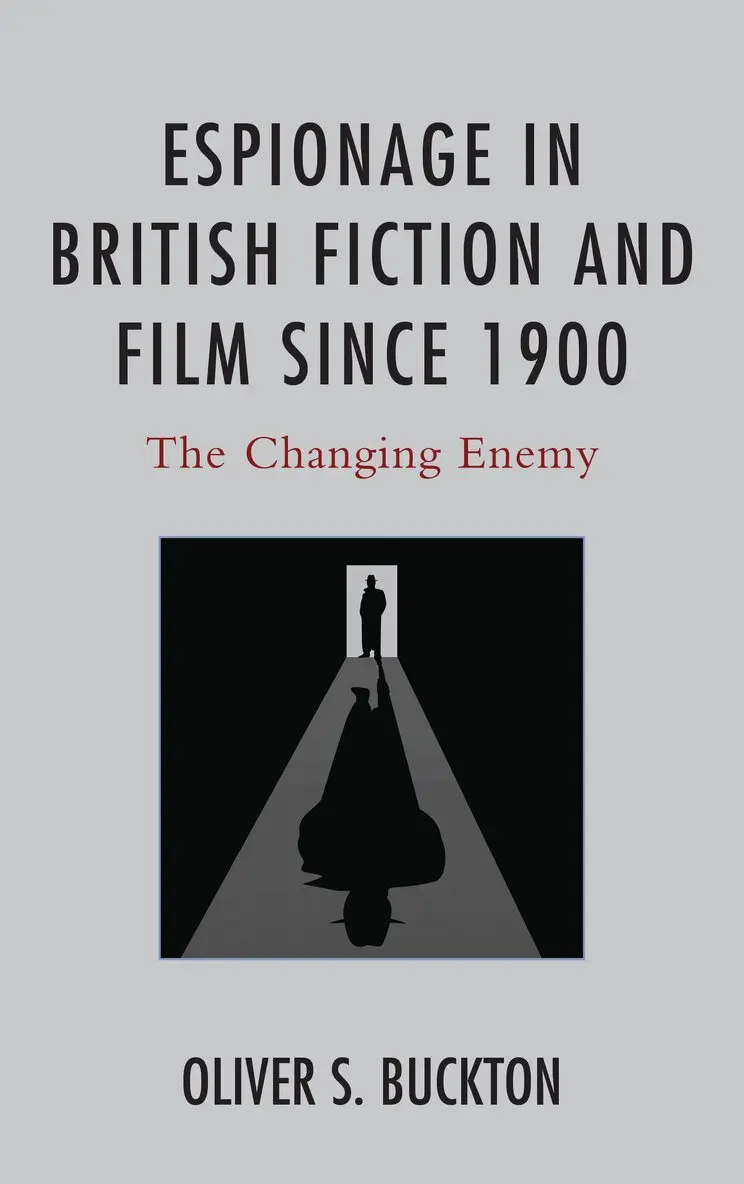
    Espionage in British Fiction and Film since 1900

    The Changing Enemy

    AvOliver Buckton

    Inbunden, Engelska, 2015

    1 764 kr

    Beställningsvara. Skickas inom 10-15 vardagar. Fri frakt över 249 kr.

    Fler format och utgåvor

    Häftad

    806 kr

    Beskrivning

    Espionage in British Fiction and Film Since 1900 traces the history and development of the British spy novel from its emergence in the early twentieth century, through its growth as a popular genre during the Cold War, to its resurgence in the early twenty-first century. Using an innovative structure, the chapters focus on specific categories of fictional spying (such as the accidental spy or the professional) and identify each type with a vital period in the evolution of the spy novel and film. A central section of the book considers how, with the creation of James Bond by Ian Fleming in the 1950s, the professional spy was launched on a new career of global popularity, enhanced by the Bond film franchise. In the realm of fiction, a glance at the fiction bestseller list will reveal the continuing appeal of novelists such as John le Carré, Frederick Forsyth, Charles Cumming, Stella Rimington, Daniel Silva, Alec Berenson, Christopher Reich—to name but a few—and illustrates the continued fascination with the spy novel into the twenty-first century, decades after the end of the Cold War. There is also a burgeoning critical interest in spy fiction, with a number of new studies appearing in recent years. A genre that many believed would falter and disappear after the fall of the Berlin Wall and the collapse of the Soviet empire has shown, if anything, increased signs of vitality.While exploring the origins of the British spy, tracing it through cultural and historical events, Espionage in British Fiction and Film Since 1900 also keeps in focus the essential role of the “changing enemy”—the chief adversary of and threat to Britain and its allies—in the evolution of spy fiction and cinema. The book concludes by analyzing examples of the enduring vitality of the British spy novel and film in the decades since the end of the Cold War.

    Produktinformation

    • Utgivningsdatum:2015-10-08
    • Mått:160 x 235 x 31 mm
    • Vikt:689 g
    • Format:Inbunden
    • Språk:Engelska
    • Antal sidor:372
    • Förlag:Bloomsbury Publishing Plc
    • ISBN:9781498504829

    Utforska kategorier

    • Litteraturvetenskap inom Skönlitteratur
    • Film inom Kultur

    Mer om författaren

    Oliver S. Buckton is professor of English at Florida Atlantic University.

    Recensioner i media

    Buckton has written a comprehensive historical and thematic study of the rise and development of what he terms 'spy fiction.' As he points out in the introduction, such fictions have always responded to temporal political and cultural currents and have 'consistently played a role in imagining, describing, elaborating, and indeed defining the identity of the ‘other’—the foremost ‘enemy’ and national rival'.... Buckton considers nearly all the most celebrated authors of the genre—Joseph Conrad, William Le Queux, Eric Ambler, John Buchan, Graham Greene, Ian Fleming, John le Carré, and Stella Rimington, to name just a few. Directors such as Alfred Hitchcock, Fritz Lang, and Carol Reed are also discussed. The book's nine chapters chart the development of the amateur spy, the professional operative, the Cold War warriors, and the Soviet threat and fall of the Berlin Wall. One of the most provocative chapters is the last, 'Reinventing the Spy Story after the Cold War,' in which Buckton considers the absence of specific enemy states and the increased reliance on faceless technology to gather information and exact retribution. The book is thoroughly researched, well written, and judicious in its assessments. Summing Up: Recommended. Lower-division undergraduates through faculty and professionals; general readers.

    Innehållsförteckning

    • IntroductionPart One: From Empire to World Wars, 1900-1945Chapter One: The Changing EnemyChapter Two: The Accidental SpyChapter Three: The Spy Who Knew Too MuchPart Two: The Cold War Era, 1945-1990Chapter Four: Licensing the Professional Spy: James BondChapter Five: The Post-Bond Cold Warriors Chapter Six: The Double Agent in Fact and FictionChapter Seven: The Spy VillainChapter Eight: The SpymasterPart Three: After the Cold War, 1990 to the PresentChapter Nine: Reinventing the Spy Story After the Cold WarConclusionBibliography