• Fri frakt över 249 kr
  • •
  • Snabba leveranser
  • •
  • Billiga böcker
Kundservice

Du är på sajten för privatpersoner.

Företag, bibliotek eller offentlig verksamhet?

Du handlar på classic.bokus.com, där alla dina funktioner finns intakta.
Till classic.bokus.com
Bokus logotyp. Gå till startsidan.
  • Erbjudanden
  • Nyheter
  • Student
  • Topplistor
  • Barn & ungdom
  • Bokus Play
  • E-böcker
  • Pocketböcker
  • Spel & pussel

10% rabatt på allt med kod: NYSTART10 →

Sidfot

Mina sidor

    Hjälp

    • Kundservice
    • Vanliga frågor och svar
    • Frakt och leverans
    • Retur vid ångerrätt
    • Reklamera vara
    • Betalning
    • Köpvillkor
    • Allmänna villkor
    • Information om webbplatsens tillgänglighet

    Om Bokus

    • Om oss
    • Pressrum
    • För studenter
    • För företag
    • För bibliotek och offentlig verksamhet
    • För leverantörer
    • Hållbarhet

    Populärt

    • Aktuella erbjudanden
    • Presentkort
    • Studentlitteratur
    • Nya böcker
    • Topplistor
    • Signerade böcker
    • Engelska böcker

    Inspiration

    • Boktips
    • BookTok
    • Populära bokserier
    • Barnbokskaraktärer
    • Populära författare
    Logotyp för Bokus
    Följ oss på Facebook (extern länk)Följ oss på Instagram (extern länk)Följ oss på YouTube (extern länk)Följ oss på TikTok (extern länk)
    bokus @ CookiesAnpassa cookiesIntegritetspolicyKöpvillkor
    Till Citymail hemsida (extern länk)Till Budbee hemsida (extern länk)Till Postnord hemsida (extern länk)Till Schenker hemsida (extern länk)Till Early Bird hemsida (extern länk)Till Walleys hemsida (extern länk)
    1. Samhälle och politik
    2. Politik och statsskick
    3. Internationella relationer

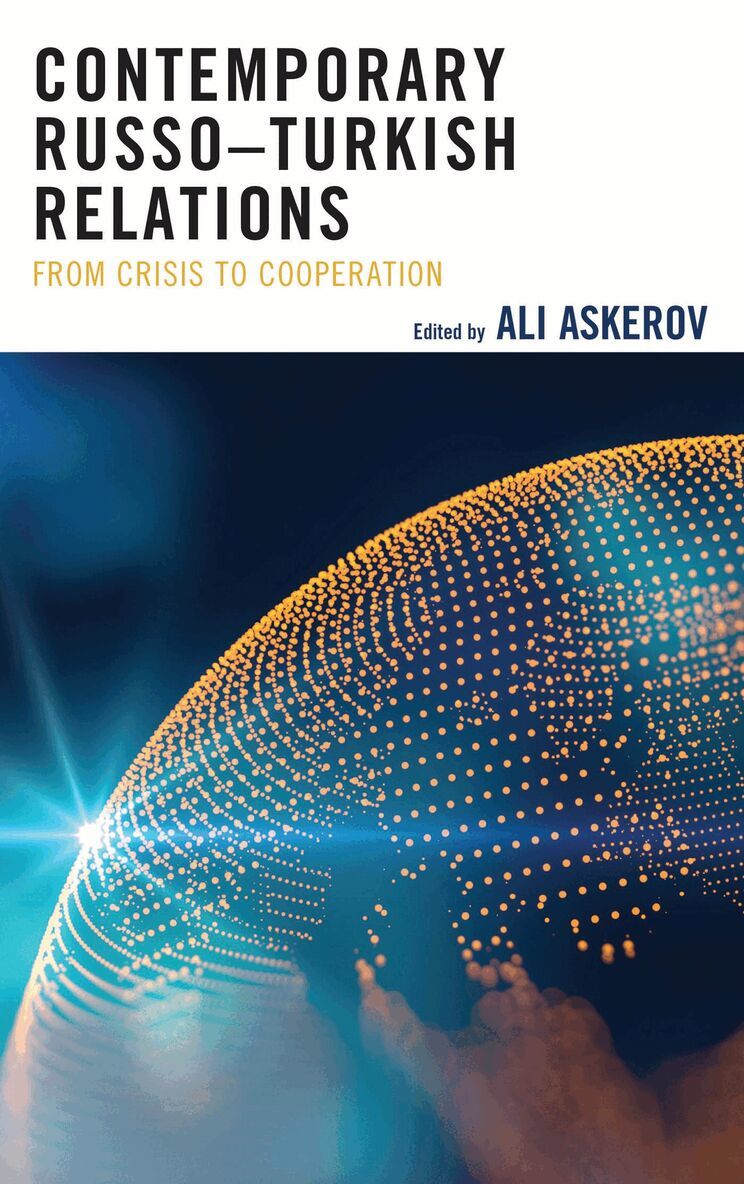
    Contemporary Russo–Turkish Relations

    From Crisis to Cooperation

    AvAli Askerov

    Inbunden, Engelska, 2018

    1 533 kr

    Beställningsvara. Skickas inom 10-15 vardagar. Fri frakt över 249 kr.

    Beskrivning

    The Syrian Civil War started in March 2011 and still continues. It causes death, turmoil, humanitarian crisis, and mass migration in the region. Numerous state and non-state actors are involved in this multi-sided armed conflict. On 24 November 2015, Turkey shoots down a Russian fighter jet on its border and this event becomes the turning point in Russo–Turkish relations. An economic and psychological war starts between Moscow and Ankara which damages their good relations existed before the crisis. Despite the crisis, the sides to the conflict understand that they need each other for their own benefits and look for reconciliation. Russia, a supporter of the Assad government in Syria, does not want to lose Turkey as a friend. Turkey, an energy partner of Russia, needs Russia to balance the power relations in the region. They are two neighboring countries with strong historical socio-economic ties that need to be restored. The reconciliation process is not easy and requires some third party role. The PYD/YPG-centered US policy in Syria affects Turkey’s strategies.

    Produktinformation

    • Utgivningsdatum:2018-06-20
    • Mått:159 x 237 x 30 mm
    • Vikt:630 g
    • Format:Inbunden
    • Språk:Engelska
    • Antal sidor:356
    • Förlag:Bloomsbury Publishing Plc
    • ISBN:9781498553230

    Utforska kategorier

    • Internationella relationer inom Samhälle och politik

    Mer om författaren

    Ali Askerov is assistant professor of peace studies at the University of North Carolina, Greensboro.

    Recensioner i media

    "This is an excellent and insightful set of essays about the state of Russian-Turkish relations - where they have been and where they are headed during the 21st century.  It examines how the Turkish and Russian states are both cooperating and managing a full range of issue areas, some quite contentious. I highly recommend it" Michael Jackson, PhD, Senior Instructor, Norwich University – The Military College of Vermont, Northfield, VT. This is a very useful and timely volume looking at the various issues at play in contemporary Russian-Turkish relations. The essays in this collection look at the issues and the areas that shape current Russia and Turkey interactions with each other over the past few decades. The various cases these essays address give us a refreshing look into the relationship between Russia and Turkey during the leadership of Putin and Erdogan.  Students of International Relations and Comparative Politics whose focus is either Russia or Turkey will find many things to value here. Clifford A. Bates, Jr. PhDUniversity ProfessorWarsaw University, Warsaw, PolandThe Syrian Civil War started in March 2011 and still continues. It causes death, turmoil, humanitarian crisis, and mass migration in the region. Numerous state and non-state actors are involved in this multi-sided armed conflict. On 24 November 2015, Turkey shoots down a Russian fighter jet on its border and this event becomes the turning point in Russo–Turkish relations. An economic and psychological war starts between Moscow and Ankara which damages the good relations they enjoyed before the incident. Despite the crisis, the sides to the conflict understand they need each other for their own benefits and look for reconciliation. Russia, a supporter of the Assad government in Syria, does not want to lose Turkey as a friend. Turkey, an energy partner of Russia, needs Russia to balance the power relations in the region. They are two neighboring countries with strong historical socio-economic ties that need to be restored. The reconciliation process is not easy and requires some involvement by third party actors.

    Innehållsförteckning

    • Foreword, by Stefan D. BrooksAcknowledgmentsIntroduction, by Ali Askerov1. A History of Russian-Turkish Relations: From the Ottoman Empire period to the end of the Soviet Era, by Ilyas Topsakal2. Main Lines of Turkey-Russia Relations in the 2000s, by Cemre Pekcan3. Contending Policies of Russia and Turkey: The Syrian Crisis, by Ali Askerov and Lasha Tchantouridze4. Turkey–Russia Relations After the Shooting Down of a Russian Warplane, by Togrul Ismayil5. Effects of US PYD/YPG Policy on Russo-Turkish Relations, by Ali Askerov, Sean Byrne, and Thomas Matyok6. The Military-Strategic Dimensions of Turkey–Russian Relations, by Aydin Çetiner7. The Black Sea Question in Russo-Turkish Relations, by Lasha Tchantouridze8. Restrictions on a Possible Rapprochement between Turkey, Russia, and Iran, by Ibrahim Arslan9. Central Asia at the Crossroads of Russian–Turkish Cooperation and Competition, by Kamala Valiyeva10. The Turkish-Russian Relations in The Context of Energy Cooperation, by Tugce Varol11. A Comparison of the EU Policies of Turkey and Russia, by Soner Karagül12. A Proposal for Sustainable Peace in the Sykes-Picot Agreement’s Hundredth Year: the Middle East Peace and Stability Pact, by Ibrahim Arslan and Mithat Baydur13. Social Dynamics of Modern Russian and Turkish Societies, by Abulfaz Suleymanov, Gali Galiev, and Chulpan Ildarhanova14. The Future of the Black Sea Economic Cooperation Organization in the Context of Contemporary Developments, by Sergey A. Kizima15. A Third Party Role in the Normalization of Russo-Turkish Relations, by Ali Askerov and Stefan D. BrooksConclusionAbout the Author