• Fri frakt över 249 kr
  • •
  • Snabba leveranser
  • •
  • Billiga böcker
Kundservice

Du är på sajten för privatpersoner.

Företag, bibliotek eller offentlig verksamhet?

Du handlar på classic.bokus.com, där alla dina funktioner finns intakta.
Till classic.bokus.com
Bokus logotyp. Gå till startsidan.
  • Erbjudanden
  • Nyheter
  • Student
  • Topplistor
  • Barn & ungdom
  • Bokus Play
  • E-böcker
  • Pocketböcker
  • Spel & pussel

Må bättre, för mindre! Upp till 50% rabatt på hälsoböcker

Sidfot

Mina sidor

    Hjälp

    • Kundservice
    • Vanliga frågor och svar
    • Frakt och leverans
    • Retur vid ångerrätt
    • Reklamera vara
    • Betalning
    • Köpvillkor
    • Allmänna villkor
    • Information om webbplatsens tillgänglighet

    Om Bokus

    • Om oss
    • Pressrum
    • För studenter
    • För företag
    • För bibliotek och offentlig verksamhet
    • För leverantörer
    • Hållbarhet

    Populärt

    • Aktuella erbjudanden
    • Presentkort
    • Studentlitteratur
    • Nya böcker
    • Topplistor
    • Signerade böcker
    • Engelska böcker

    Inspiration

    • Boktips
    • BookTok
    • Populära bokserier
    • Barnbokskaraktärer
    • Populära författare
    Logotyp för Bokus
    Följ oss på Facebook (extern länk)Följ oss på Instagram (extern länk)Följ oss på YouTube (extern länk)Följ oss på TikTok (extern länk)
    bokus @ CookiesAnpassa cookiesIntegritetspolicyKöpvillkor
    Till Citymail hemsida (extern länk)Till Budbee hemsida (extern länk)Till Postnord hemsida (extern länk)Till Schenker hemsida (extern länk)Till Early Bird hemsida (extern länk)Till Walleys hemsida (extern länk)
    1. Skönlitteratur
    2. Litteraturvetenskap
    3. Litteraturvetenskap

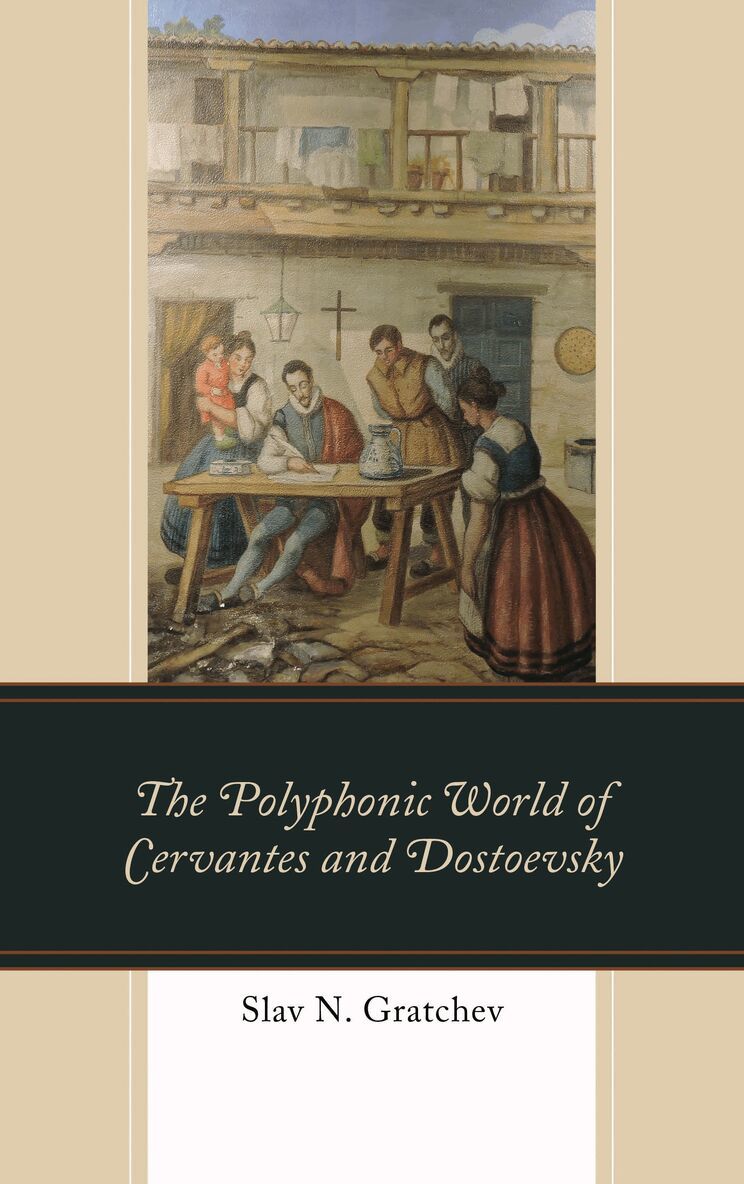
    Polyphonic World of Cervantes and Dostoevsky

    AvSlav N. Gratchev

    Inbunden, Engelska, 2017

    1 364 kr

    Beställningsvara. Skickas inom 10-15 vardagar. Fri frakt över 249 kr.

    Beskrivning

    This book is the first scholarly attempt to examine Don Quixote from the angle of dialogism and polyphony. To begin with, although Mikhail Bakhtin considered Dostoevsky the “creator of a polyphonic novel,” we believe that the first elements of polyphony can be observed in Cervantes’ Don Quixote. A preliminary objective will therefore be to articulate, without reducing the role of Dostoevsky in the creation of the polyphonic novel and relying on Bakhtin’s interpretation of polyphony, heteroglossia, and multivoicedness, that the polyphonic structure appeared and evolved to a state of relative maturity centuries before Dostoevsky. The book will subsequently explore how and why the polyphonic structure was born within the classic monophonic structure of Don Quixote, the ways in which this new structure positioned itself in relation to the classic monophonic one, and what relations it may be said to have established with it resulting in a unique amalgam—the hybrid semi-polyphonic novel. An overarching concern throughout the project will be to trace Cervantes’ search for new and more sophisticated expressive possibilities that the old, monophonic narration could not offer, while also shedding light on how Cervantes systematically and deliberately employed polyphonic structure in Don Quixote.

    Produktinformation

    • Utgivningsdatum:2017-12-06
    • Mått:160 x 236 x 19 mm
    • Vikt:386 g
    • Format:Inbunden
    • Språk:Engelska
    • Antal sidor:162
    • Förlag:Bloomsbury Publishing Plc
    • ISBN:9781498565530

    Utforska kategorier

    • Litteraturvetenskap inom Skönlitteratur

    Mer om författaren

    Slav N. Gratchev is associate professor of Spanish at Marshall University.

    Innehållsförteckning

    • Table of contentsAcknowledgmentsIntroduction Part I: The World of CervantesChapter I: “I hear voices in everything and dialogic relation among them.” (M. Bakhtin) Chapter II: “We do not read words, we read ideas.” (M. Bakhtin) Chapter III: “I am against enclosure in a text.” (Bakhtin) Chapter IV: “Feci quod potui, faciant meliora potentes. I have done what I could; those who can will do better.” Chapter V: “Writers themselves do not create polyphonic novels.” (Bakhtin) Chapter VI: “Consensus omnium. By the agreement of all.” Chapter VII: “Quantum satis. The amount that is needed.” Chapter VIII: “Carthago delenda est. Carthage must be destroyed.” Chapter IX: “Life enters language through concrete utterances.” (Bakhtin) Part II: The World of DostoevskyChapter X: “Nothing is absolutely dead: every meaning will have its festival.” (Bakhtin) Bibliography About the author Index