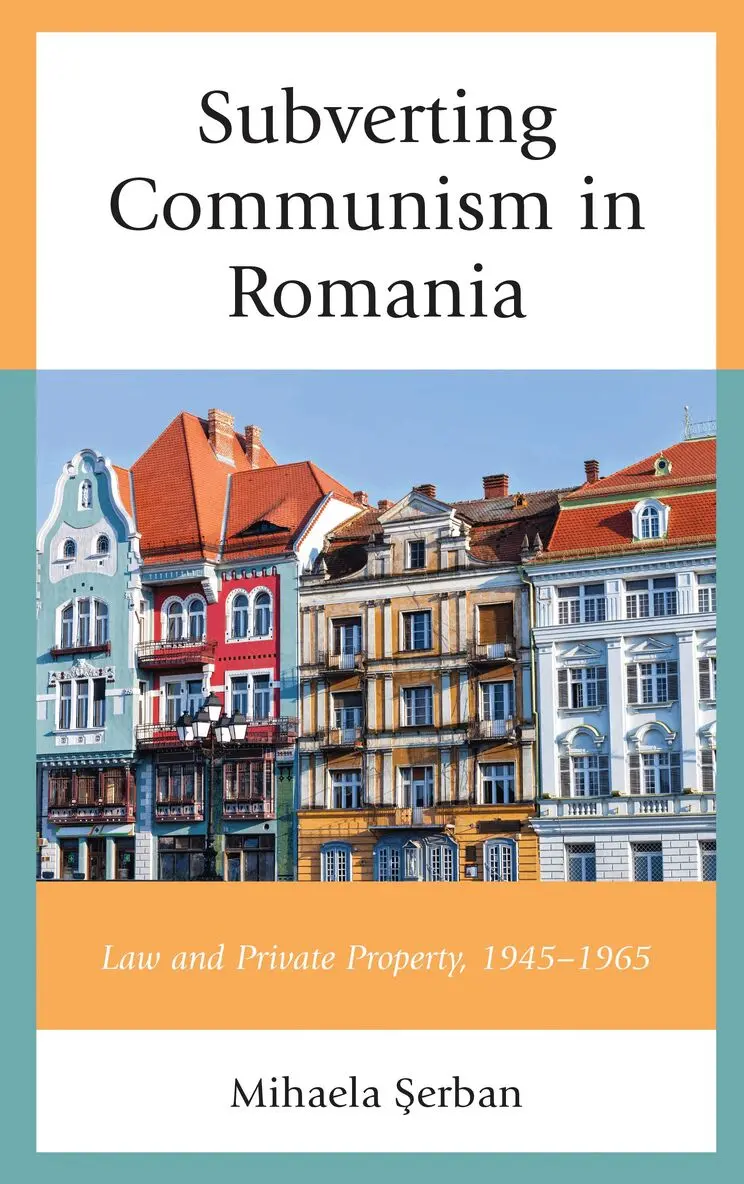
Inbunden, Engelska, 2019
Subverting Communism in Romania
Law and Private Property 1945–1965
1312 kr
Beställningsvara. Skickas inom 10-15 vardagar. Fri frakt över 249 kr.
Beskrivning
Produktinformation
- Utgivningsdatum: 2019-08-22
- Mått: 161 x 228 x 22 mm
- Vikt: 585 g
- Format: Inbunden
- Språk: Engelska
- Antal sidor: 294
- Förlag: Bloomsbury Publishing Plc
- ISBN: 9781498595674
Utforska kategorier
Mer om författaren
Mihaela Serban is associate professor of law and society at Ramapo College of New Jersey.
Recensioner i media
In Subverting Communism in Romania: Law and Private Property 1945-1965 Mihaela Serban makes a compelling argument that communist legality in socialist East and Central Europe should be equally understood as an instrument of state repression and a space for continuity, accommodation, and subversion. This argument is sustained by a rich documentation of historical and archival sources and interviews relating to the nationalization and expropriation of housing in the Banat region of Romania during the first two decades of the communist regime between 1945- 1965. By emphasizing significant continuities between the interwar civil law tradition and socialist law the author goes well beyond a specific case study. The monograph has broader implications for the complex relationships between any legal system and its subjects in a non-democratic society. Its sophisticated conceptual approach makes it an important source for a large academic audience including scholars of socialism and post-socialism, of law and society and of transitional justice.
Betyg & recensioner
0 recensioner
Inga recensioner tillgängliga.