• Fri frakt över 249 kr
  • •
  • Snabba leveranser
  • •
  • Billiga böcker
Kundservice

Du är på sajten för privatpersoner.

Företag, bibliotek eller offentlig verksamhet?

Du handlar på classic.bokus.com, där alla dina funktioner finns intakta.
Till classic.bokus.com
Bokus logotyp. Gå till startsidan.
  • Erbjudanden
  • Nyheter
  • Student
  • Topplistor
  • Barn & ungdom
  • Bokus Play
  • E-böcker
  • Pocketböcker
  • Spel & pussel

10% rabatt på allt med kod: NYSTART10 →

Sidfot

Mina sidor

    Hjälp

    • Kundservice
    • Vanliga frågor och svar
    • Frakt och leverans
    • Retur vid ångerrätt
    • Reklamera vara
    • Betalning
    • Köpvillkor
    • Allmänna villkor
    • Information om webbplatsens tillgänglighet

    Om Bokus

    • Om oss
    • Pressrum
    • För studenter
    • För företag
    • För bibliotek och offentlig verksamhet
    • För leverantörer
    • Hållbarhet

    Populärt

    • Aktuella erbjudanden
    • Presentkort
    • Studentlitteratur
    • Nya böcker
    • Topplistor
    • Signerade böcker
    • Engelska böcker

    Inspiration

    • Boktips
    • BookTok
    • Populära bokserier
    • Barnbokskaraktärer
    • Populära författare
    Logotyp för Bokus
    Följ oss på Facebook (extern länk)Följ oss på Instagram (extern länk)Följ oss på YouTube (extern länk)Följ oss på TikTok (extern länk)
    bokus @ CookiesAnpassa cookiesIntegritetspolicyKöpvillkor
    Till Citymail hemsida (extern länk)Till Budbee hemsida (extern länk)Till Postnord hemsida (extern länk)Till Schenker hemsida (extern länk)Till Early Bird hemsida (extern länk)Till Walleys hemsida (extern länk)
    1. Naturvetenskap och teknik
    2. Matematik och naturvetenskap
    3. Kemi
    4. Organisk kemi

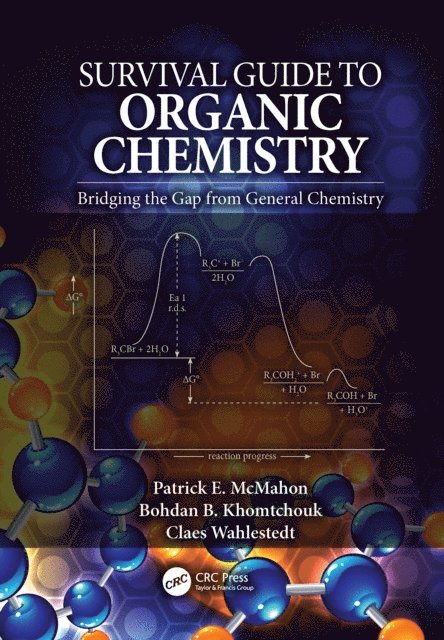
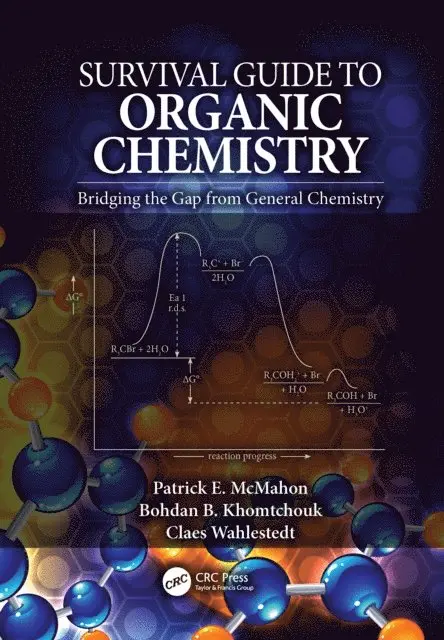
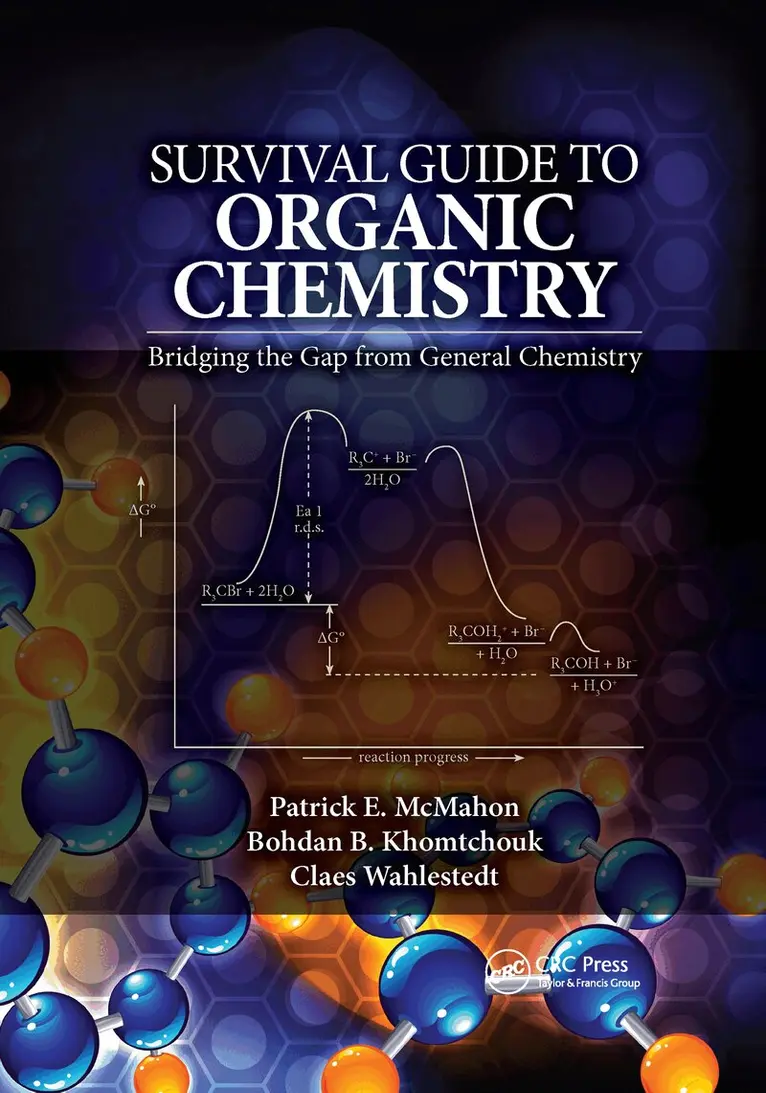
    Survival Guide to Organic Chemistry

    Bridging the Gap from General Chemistry

    AvPatrick E. McMahon,Bohdan B. Khomtchouk

    Inbunden, Engelska, 2016

    2 421 kr

    Beställningsvara. Skickas inom 10-15 vardagar. Fri frakt över 249 kr.

    Fler format och utgåvor

    Häftad

    766 kr

    Beskrivning

    The Survival Guide to Organic Chemistry: Bridging the Gap from General Chemistry enables organic chemistry students to bridge the gap between general chemistry and organic chemistry. It makes sense of the myriad of in-depth concepts of organic chemistry, without overwhelming them in the necessary detail often given in a complete organic chemistry text. Here, the topics covered span the entire standard organic chemistry curriculum. The authors describe subjects which require further explanation, offer alternate viewpoints for understanding and provide hands-on practical problems and solutions to help master the material. This text ultimately allows students to apply key ideas from their general chemistry curriculum to key concepts in organic chemistry.Key Features:Reviews key general chemistry concepts and techniques, adapted for application to important organic principlesProvides practical guidance to help students make the notoriously well-known and arduous transition from general chemistry to organic chemistryExplains organic concepts and reaction mechanisms, generally expanding the focus on how to understand each step from a more intuitive viewpointCovers concepts that need further explanation as well as those that summarize and emphasize key ideas or skills necessary in this field. An added bonus is help with organizing principles to make sense of a wide range of similar reactions and mechanismsImplements a user-friendly process to achieve the end result of problem solvingCovers organic chemistry I and II concepts at the level and depth of a standard ACS organic chemistry curriculum; features practice problems and solutions to help master the material, including an extensive and comprehensive bank of practice exams with solutions

    Produktinformation

    • Utgivningsdatum:2016-12-01
    • Mått:178 x 254 x 45 mm
    • Vikt:1 338 g
    • Format:Inbunden
    • Språk:Engelska
    • Antal sidor:654
    • Förlag:Taylor & Francis Inc
    • ISBN:9781498777070

    Utforska kategorier

    • Organisk kemi inom Naturvetenskap och teknik

    Mer om författaren

    Patrick E. McMahon has for the past twenty three years been teaching both general chemistry and organic chemistry at Benedictine University in Lisle, Illinois. Prior to that, he was a research scientist for Amoco Chemical Company at the Naperville, Illinois campus. McMahon has also taught at several institutions in the Chicago area, including Elmhurst College, Dominican University and Triton Community College. He is a member of the American Legion and served in the United States Army from 1970-1972. His main area of research interest is organic reaction catalysis. Awards that can be accredited to his name include the B.J. Babler award for outstanding contribution to under-graduate instruction at the University of Illinois, the Dean’s Award for Teaching Excellence at Benedictine University and first recipient of the Shining Star award given by the student senate for outstanding contribution to students at Benedictine University.Bohdan B. Khomtchouk is a triple-major summa cum laude (B.Sc. Biochemistry and Molecular Biology, B.Sc. Mathematics and B.Sc. Physics) and is currently United States Department of Defense NDSEG Fellow at the University of Miami Miller School of Medicine.Claes Wahlestedt, MD, PhD, is Leonard M. Miller Professor at the University of Miami Miller School of Medicine and is working on a range of chemistry related translational efforts in his roles as Associate Dean and Center Director for Therapeutic Innovation. The author of some 250 peer reviewed scientific publications with 30,000+ citations, his ongoing research projects concern chemical biology, epigenetics, genomics and drug/biomarker discovery across several therapeutic areas. He has experience not only from academia, but also from leadership positions in the pharmaceutical industry, namely Astra-Zeneca, Pharmacia & Upjohn and Pharmacia Corporation.

    Recensioner i media

    'In Survival Guide to Organic Chemistry, the authors approach concepts in organic chemistry from an angle that differs from most textbooks. Rather than the usual approach of heavy paragraphs and figures, they establish a process wherein each concept is broken into a series of manageable steps, each of which involves a singular aspect of an overarching theme. Each step includes an example illustrating that singular process. This method allows students to approach material at levels within their control, rather than all at once for any given concept. The text also provides a framework for organizing reactions and includes over 30 practice exams spanning concepts of both semesters of a typical undergraduate organic chemistry sequence. In addition to students entering organic chemistry, this text could also serve as a useful reference for students in upper-level undergraduate or graduate level courses who need to refresh fundamental concepts before delving into more complex material. Finally, faculty may find this useful as a source of practice problems in class, as well as a means of guiding conversations for students struggling with particular concepts.--J. Tedesco, Lake Erie CollegeSumming Up: Recommended. Lower-division undergraduates and above; faculty and professionals.'– J. Tedesco, for CHOICE, January 2018, Vol. 55, No. 5.

    Innehållsförteckning

    • Chapter 1: General Concepts for Covalent Bonding and Constructing Lewis Structures for Organic Molecules. Chapter 2: Guideline for Writing Organic Molecule Isomers and Determining Number of Rings Plus Pi-Bonds. Chapter 3: Guideline for Complete Analysis for Central Atoms and Molecules: Bonding/Hybridization/Geometry/Polarity. Chapter 4: Notation in Organic Chemistry: Guide to Writing and Using Condensed Formulas and Line Drawings. Chapter 5: Summary Guidelines for Organic Nomenclature. Chapter 6: Guidelines for Analysis of Intermolecular Forces for Organic Molecules. Chapter 7: Alkane and Cycloalkane Conformations. Chapter 8: Summary Guide to Thermodynamic Concepts for Organic Chemistry. Chapter 9: Guide to Kinetics and Reaction Mechanisms. Chapter 10: Review of Acid/Base Concepts for Organic Chemistry. Chapter 11: Electrophiles and Nucleophiles in Organic Reaction Mechanisms. Chapter 12: Conceptual Guide to Mechanisms in Organic Chemistry. Chapter 13: Guide to Stereochemistry Concepts and Analysis of Reaction Stereochemistry as Applied to Electrophilic Addition. Chapter 14: A Process for Calculation of Product Distribution Through Relative Rate Analysis: Examples for Free Radical Halogenation. Chapter 15: Process to Identify and Solve the Reactions for Organic I. Chapter 16: Electrophilic Addition and Addition/Elimination to Conjugated Double Bond and Aromatic Systems. Chapter 17: Oxidation/Reduction Relationships for Carbonyl Carbon. Chapter 18: A Complete System for Organizing, Identifying, and Solving Carbonyl Reactions: Nucleophilic Addition and Addition/Elimination. Chapter 19: A Brief Guideline for Applying Fundamental Concepts in NMR Spectroscopy. Organic I Practice Exams. Organic II Practice Exams. Multiple Choice Exams.