• Fri frakt över 249 kr
  • •
  • Snabba leveranser
  • •
  • Billiga böcker
Kundservice

Du är på sajten för privatpersoner.

Företag, bibliotek eller offentlig verksamhet?

Du handlar på classic.bokus.com, där alla dina funktioner finns intakta.
Till classic.bokus.com
Bokus logotyp. Gå till startsidan.
  • Erbjudanden
  • Nyheter
  • Student
  • Topplistor
  • Barn & ungdom
  • Bokus Play
  • E-böcker
  • Pocketböcker
  • Spel & pussel

Må bättre, för mindre! Upp till 50% rabatt på hälsoböcker

Sidfot

Mina sidor

    Hjälp

    • Kundservice
    • Vanliga frågor och svar
    • Frakt och leverans
    • Retur vid ångerrätt
    • Reklamera vara
    • Betalning
    • Köpvillkor
    • Allmänna villkor
    • Information om webbplatsens tillgänglighet

    Om Bokus

    • Om oss
    • Pressrum
    • För studenter
    • För företag
    • För bibliotek och offentlig verksamhet
    • För leverantörer
    • Hållbarhet

    Populärt

    • Aktuella erbjudanden
    • Presentkort
    • Studentlitteratur
    • Nya böcker
    • Topplistor
    • Signerade böcker
    • Engelska böcker

    Inspiration

    • Boktips
    • BookTok
    • Populära bokserier
    • Barnbokskaraktärer
    • Populära författare
    Logotyp för Bokus
    Följ oss på Facebook (extern länk)Följ oss på Instagram (extern länk)Följ oss på YouTube (extern länk)Följ oss på TikTok (extern länk)
    bokus @ CookiesAnpassa cookiesIntegritetspolicyKöpvillkor
    Till Citymail hemsida (extern länk)Till Budbee hemsida (extern länk)Till Postnord hemsida (extern länk)Till Schenker hemsida (extern länk)Till Early Bird hemsida (extern länk)Till Walleys hemsida (extern länk)
    1. Biografier
    2. Biografier
    3. Biografi: historia, politik och försvar

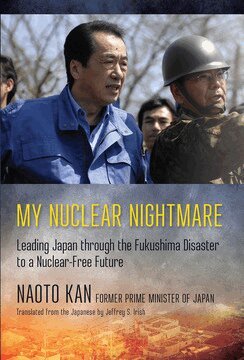
    My Nuclear Nightmare

    Leading Japan Through the Fukushima Disaster to a Nuclear-Free Future

    AvNaoto Kan

    Inbunden, Engelska, 2017

    302 kr

    Beställningsvara. Skickas inom 10-15 vardagar. Fri frakt över 249 kr.

    Beskrivning

    "Naoto Kan, who was prime minister of Japan when the March 2011 Fukushima nuclear disaster began, has become a ubiquitous and compelling voice for the global antinuclear movement. Kan compared the potential worst-case devastation that could be caused by a nuclear power plant meltdown as tantamount only to 'a great world war. Nothing else has the same impact.' Japan escaped such a dire fate during the Fukushima disaster, said Kan, only 'due to luck.' Even so, Kan had to make some steely-nerved decisions that necessitated putting all emotion aside. In a now famous phone call from Tepco, when the company asked to pull all their personnel from the out-of-control Fukushima site for their own safety, Kan told them no. The workforce must stay. The few would need to make the sacrifice to save the many. Kan knew that abandoning the Fukushima Daiichi site would cause radiation levels in the surrounding environment to soar. His insistence that the Tepco workforce remain at Fukushima was perhaps one of the most unsung moments of heroism in the whole sorry saga."—The Ecologist On March 11, 2011, a massive undersea earthquake off Japan's coast triggered devastating tsunami waves that in turn caused meltdowns at three reactors in the Fukushima Daiichi Nuclear Power Plant. Ranked with Chernobyl as the worst nuclear disaster in history, Fukushima will have lasting consequences for generations. Until 3.11, Japan's Prime Minister, Naoto Kan, had supported the use of nuclear power. His position would undergo a radical change, however, as Kan watched the nuclear disaster at the Fukushima No. 1 Power Plant unfold and came to understand the potential for the physical, economic, and political destruction of Japan.In My Nuclear Nightmare, Kan offers a fascinating day-by-day account of his actions in the harrowing week after the earthquake struck. He records the anguished decisions he had to make as the scale of destruction became clear and the threat of nuclear catastrophe loomed ever larger—decisions made on the basis of information that was often unreliable. For example, frustrated by the lack of clarity from the executives at Tepco, the company that owned the power plant, Kan decided to visit Fukushima himself, despite the risks, so he could talk to the plant's manager and find out what was really happening on the ground. As he details, a combination of extremely good fortune and hard work just barely prevented a total meltdown of all of Fukushima's reactor units, which would have necessitated the evacuation of the thirty million residents of the greater Tokyo metropolitan area.In the book, first published in Japan in 2012, Kan also explains his opposition to nuclear power: "I came to understand that a nuclear accident carried with it a risk so large that it could lead to the collapse of a country." When Kan was pressured by the opposition to step down as prime minister in August 2011, he agreed to do so only after legislation had been passed to encourage investments in alternative energy. As both a document of crisis management during an almost unimaginable disaster and a cogent argument about the dangers of nuclear power, My Nuclear Nightmare is essential reading.

    Produktinformation

    • Utgivningsdatum:2017-01-10
    • Mått:140 x 216 x 22 mm
    • Vikt:454 g
    • Format:Inbunden
    • Språk:Engelska
    • Antal sidor:200
    • Förlag:Cornell University Press
    • ISBN:9781501705816
    • Översättare:Jeffrey S. Irish, Jeffrey S Irish

    Utforska kategorier

    • Biografi: historia, politik och försvar inom Biografier
    • Asiens historia inom Historia och arkeologi
    • Politik och statsskick inom Samhälle och politik

    Mer om författaren

    Naoto Kan is the former Prime Minister of Japan. He is an adviser on renewable energy for Japan's Technical Committee on Renewable Energy. Jeffrey S. Irish is Associate Professor of Economics at the International University of Kagoshima. He is the translator of books including The Forgotten Japanese: Encounters with Rural Life and Folklore.

    Recensioner i media

    Naoto Kan, who was prime minister of Japan when the March 2011 Fukushima nuclear disaster began, has become a ubiquitous and compelling voice for the global antinuclear movement. Kan compared the potential worst-case devastation that could be caused by a nuclear power plant meltdown as tantamount only to 'a great world war. Nothing else has the same impact.' Japan escaped such a dire fate during the Fukushima disaster, said Kan, only 'due to luck.' Even so, Kan had to make some steely-nerved decisions that necessitated putting all emotion aside. In a now famous phone call from Tepco, when the company asked to pull all their personnel from the out-of-control Fukushima site for their own safety, Kan told them no. The workforce must stay. The few would need to make the sacrifice to save the many. Kan knew that abandoning the Fukushima Daiichi site would cause radiation levels in the surrounding environment to soar. His insistence that the Tepco workforce remain at Fukushima was perhaps one of the most unsung moments of heroism in the whole sorry saga.(The Ecologist) This worthwhile account of the Fukushima nuclear disaster was written by former Japanese Prime Minister Naoto Kan, who served during that time.... This excellent work provides thorough detail about the Fukushima disaster from the eyes of a political leader. To any individual who thinks governing is easy or that lack of governance is possible in the modern world, this book is a necessary revelation. Summing Up: Recommended. All readers.- A. M. Saperstein, Wayne State University (CHOICE) Voluminous literature on the Fukushima nuclear disaster has been published, but My Nuclear Nightmare might be one of the most important primary sources to be translated into English.... The book is interesting in many research contexts. Scholars who are interested in crisis management, risk communication, the prime minister's political leadership, media coverage of the prime minister, nuclear regulatory authority, renewable energy policy, and ethical issues such as the lives of nuclear power plant workers, will find the book engaging.(Pacific Affairs)