• Fri frakt över 249 kr
  • •
  • Snabba leveranser
  • •
  • Billiga böcker
Kundservice

Du är på sajten för privatpersoner.

Företag, bibliotek eller offentlig verksamhet?

Du handlar på classic.bokus.com, där alla dina funktioner finns intakta.
Till classic.bokus.com
Bokus logotyp. Gå till startsidan.
  • Erbjudanden
  • Nyheter
  • Student
  • Topplistor
  • Barn & ungdom
  • Bokus Play
  • E-böcker
  • Pocketböcker
  • Spel & pussel

10% rabatt på allt med kod NYSTART10 →

Sidfot

Mina sidor

    Hjälp

    • Kundservice
    • Vanliga frågor och svar
    • Frakt och leverans
    • Retur vid ångerrätt
    • Reklamera vara
    • Betalning
    • Köpvillkor
    • Allmänna villkor
    • Information om webbplatsens tillgänglighet

    Om Bokus

    • Om oss
    • Pressrum
    • För studenter
    • För företag
    • För bibliotek och offentlig verksamhet
    • För leverantörer
    • Hållbarhet

    Populärt

    • Aktuella erbjudanden
    • Presentkort
    • Studentlitteratur
    • Nya böcker
    • Topplistor
    • Signerade böcker
    • Engelska böcker

    Inspiration

    • Boktips
    • BookTok
    • Populära bokserier
    • Barnbokskaraktärer
    • Populära författare
    Logotyp för Bokus
    Följ oss på Facebook (extern länk)Följ oss på Instagram (extern länk)Följ oss på YouTube (extern länk)Följ oss på TikTok (extern länk)
    bokus @ CookiesAnpassa cookiesIntegritetspolicyKöpvillkor
    Till Citymail hemsida (extern länk)Till Budbee hemsida (extern länk)Till Postnord hemsida (extern länk)Till Schenker hemsida (extern länk)Till Early Bird hemsida (extern länk)Till Walleys hemsida (extern länk)
    1. Historia och arkeologi
    2. Historia
    3. Historia: särskilda händelser och ämnen
    4. Socialhistoria och kulturhistoria

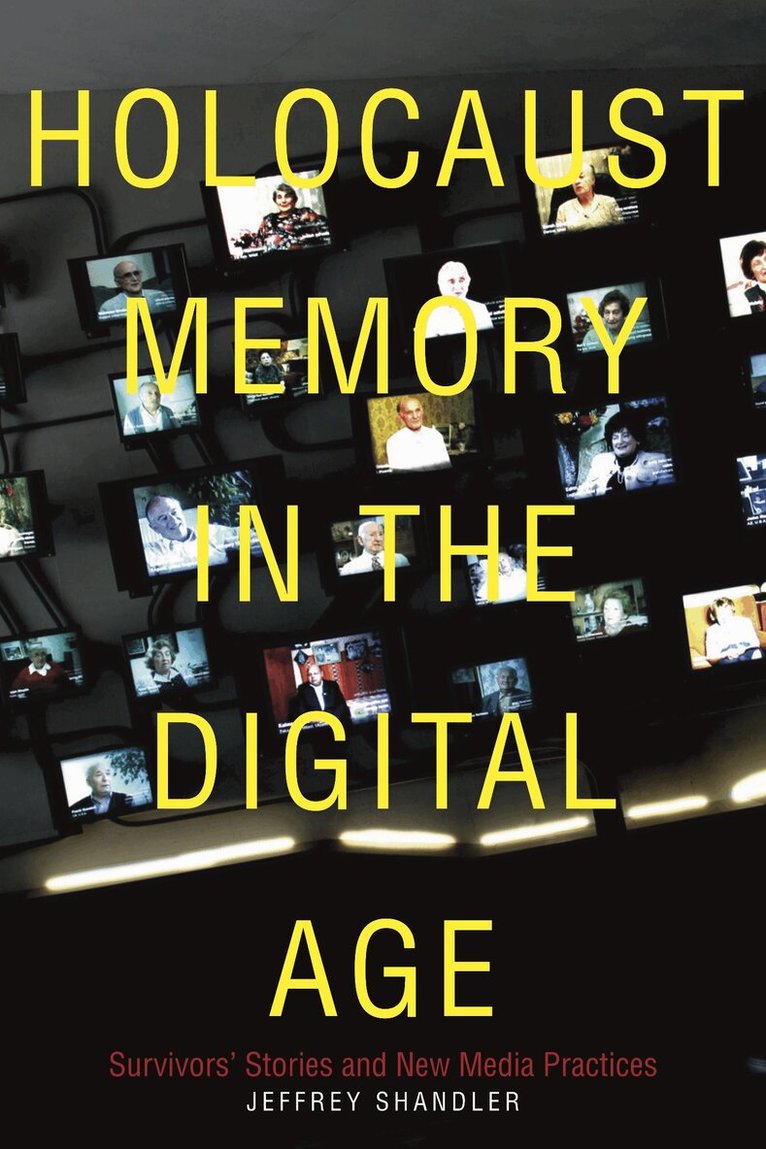
    Holocaust Memory in the Digital Age

    Survivors' Stories and New Media Practices

    AvJeffrey Shandler

    Inbunden, Engelska, 2017

    Del i serien Stanford Studies in Jewish History and Culture

    1 248 kr

    Beställningsvara. Skickas inom 5-8 vardagar. Fri frakt över 249 kr.

    Fler format och utgåvor

    Häftad

    303 kr

    E-bok

    364 kr

    Beskrivning

    Holocaust Memory in the Digital Age explores the nexus of new media and memory practices, raising questions about how advances in digital technologies continue to influence the nature of Holocaust memorialization. Through an in-depth study of the largest and most widely available collection of videotaped interviews with survivors and other witnesses to the Holocaust, the University of Southern California Shoah Foundation's Visual History Archive, Jeffrey Shandler weighs the possibilities and challenges brought about by digital forms of public memory.The Visual History Archive's holdings are extensive—over 100,000 hours of video, including interviews with over 50,000 individuals—and came about at a time of heightened anxiety about the imminent passing of the generation of Holocaust survivors and other eyewitnesses. Now, the Shoah Foundation's investment in new digital media is instrumental to its commitment to remembering the Holocaust both as a subject of historical importance in its own right and as a paradigmatic moral exhortation against intolerance. Shandler not only considers the Archive as a whole, but also looks closely at individual survivors' stories, focusing on narrative, language, and spectacle to understand how Holocaust remembrance is mediated.

    Produktinformation

    • Utgivningsdatum:2017-08-08
    • Mått:152 x 229 x 18 mm
    • Vikt:513 g
    • Format:Inbunden
    • Språk:Engelska
    • Serie:Stanford Studies in Jewish History and Culture
    • Antal sidor:232
    • Förlag:Stanford University Press
    • ISBN:9781503601956

    Utforska kategorier

    • Socialhistoria och kulturhistoria inom Historia och arkeologi

    Mer om författaren

    Jeffrey Shandler is Professor of Jewish Studies at Rutgers University. He is the author of numerous works, including Shtetl: A Vernacular Intellectual History (2014) and Jews, God, and Videotape: Religion and Media in America (2009).

    Recensioner i media

    "Jeffrey Shandler once again brings his erudite, incisive mind to address the intersections of media, memory, and recent Jewish history and its memorialization. Diving deep into the Shoah Foundation's Visual History Archive, Shandler explores the project's mission to provide an invaluable record of those who witnessed the unspeakable, while deploying digital technologies as a bulwark against racism and hate."—Faye Ginsburg, New York University "In his probing and clear-eyed inquiry into how and what we learn from Holocaust video testimonies, Jeffrey Shandler gives visual history archives of the Holocaust new life in our 'digital age.' A must-read for anyone viewing, teaching, or writing about Holocaust video testimony."—James E. Young, University of Massachusetts, Amherst "This original and thought-provoking work demonstrates the value of situating the study of the Holocaust within the context of the digital humanities, of expanding the scope of this type of research to include other genocides and oral history collections, and of fostering an ongoing discussion about how, why, and in what forms life stories will be documented for generations that are to come."—Sarah Jefferies, Biography "Basing his book on extensive study and unfettered analysis of the University of Southern California Shoah Foundation's Visual History Archive, Shandler studies memory and remembrance through the application and exploitation of digital formats and technologies. This volume belongs in libraries supporting oral historians, practitioners of digital humanities, and Holocaust and genocide studies...Recommended"—B. M. Banta, Choice "[A] welcome contribution to scholarship on the mediations of Holocaust memory....Shandler's book represents a timely and insightful contribution to a vibrant area of scholarship engaged in pressing questions."—Noah Shenker, American Historical Review

    Innehållsförteckning

    • Introduction: 1. An Archive in Contexts2. Narrative: Tales Retold3. Language: In Other Words4. Spectacle: Seeing as BelievingConclusion: