• Fri frakt över 249 kr
  • •
  • Snabba leveranser
  • •
  • Billiga böcker
Kundservice

Du är på sajten för privatpersoner.

Företag, bibliotek eller offentlig verksamhet?

Du handlar på classic.bokus.com, där alla dina funktioner finns intakta.
Till classic.bokus.com
Bokus logotyp. Gå till startsidan.
  • Erbjudanden
  • Nyheter
  • Student
  • Topplistor
  • Barn & ungdom
  • Bokus Play
  • E-böcker
  • Pocketböcker
  • Spel & pussel

10% rabatt på allt med kod NYSTART10 →

Sidfot

Mina sidor

    Hjälp

    • Kundservice
    • Vanliga frågor och svar
    • Frakt och leverans
    • Retur vid ångerrätt
    • Reklamera vara
    • Betalning
    • Köpvillkor
    • Allmänna villkor
    • Information om webbplatsens tillgänglighet

    Om Bokus

    • Om oss
    • Pressrum
    • För studenter
    • För företag
    • För bibliotek och offentlig verksamhet
    • För leverantörer
    • Hållbarhet

    Populärt

    • Aktuella erbjudanden
    • Presentkort
    • Studentlitteratur
    • Nya böcker
    • Topplistor
    • Signerade böcker
    • Engelska böcker

    Inspiration

    • Boktips
    • BookTok
    • Populära bokserier
    • Barnbokskaraktärer
    • Populära författare
    Logotyp för Bokus
    Följ oss på Facebook (extern länk)Följ oss på Instagram (extern länk)Följ oss på YouTube (extern länk)Följ oss på TikTok (extern länk)
    bokus @ CookiesAnpassa cookiesIntegritetspolicyKöpvillkor
    Till Citymail hemsida (extern länk)Till Budbee hemsida (extern länk)Till Postnord hemsida (extern länk)Till Schenker hemsida (extern länk)Till Early Bird hemsida (extern länk)Till Walleys hemsida (extern länk)
    1. Historia och arkeologi
    2. Historia
    3. Amerikas historia

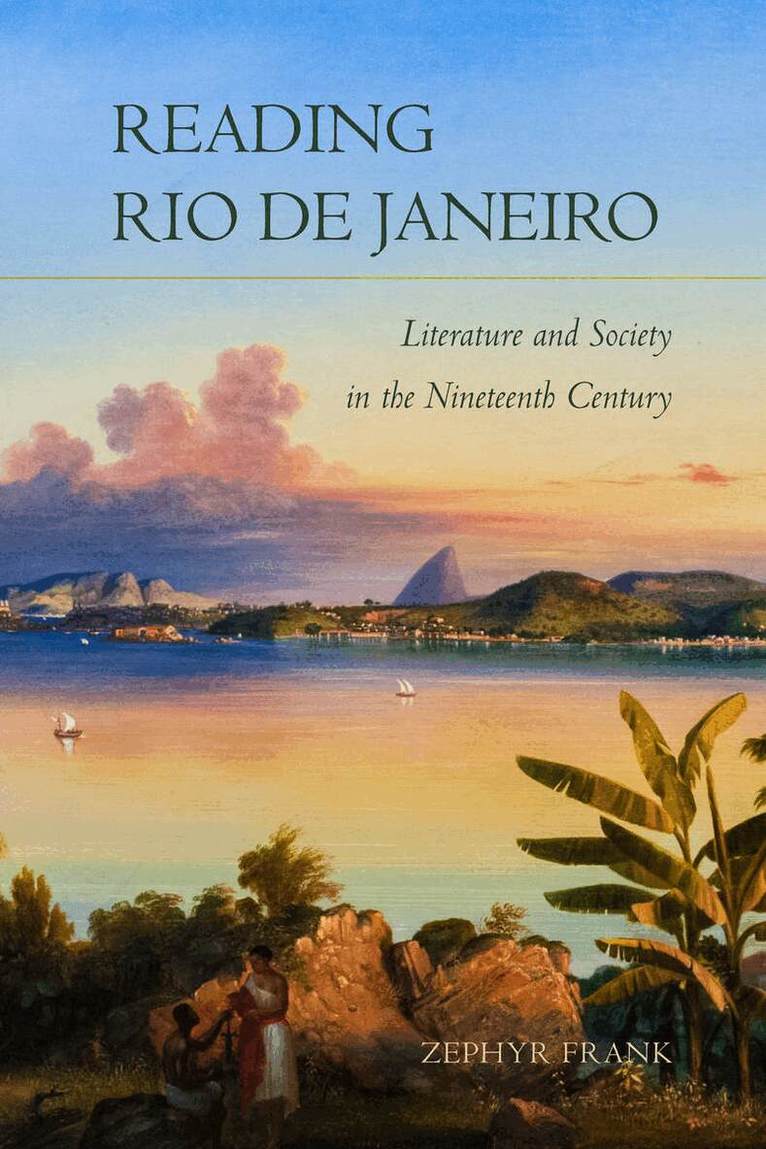
    Reading Rio De Janeiro

    Literature and Society in the Nineteenth Century

    AvZephyr Frank

    Häftad, Engelska, 2022

    331 kr

    Beställningsvara. Skickas inom 5-8 vardagar. Fri frakt över 249 kr.

    Fler format och utgåvor

    Inbunden

    1 361 kr

    E-bok

    444 kr

    Beskrivning

    Reading Rio de Janeiro blazes a new trail for understanding the cultural history of 19th-century Brazil. To bring the social fabric of Rio de Janeiro alive, Zephyr Frank flips the historian's usual interest in literature as a source of evidence and, instead, uses the historical context to understand literature. By focusing on the theme of social integration through the novels of José de Alencar, Machado de Assis, and Aluisio Azevedo, the author draws the reader's attention to the way characters are caught between conflicting moral imperatives as they encounter the newly mobile, capitalist, urban society, so different from the slave-based plantations of the past. Some characters grow and triumph in this setting; others are defeated by it. Though literature infuses this social history of 19th-century Rio, it is replete with maps, graphs, non-fiction sources, and statistical data and analysis that are the historian's stock-in-trade. By connecting a literary understanding of the social problems with the quantitative data traditional historical methods provide, Frank creates a richer and deeper understanding of society in 19th-century Rio.

    Produktinformation

    • Utgivningsdatum:2022-05-03
    • Mått:152 x 229 x 18 mm
    • Vikt:363 g
    • Format:Häftad
    • Språk:Engelska
    • Antal sidor:248
    • Förlag:Stanford University Press
    • ISBN:9781503632929

    Utforska kategorier

    • Amerikas historia inom Historia och arkeologi

    Mer om författaren

    Zephyr L. Frank is Professor of History at Stanford University. He is the author of Dutra's World: Wealth and Family in Nineteenth-Century Rio de Janeiro.

    Recensioner i media

    "The scholarship is deep, original, and the author addresses familiar topics in an entirely new and illuminating way. Reading Rio is a major contribution to knowledge.—Alida Metcalf, Rice University "Stimulating and attractive—Frank perceptively uses history to understand literature."—Richard Graham, The University of Texas at Austin

    Innehållsförteckning

    • Contents and Abstracts1Sonhos d'Ouro chapter abstractThis chapter describes and analyzes the novel Sonhos d'Ouro, by José de Alencar. Drawing on literary and social history, the chapter explores the characters and settings in this important novel in order to uncover Alencar's distinctive vision for social integration and the reconciliation of metropolitan wealth and provincial virtue. The character of Guida Soares is shown to represent the caprice and, concomitantly, the latent potential goodness inherent in capital honestly accumulated; her counterpart, Ricardo Nunes, is understood as Alencar's proxy for a virtuous and idealistic young man from the provinces. Together, their story represents a version of Bildung wherein an alternative mode of social integration is made possible.2Memórias Póstumas de Brás Cubas chapter abstractThis chapter explores the novel Memórias Póstumas de Brás Cubas, by Joaquim Maria Machado de Assis, from literary and historical perspectives. This reading of the novel, long considered a masterpiece of world literature, emphasizes its relation to the literary field in which it was embedded, within and beyond Brazil, as well as the social historical dimensions of the urban space therein depicted. The novel is placed into context with works by Balzac and Flaubert—extending and modifying previous readings that emphasized its sui generis, Brazilian content. Additionally, the chapter shows how Brás Cubas can be read alongside Sonhos d'Ouro—highlighting the different answers to the problem of social integration provided by Machado de Assis and José de Alencar.3O Coruja chapter abstractThis chapter analyzes the novel O Coruja, by Aluísio Azevedo. A more obscure novel than those discussed in the first two chapters, this work by Azevedo is also read in both literary and social historical perspective, allowing for an exploration of the themes of environmental determinism and social hierarchies in Rio de Janeiro during the 1880s.4Sentimental Educations chapter abstractThis chapter develops an interpretation of the problem of the individual and his or her integration into society. Building upon the foundation laid in the first three chapters, this analysis engages a broader range of novels and focuses on the problem of comportment in social settings. History and social theory combine to offer a reading of nineteenth-century Brazilian novels that highlight the key milestones and challenges associated with the growth and development of fictional protagonists, including the themes of education and career.5Marriage and Money chapter abstractThis chapter examines the way marriage and money intersected in nineteenth-century Rio de Janeiro as depicted in novels and against a backdrop of social historical data. Using parish records and estate inventories, the analysis shows how the realistic commitments of nineteenth-century authors echoed and reproduced an image of social structure surrounding the critical issues of wealth and family in Rio de Janeiro.6Problems of Spatial Practice chapter abstractThis chapter reads nineteenth-century novels set in Rio de Janeiro in terms of spatial practices. Through a combination of close and distant reading, novels are shown to contain detailed scripts referring to spatial practices ranging from the open spaces of sociability, such as the street and theater, to the closed spaces of the house. Within these spaces, the disposition and movement of characters is shown to reflect core aspects of social reality and the strategic and tactical maneuverings available to individuals of varied class status, age, and gender.