• Fri frakt över 249 kr
  • •
  • Snabba leveranser
  • •
  • Billiga böcker
Kundservice

Du är på sajten för privatpersoner.

Företag, bibliotek eller offentlig verksamhet?

Du handlar på classic.bokus.com, där alla dina funktioner finns intakta.
Till classic.bokus.com
Bokus logotyp. Gå till startsidan.
  • Erbjudanden
  • Nyheter
  • Student
  • Topplistor
  • Barn & ungdom
  • Bokus Play
  • E-böcker
  • Pocketböcker
  • Spel & pussel

10% rabatt på allt med kod: NYSTART10 →

Sidfot

Mina sidor

    Hjälp

    • Kundservice
    • Vanliga frågor och svar
    • Frakt och leverans
    • Retur vid ångerrätt
    • Reklamera vara
    • Betalning
    • Köpvillkor
    • Allmänna villkor
    • Information om webbplatsens tillgänglighet

    Om Bokus

    • Om oss
    • Pressrum
    • För studenter
    • För företag
    • För bibliotek och offentlig verksamhet
    • För leverantörer
    • Hållbarhet

    Populärt

    • Aktuella erbjudanden
    • Presentkort
    • Studentlitteratur
    • Nya böcker
    • Topplistor
    • Signerade böcker
    • Engelska böcker

    Inspiration

    • Boktips
    • BookTok
    • Populära bokserier
    • Barnbokskaraktärer
    • Populära författare
    Logotyp för Bokus
    Följ oss på Facebook (extern länk)Följ oss på Instagram (extern länk)Följ oss på YouTube (extern länk)Följ oss på TikTok (extern länk)
    bokus @ CookiesAnpassa cookiesIntegritetspolicyKöpvillkor
    Till Citymail hemsida (extern länk)Till Budbee hemsida (extern länk)Till Postnord hemsida (extern länk)Till Schenker hemsida (extern länk)Till Early Bird hemsida (extern länk)Till Walleys hemsida (extern länk)
    1. Ekonomi och Ledarskap
    2. Nationalekonomi
    3. Ekonomisk politik

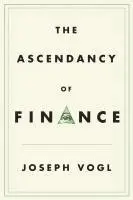
    Ascendancy of Finance

    AvJoseph Vogl

    Häftad, Engelska, 2017

    247 kr

    Beställningsvara. Skickas inom 5-8 vardagar. Fri frakt över 249 kr.

    Fler format och utgåvor

    Inbunden

    764 kr

    E-bok

    260 kr

    Beskrivning

    The global financial crisis of 2008 ushered in a system of informal decision-making in the grey zone between economics and politics. Legitimized by a rhetoric of emergency, ad hoc bodies have usurped democratically elected governments. In line with the neoliberal credo, the recent crisis has been used to realize the politically impossible and to re-align executive power with the interests of the finance industry. In this important book, Joseph Vogl offers a much longer perspective on these developments, showing how the dynamics of modern finance capitalism have always rested on a complex and constantly evolving relationship between private creditors and the state. Combining historical and theoretical analysis, Vogl argues that over the last three centuries, finance has become a "fourth estate," marked by the systematic interconnection of treasury and finance, of political and private economic interests. Against this historical background, Vogl explores the latest phase in the financialization of government, namely the dramatic transfer of power from states to markets in the latter half of the 20th century. From the liberalization of credit and capital markets to the privatization of social security, he shows how policy has actively enabled a restructuring of the economy around the financial sector. Political systems are "imprisoned" by the regime of finance, while the corporate model suffuses society, enclosing populations in the production of financial capital. The Ascendancy of Finance provides valuable and unsettling insight into the genesis of modern power and where it truly resides.

    Produktinformation

    • Utgivningsdatum:2017-05-12
    • Mått:137 x 213 x 18 mm
    • Vikt:318 g
    • Format:Häftad
    • Språk:Engelska
    • Antal sidor:200
    • Förlag:Polity Press
    • ISBN:9781509509300
    • Översättare:Simon Garnett

    Utforska kategorier

    • Ekonomisk politik inom Ekonomi och Ledarskap
    • Finanskriser inom Ekonomi och Ledarskap

    Mer om författaren

    Joseph Vogl is Professor of Modern German Literature, Literary, Media and Cultural Studies at the Humboldt University of Berlin. He is also permanent Visiting Professor at Princeton University.

    Recensioner i media

    "Who is sovereign in the modern state? working like a detective to trace the historical roots of the current financial and budgetary crisis and the interplay between markets and government action, Joseph Vogl gives a politically explosive answer to this question." —Jury, Leipzig Bookfair Prize"A bold and clever treatise on political economy... A lively debate of the issues raised by this book would be greatly welcomed, being in its essence a debate about the image of the West... and how we might live under great fiscal uncertainty." —Suddeutsche Zeitung"With stunning erudition Vogl explores the dark corners of the neoliberal political economy, where states fuse with finance and the public power is simultaneously marketized and de-democratized. Anchored in a concise history of the modern state and its claims to sovereignty, Vogl's analysis focuses on the strangest creation of modern capitalism, money." —Wolfgang Streeck, emeritus director, Max Planck Institute for the Study of Societies, Cologne"It is no overstatement to call this book groundbreaking. In The Ascendancy of Finance, Joseph Vogl recasts nearly half a millennia of economic history to argue that the symbiosis of the finance and political spheres is longstanding, and that the informalization of policy-making, as seen most dramatically in 2008, threatens to bypass democracy. Indispensable reading, and, in these tumultuous times, the Ascendancy of Finance is both illuminating and chilling." —Janine Wedel, George Mason University‘In elegant historical-institutionalist fashion, Vogl recounts the long story of modern money’s development, tracing the co-evolution of sovereign states and financial markets—each needing the other in defence of its own credit and credibility.' —New Left Review

    Innehållsförteckning

    • ContentsPrefaceChapter oneFunctional dedifferentiationChapter twoEconomy and governmentChapter threeSeigniorial powerChapter fourApotheosis of financeChapter fiveFourth powerChapter sixReserves of sovereigntyNotesFigure creditsIndex