• Fri frakt över 249 kr
  • •
  • Snabba leveranser
  • •
  • Billiga böcker
Kundservice

Du är på sajten för privatpersoner.

Företag, bibliotek eller offentlig verksamhet?

Du handlar på classic.bokus.com, där alla dina funktioner finns intakta.
Till classic.bokus.com
Bokus logotyp. Gå till startsidan.
  • Erbjudanden
  • Student
  • Topplistor
  • Barn & ungdom
  • Bokus Play
  • E-böcker
  • Ljudböcker
  • Pocketböcker
  • Spel och pussel

Pocketfynda! Hundratals böcker för 49 kr/st →

Sidfot

Mina sidor

    Hjälp

    • Kundservice
    • Vanliga frågor och svar
    • Frakt och leverans
    • Retur vid ångerrätt
    • Reklamera vara
    • Betalning
    • Köpvillkor
    • Allmänna villkor
    • Information om webbplatsens tillgänglighet

    Om Bokus

    • Om oss
    • Pressrum
    • För studenter
    • För företag
    • För bibliotek och offentlig verksamhet
    • För leverantörer
    • Hållbarhet

    Populärt

    • Aktuella erbjudanden
    • Presentkort
    • Studentlitteratur
    • Nya böcker
    • Topplistor
    • Signerade böcker
    • Engelska böcker

    Inspiration

    • Boktips
    • BookTok
    • Barnbokskaraktärer
    • Populära författare
    Logotyp för Bokus
    Följ oss på Facebook (extern länk)Följ oss på Instagram (extern länk)Följ oss på YouTube (extern länk)Följ oss på TikTok (extern länk)
    bokus @ CookiesAnpassa cookiesIntegritetspolicyKöpvillkor
    Till Citymail hemsida (extern länk)Till Budbee hemsida (extern länk)Till Postnord hemsida (extern länk)Till Schenker hemsida (extern länk)Till Early Bird hemsida (extern länk)Till Walleys hemsida (extern länk)
    1. Juridik
    2. Rättsvetenskap

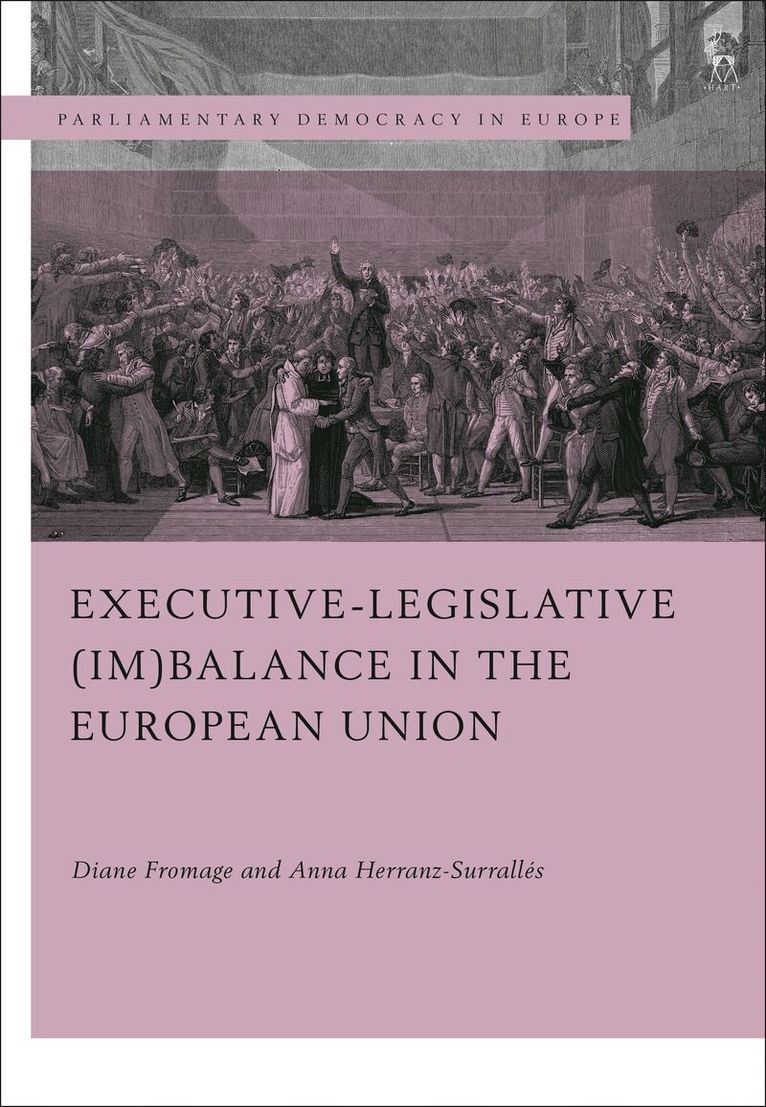
    Executive-legislative (Im)balance in the European Union

    AvDiane Fromage,Anna Herranz-Surrallés

    Inbunden, Engelska, 2021

    Del i serien Parliamentary Democracy in Europe

    1 405 kr

    Beställningsvara. Skickas inom 10-15 vardagar. Fri frakt över 249 kr.

    Beskrivning

    Ten years after the entry into force of the Lisbon Treaty, has executive predominance in EU-related matters disappeared? How have executive-legislative relations in the EU evolved over a crisis-ridden decade, from the financial and migration crises, to Brexit and the COVID-19 pandemic?The Lisbon Treaty could be expected to lead to the re-balancing of powers in favour of parliaments, for it significantly enhanced the roles of both the European Parliament and national parliaments. A decade later the contributions to this edited volume examine – for the first time in such an extensive breadth and from a multi-level and cross-policy perspective – whether this has actually materialised. They highlight that diverging tendencies may be observed, and that important variations over time have occurred, depending particularly on the occurrence of crises. As stated in the fascinating epilogue by Peter Lindseth (University of Connecticut School of Law), this is an ‘admirably coherent collective volume, whose contributions provide an excellent overview of key aspects of executive-legislative relations in the European system since the Treaty of Lisbon’. This edited volume will hence be of interest to both academics and practitioners interested in future reforms designed at the European and national levels to improve the EU’s democratic quality.

    Produktinformation

    • Utgivningsdatum:2021-02-11
    • Mått:169 x 244 x undefined mm
    • Vikt:767 g
    • Format:Inbunden
    • Språk:Engelska
    • Serie:Parliamentary Democracy in Europe
    • Antal sidor:360
    • Förlag:Bloomsbury Publishing PLC
    • ISBN:9781509930005

    Utforska kategorier

    • Rättsvetenskap inom Juridik

    Mer om författaren

    Diane Fromage is Assistant Professor of EU Law and Anna Herranz-Surrallés is Associate Professor of International Relations, both at Maastricht University.

    Recensioner i media

    It is the great strength of this edited volume that it offers such invaluable input – based on excellent empirical work – for addressing … normative and conceptual questions and for putting them in the right light. I am therefore certain it will find its way in the broad field of EU Legal Studies and Governance. But I hope the book will do more than that. I hope it will equally benefit the work of the Conference on the Future of the EU.

    Innehållsförteckning

    • Introduction: Executive–Legislative (Im)balance in the European UnionDiane Fromage, Maastricht University, The Netherlands, and Anna Herranz-Surralles Maastricht University, The Netherlands PART IEXECUTIVE–LEGISLATIVE RELATIONS FROM A MULTI-LEVEL PERSPECTIVE1. Recalibration of Executive–Legislative Relations in the European Union: Strategies Inspired by the Trilemma of Democracy, Sovereignty and Integration Peter Bursens, University of Antwerp, Belgium2. The Anticipation Function of Interinstitutional Agreements: A Smooth Mechanism to Recalibrate Executive–Legislative Relations Marco Urban, University of Lausanne, Switzerland3. Divided Accountability of the Council and the European Council: The Challenge of Collective Parliamentary Oversight Elena Griglio, LUISS Guido Carli University, Italy4. Executive–Legislative Relations and Delegated Powers in the European Union: Continuous Recalibration? Thomas Christiansen, LUISS Guido Carli University, Italy, and Sabina Lange, University of Ljubljana, SloveniaPART IIEXECUTIVE–LEGISLATIVE (IM)BALANCE WITHIN MEMBER STATES5. The Implementation of EU Law in Member States and its Impact on the Relationship between Parliaments and Governments Diane Fromage, Maastricht University, The Netherlands6. National Strategies of EU Law Transposition: Does the Distinction between Legislative and Executive Measures Matter in Practice? Robert Zbiral, Masaryk University, Czech Republic, and Jan Grinc, Charles University, Czech Republic7. Failed Constitutional Reforms and Silent Constitutional Transformations in Executive–Legislative Relations: The Case of Italy Nicola Lupo, LUISS Guido Carli University, Italy8. Short-Lived Reparliamentarisation? A Year of Eff orts to ‘Take Back Control’ from the Executive in the Brexit House of Commons Kathryn Wright, University of York, UKPART IIIEXECUTIVE–LEGISLATIVE (IM)BALANCE AND VARIATIONS ACROSS POLICY AREAS9. How the Debates on Trade Policy Helped Rebalance the Executive–Legislative Relationship in Favour of the European Parliament Peter Marton, New Zealand Mission to the EU in Brussels, Belgium10. A Temporary Recalibration of Executive–Legislative Relations on EU Trade Agreements? The Case of National and Regional Parliaments on CETA and TTIP Cristina Fasone, LUISS Guido Carli University, Italy, and Maria Romaniello, IMT School for Advanced Studies Lucca, Italy11. Exploring Interaction between National Parliaments and the European Parliament in EU Trade Policy Katharina L Meissner, University of Vienna, Austria, and Guri Rosen, Oslo Metropolitan University, Norway12. The European Parliament’s Role in the Operation of Trade Agreements: Parliamentary Control and Executive – Legislative Balance in External Action Wolfgang Weiß, German University of Administrative Sciences Speyer, Germany13. Representative Democracy in Financial Crisis Governance: New Challenges in the EU Multi-level System Claudia Wiesner, Fulda University of Applied Sciences, Germany14. Towards the ‘ Normalisation ’ of Security? Executive– Legislative Relations in an Expanding EU Security and Defence Policy Anna Herranz-Surralles, Maastricht University, The Netherlands15. The Balance of Powers and the EU’s Common Foreign and Security Policy Graham Butler, Aarhus University, Denmark16. All Buzz, No Bite: The Parliamentarisation of the Area of Freedom, Security and Justice Angela Tacea, Vrije Universiteit Brussel, Belgium17. Epilogue: Executives, Legislatures and the Semantics of EU Public Law: A Pandemic-Inflected Perspective Peter L Lindseth, University of Connecticut, USA