• Fri frakt över 249 kr
  • •
  • Snabba leveranser
  • •
  • Billiga böcker
Kundservice

Du är på sajten för privatpersoner.

Företag, bibliotek eller offentlig verksamhet?

Du handlar på classic.bokus.com, där alla dina funktioner finns intakta.
Till classic.bokus.com
Bokus logotyp. Gå till startsidan.
  • Erbjudanden
  • Nyheter
  • Student
  • Topplistor
  • Barn & ungdom
  • Bokus Play
  • E-böcker
  • Pocketböcker
  • Spel & pussel

10% rabatt på allt med kod: NYSTART10 →

Sidfot

Mina sidor

    Hjälp

    • Kundservice
    • Vanliga frågor och svar
    • Frakt och leverans
    • Retur vid ångerrätt
    • Reklamera vara
    • Betalning
    • Köpvillkor
    • Allmänna villkor
    • Information om webbplatsens tillgänglighet

    Om Bokus

    • Om oss
    • Pressrum
    • För studenter
    • För företag
    • För bibliotek och offentlig verksamhet
    • För leverantörer
    • Hållbarhet

    Populärt

    • Aktuella erbjudanden
    • Presentkort
    • Studentlitteratur
    • Nya böcker
    • Topplistor
    • Signerade böcker
    • Engelska böcker

    Inspiration

    • Boktips
    • BookTok
    • Populära bokserier
    • Barnbokskaraktärer
    • Populära författare
    Logotyp för Bokus
    Följ oss på Facebook (extern länk)Följ oss på Instagram (extern länk)Följ oss på YouTube (extern länk)Följ oss på TikTok (extern länk)
    bokus @ CookiesAnpassa cookiesIntegritetspolicyKöpvillkor
    Till Citymail hemsida (extern länk)Till Budbee hemsida (extern länk)Till Postnord hemsida (extern länk)Till Schenker hemsida (extern länk)Till Early Bird hemsida (extern länk)Till Walleys hemsida (extern länk)
    1. Juridik
    2. Rättsvetenskap

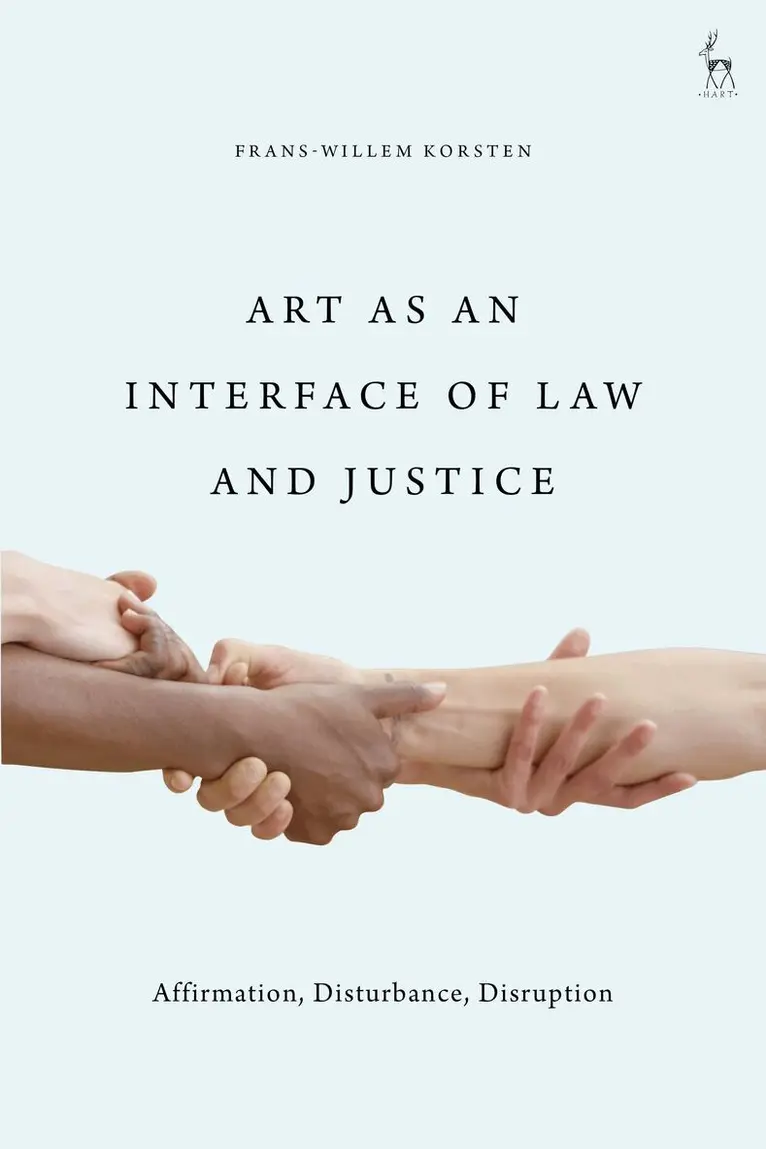
    Art as an Interface of Law and Justice

    Affirmation, Disturbance, Disruption

    AvFrans-Willem Korsten

    Häftad, Engelska, 2022

    491 kr

    Beställningsvara. Skickas inom 10-15 vardagar. Fri frakt över 249 kr.

    Fler format och utgåvor

    Inbunden

    1 028 kr

    E-bok

    528 kr

    E-bok

    511 kr

    Beskrivning

    This book looks at the way in which the ‘call for justice’ is portrayed through art and presents a wide range of texts from film to theatre to essays and novels to interrogate the law. ‘Calls for justice’ may have their positive connotations, but throughout history most have caused annoyance. Art is very well suited to deal with such annoyance, or to provoke it. This study shows how art operates as an interface, here, between two spheres: the larger realm of justice and the more specific system of law. This interface has a double potential. It can make law and justice affirm or productively disturb one another. Approaching issues of injustice that are felt globally, eight chapters focus on original works of art not dealt with before, including Milo Rau’s The Congo Tribunal, Elfriede Jelinek’s Ulrike Maria Stuart, Valeria Luiselli’s Tell Me How It Ends and Nicolas Winding Refn’s Only God Forgives. They demonstrate how through art’s interface, impasses are addressed, new laws are made imaginable, the span of systems of laws is explored, and the differences in what people consider to be just are brought to light. The book considers the improvement of law and justice to be a global struggle and, whilst the issues dealt with are culture-specific, it argues that the logics introduced are applicable everywhere.

    Produktinformation

    • Utgivningsdatum:2022-10-20
    • Mått:154 x 232 x 16 mm
    • Vikt:340 g
    • Format:Häftad
    • Språk:Engelska
    • Antal sidor:272
    • Förlag:Bloomsbury Publishing PLC
    • ISBN:9781509944385

    Utforska kategorier

    • Rättsvetenskap inom Juridik
    • Underhållning och media: Juridik inom Juridik

    Mer om författaren

    Frans-Willem Korsten holds the chair in 'Literature and Society' at the Erasmus School of Philosophy and is working at the Leiden University Centre for the Arts in Society in the Netherlands.

    Recensioner i media

    A thought-provoking and well-considered book that builds toward a general theory of law and justice but that is also able to include in-depth analyses of multiple different literary/artistic works that span genres.

    Innehållsförteckning

    • 1. Art as the Interface of Law and Justice: From Annoyance to an Ethics of Affirmation I. Law – Justice and Art as Interface II. System, Realm and Two Kinds of Logic: Affirmation and DisturbanceIII. ‘Thirds’: Forces of Disruption and Impasse IV. In Defence of Law, as a Defence of Justice V. Art, Annoyance and an Ethics of Affirmation 2. Logic of Fear vs Logic of Desire: Milo Rau’s The Congo Tribunal and the Care for Law I. Absent Rule of Law and the Potential in Art’s Interface II. Law’s Genesis, Fear of Law and the Nature of Courts III. Apathy: The Threat to Law and Justice IV. Theatre and Drama: Dunamis and the Judicial Mise-en-scene V. The Care for Law: Jurisannihilatio and Juriscaritas 3. Logic of Tragedy vs Logic of Comedy: Elfriede Jelinek’s Ulrike Maria Stuart and Princess-dramas: Death and the Maiden I. Open or Closed: Tragedy, Comedy, Impasse II. Culture-text and the Cohabitation of Symbolic Order and Law III. Mary Stuart and Ulrike Meinhof: Law’s Domesticity and Mystery IV. The Weight of Law’s Architectonic: Sovereignty 4. Logic of the Official vs Logic of the Officious: The Force in Form and Forum in Valeria Luiselli’s Tell Me How It Ends and Lost Children Archive I. Officious: Meddlesome, Informal, Obliging, Passionate II. Data Subjects: Records, Documents and Form III. Öffentlichkeit, Publicity and Forum IV. The Destructive Fictitious and the Test of Fiction: Forensic Architecture 5. Logic of Personhood vs Logic of Self: Threat of Packs in Vondel’s ‘Water-wolf’ and the Shift of Commons into Property I. Personhood, Self, Pack and the Legal Need for Dissection II. The Art of Mapping: From Centralisation to Ecological Territorialisation III. Waters as Wolf Packs: Tropes of Infuriation IV. The Veil of Irresponsibility, New Persons, New Selves 6. Logic of Completion vs Logic of Antinomy: Corruption and Well-being from Marek Hlasko, to Chibundu Onuzo, to the American Suburban Grass Turf and Fritz Haeg I. Corruption, Law’s Completion and Antinomy II. ‘It’s Not Me’: A Culture of Corruption III. Functional Corruption and the Proper IV. Corruption in an Ecological Context: Needs for an Antinomian Response 7. Logic of Violence vs Logic of Empathy: Justice and Law in Chiasmus through George Eliot’s Daniel DerondaI. The Political in Justice: Interests and Just Law II. Two Modes of Wilfulness and the Chiasmus of Law and Justice III. Obliviousness and the Grey Area between Law and Justice IV. Divisive Empathy, Cohesive Violence 8. Logic of Reason vs Logic of Dream: Epistemic Authority, Habeas Corpus, Hallucination – Nicholas Refn’sOnly God Forgives I. Reason, Dream and Disruptive Hallucination II. Epistemic Authority and Deviant Investigators in Times of Multiple Insurgencies III. Habeas Corpus: Historical Struggles for a Common Ground IV. Familiar Orders and Current Unchecked Powers