Frans-Willem Korsten - Böcker
Visar alla böcker från författaren Frans-Willem Korsten. Handla med fri frakt och snabb leverans.
11 produkter
11 produkter
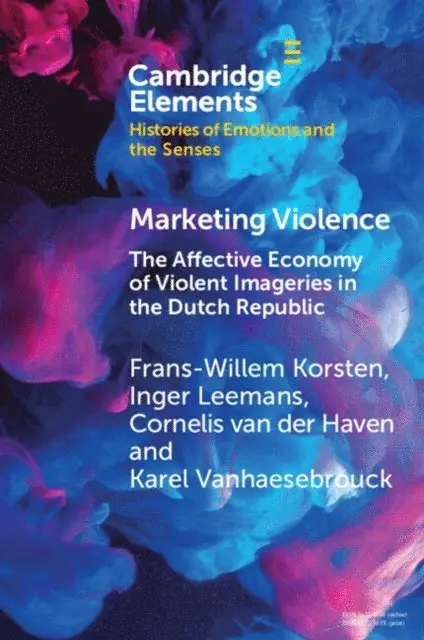
Marketing Violence
The Affective Economy of Violent Imageries in the Dutch Republic
Häftad, Engelska, 2023
241 kr
Skickas inom 7-10 vardagar
This Element describes the development of an affective economy of violence in the early modern Dutch Republic through the circulation of images. The Element outlines that while violence became more controlled in the course of the 17th century, with fewer public executions for instance, the realm of cultural representation was filled with violent imagery: from prints, atlases and paintings, through theatres and public spectacles, to peep boxes. It shows how emotions were evoked, exploited, and controlled in this affective economy of violence based on desires, interests and exploitation. This title is also available as Open Access on Cambridge Core.
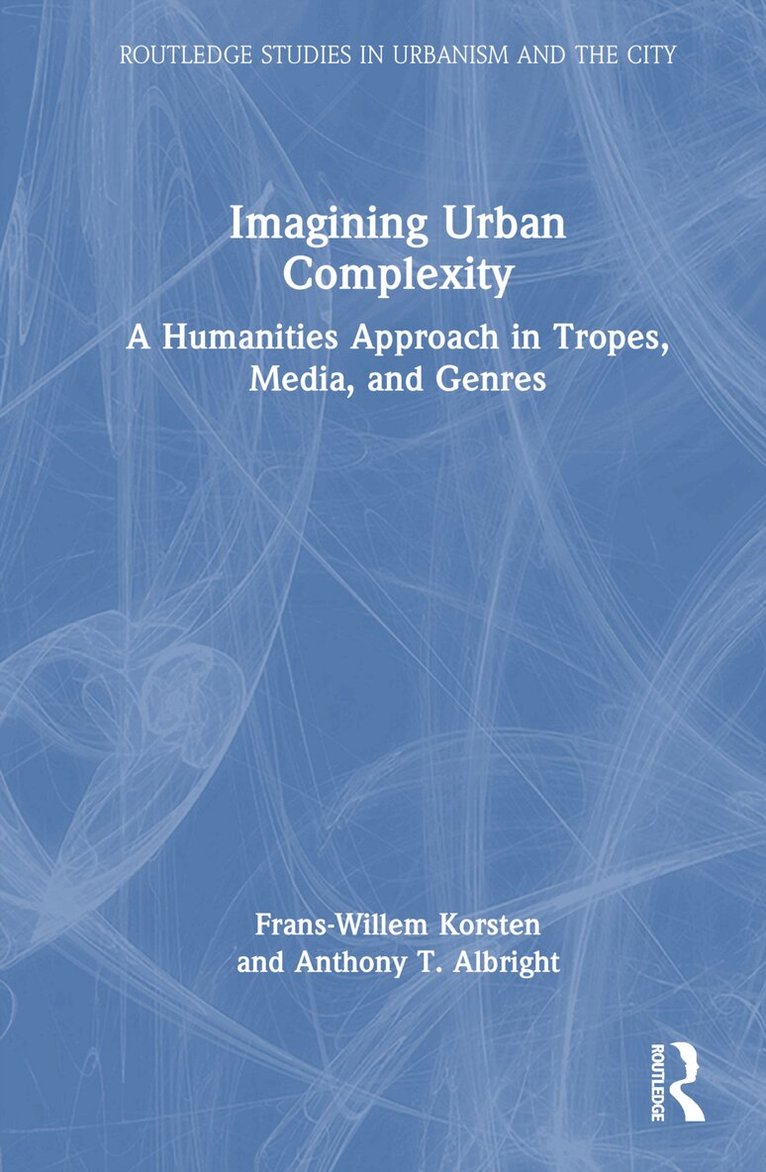
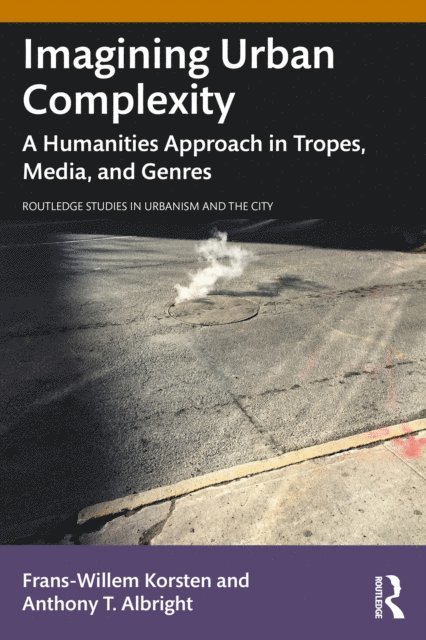
Imagining Urban Complexity
A Humanities Approach in Tropes, Media, and Genres
Inbunden, Engelska, 2024
2 088 kr
Skickas inom 10-15 vardagar
Imagining Urban Complexity introduces passionate and critical perspectives on the link between the humanities and urban studies. It emphasizes tropes, media, and genres as cultural techniques that shape complexity in urban environments by distributing affordances, modes of sensing, and modes of sense-making.Focusing on urban political and cultural dynamics in 24 global cities, the book shows that urban environments are thematized in literature and art, but are also entities that are shaped, perceived, interpreted, and experienced through sense-making techniques that have long been central concerns of the humanities. These techniques, the book argues, activate a dialectic between urban imaginations and cancellations. Tropes, media, and genres are aesthetically and politically powerful: they propel imaginations and open up multiplicities of urban possibilities, they naturalize actualized orders, and they cancel alternatives. The book moves between close readings of city spaces and more systemic and infrastructural approaches to urban environments, providing tools and strategies that can be adapted and extended to understand urban complexity in different cultural and political contexts.The book speaks to global audiences from a continental philosophical tradition. It is relevant to undergraduates, postgraduates, and academic researchers in the fields of critical urban studies, urban design, comparative literature, cultural studies, cultural analysis, ecocriticism, political theory, and ethics.
563 kr
Skickas inom 10-15 vardagar
Imagining Urban Complexity introduces passionate and critical perspectives on the link between the humanities and urban studies. It emphasizes tropes, media, and genres as cultural techniques that shape complexity in urban environments by distributing affordances, modes of sensing, and modes of sense-making.Focusing on urban political and cultural dynamics in 24 global cities, the book shows that urban environments are thematized in literature and art, but are also entities that are shaped, perceived, interpreted, and experienced through sense-making techniques that have long been central concerns of the humanities. These techniques, the book argues, activate a dialectic between urban imaginations and cancellations. Tropes, media, and genres are aesthetically and politically powerful: they propel imaginations and open up multiplicities of urban possibilities, they naturalize actualized orders, and they cancel alternatives. The book moves between close readings of city spaces and more systemic and infrastructural approaches to urban environments, providing tools and strategies that can be adapted and extended to understand urban complexity in different cultural and political contexts.The book speaks to global audiences from a continental philosophical tradition. It is relevant to undergraduates, postgraduates, and academic researchers in the fields of critical urban studies, urban design, comparative literature, cultural studies, cultural analysis, ecocriticism, political theory, and ethics.
1 921 kr
Skickas inom 10-15 vardagar
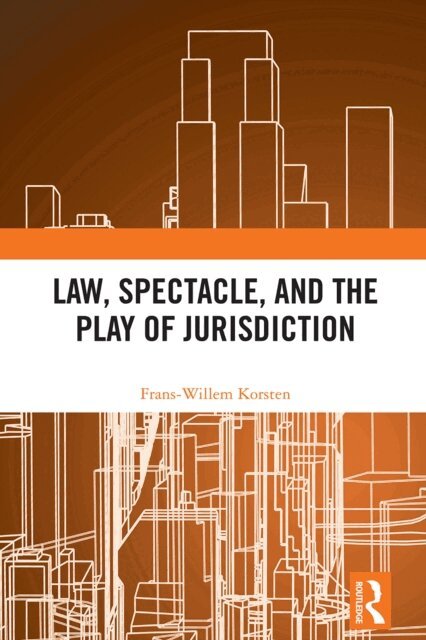
This book offers a critical reconsideration of the theatrical nature of jurisdiction, as it examines how legal proceedings are regularly framed by or turned into a public spectacle.In legal cases, all those involved must play their parts, according to the rules, on a stage that is open to public scrutiny. As this book demonstrates, however, the affordances offered by new media, in a society spellbound by spectacle and embroiled in the polarization that accompanies it, can easily disrupt the theatrical nature of the court case. The book is divided into two parts. In Part 1, cases – from the Netherlands, the United States, Italy, Brazil, India, Germany, and Russia – show how populists, insurgents, corporations, and states play the judiciary by probing its limits or the rules of the game, often by twisting the proper intent of legal regulation or by formally making a farce of jurisdiction. In Part 2, the chapters deal with weaknesses in the theatrical nature of the judiciary in a time of spectacle. Here, the central issue is how the judiciary is threatened by dramatic forms of excess: forms that exceed the frame and stage of jurisdiction’s own theatricality. Bringing cultural analysis and play studies in conversation with legal analysis and legal philosophy, the book shows how the theatrical nature of the judiciary is more and more challenged by the force of the spectacular, and with it a strategic and tactically malevolent play of powerful actors that fragments collective feelings for justice, and instrumentalizes the law in the service of particular interests.Law, Spectacle, and the Play of Jurisdiction will appeal to scholars and students in legal theory, law and literature, and others with relevant interests in politics, media, theatre and cultural studies.
2 150 kr
Skickas inom 10-15 vardagar
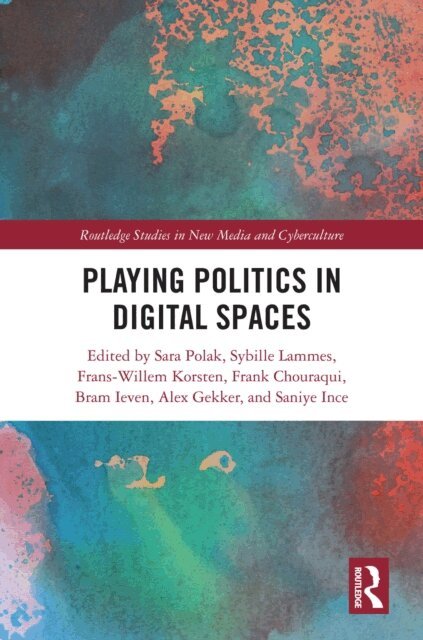
Playing Politics in Digital Spaces offers a timely analysis of play and politics woven together to imagine and enact new worlds, democratic and reactionary alike.Bringing together media and philosophical insights into the concepts of play, politics and worlding (or world-making), the book highlights the dual potential of play-politics for both oppression and liberation. Through theoretical and cultural-historical perspectives on the emergence and repercussions of a post-digital “radical uncertainty”, the book allows readers to understand how play has become a crucial component of contemporary politics. It examines this through an array of diverse cases, from different places and scale.This book will interest scholars and students from media studies, philosophy, cultural studies, games and play studies, and political theory and philosophy, and will be valuable for other stakeholders including policy-makers, politicians, journalists, game designers, activists and NGOs.
649 kr
Skickas inom 10-15 vardagar
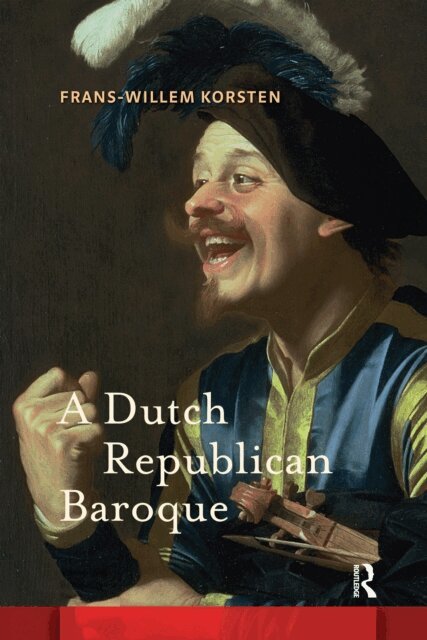
In the Dutch Republic, in its Baroque forms of art, two aesthetic formal modes, theatre and drama, were dynamically related to two political concepts, event and moment. The Dutch version of the Baroque is characterised by a fascination with this world regarded as one possibility out of a plurality of potential worlds. It is this fascination that explains the coincidence in the Dutch Republic, strange at first sight, of Baroque exuberance, irregularity, paradox, and vertigo with scientific rigor, regularity, mathematical logic, and rational distance. In giving a new historical perspective on the Baroque as a specifically Dutch republican one, this study also offers a new and systematic approach towards the interactions among the notions of theatricality, dramatisation, moment, and event: concepts that are currently at the centre of philosophical and political debates but the modern articulation of which can best be considered in the explorations of history and world in the Dutch Republic.
990 kr
Skickas inom 10-15 vardagar
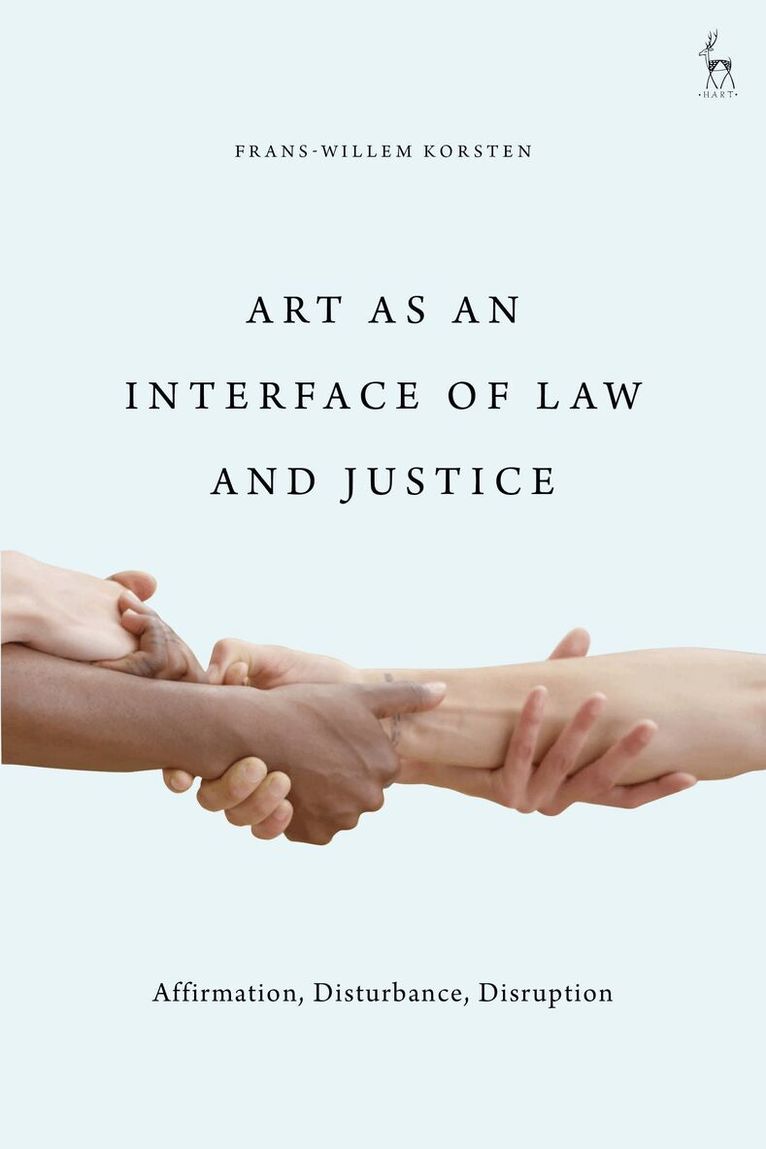
This book looks at the way in which the ‘call for justice’ is portrayed through art and presents a wide range of texts from film to theatre to essays and novels to interrogate the law. ‘Calls for justice’ may have their positive connotations, but throughout history most have caused annoyance. Art is very well suited to deal with such annoyance, or to provoke it. This study shows how art operates as an interface, here, between two spheres: the larger realm of justice and the more specific system of law. This interface has a double potential. It can make law and justice affirm or productively disturb one another. Approaching issues of injustice that are felt globally, eight chapters focus on original works of art not dealt with before, including Milo Rau’s The Congo Tribunal, Elfriede Jelinek’s Ulrike Maria Stuart, Valeria Luiselli’s Tell Me How It Ends and Nicolas Winding Refn’s Only God Forgives. They demonstrate how through art’s interface, impasses are addressed, new laws are made imaginable, the span of systems of laws is explored, and the differences in what people consider to be just are brought to light. The book considers the improvement of law and justice to be a global struggle and, whilst the issues dealt with are culture-specific, it argues that the logics introduced are applicable everywhere.
473 kr
Skickas inom 10-15 vardagar
This book looks at the way in which the ‘call for justice’ is portrayed through art and presents a wide range of texts from film to theatre to essays and novels to interrogate the law. ‘Calls for justice’ may have their positive connotations, but throughout history most have caused annoyance. Art is very well suited to deal with such annoyance, or to provoke it. This study shows how art operates as an interface, here, between two spheres: the larger realm of justice and the more specific system of law. This interface has a double potential. It can make law and justice affirm or productively disturb one another. Approaching issues of injustice that are felt globally, eight chapters focus on original works of art not dealt with before, including Milo Rau’s The Congo Tribunal, Elfriede Jelinek’s Ulrike Maria Stuart, Valeria Luiselli’s Tell Me How It Ends and Nicolas Winding Refn’s Only God Forgives. They demonstrate how through art’s interface, impasses are addressed, new laws are made imaginable, the span of systems of laws is explored, and the differences in what people consider to be just are brought to light. The book considers the improvement of law and justice to be a global struggle and, whilst the issues dealt with are culture-specific, it argues that the logics introduced are applicable everywhere.
3 831 kr
Skickas inom 5-8 vardagar
1 735 kr
Skickas inom 10-15 vardagar
In the Dutch Republic, in its Baroque forms of art, two aesthetic formal modes, theatre and drama, were dynamically related to two political concepts, event and moment. The Dutch version of the Baroque is characterised by a fascination with this world regarded as one possibility out of a plurality of potential worlds. It is this fascination that explains the coincidence in the Dutch Republic, strange at first sight, of Baroque exuberance, irregularity, paradox, and vertigo with scientific rigor, regularity, mathematical logic, and rational distance. In giving a new historical perspective on the Baroque as a specifically Dutch republican one, this study also offers a new and systematic approach towards the interactions among the notions of theatricality, dramatisation, moment, and event: concepts that are currently at the centre of philosophical and political debates but the modern articulation of which can best be considered in the explorations of history and world in the Dutch Republic.
292 kr
Skickas inom 10-15 vardagar
This book argues that people live a culture – which may explain why they are so affectively attached to it. By considering cultural interactions on a global scale, it investigates how cultures can be understood in terms of conflict and cooperation, in relation to the nation-state, a multiplicity of worlds, society, civilization and community.