• Fri frakt över 249 kr
  • •
  • Snabba leveranser
  • •
  • Billiga böcker
Kundservice

Du är på sajten för privatpersoner.

Företag, bibliotek eller offentlig verksamhet?

Du handlar på classic.bokus.com, där alla dina funktioner finns intakta.
Till classic.bokus.com
Bokus logotyp. Gå till startsidan.
  • Erbjudanden
  • Nyheter
  • Student
  • Topplistor
  • Barn & ungdom
  • Bokus Play
  • E-böcker
  • Pocketböcker
  • Spel & pussel

10% rabatt på allt med kod NYSTART10 →

Sidfot

Mina sidor

    Hjälp

    • Kundservice
    • Vanliga frågor och svar
    • Frakt och leverans
    • Retur vid ångerrätt
    • Reklamera vara
    • Betalning
    • Köpvillkor
    • Allmänna villkor
    • Information om webbplatsens tillgänglighet

    Om Bokus

    • Om oss
    • Pressrum
    • För studenter
    • För företag
    • För bibliotek och offentlig verksamhet
    • För leverantörer
    • Hållbarhet

    Populärt

    • Aktuella erbjudanden
    • Presentkort
    • Studentlitteratur
    • Nya böcker
    • Topplistor
    • Signerade böcker
    • Engelska böcker

    Inspiration

    • Boktips
    • BookTok
    • Populära bokserier
    • Barnbokskaraktärer
    • Populära författare
    Logotyp för Bokus
    Följ oss på Facebook (extern länk)Följ oss på Instagram (extern länk)Följ oss på YouTube (extern länk)Följ oss på TikTok (extern länk)
    bokus @ CookiesAnpassa cookiesIntegritetspolicyKöpvillkor
    Till Citymail hemsida (extern länk)Till Budbee hemsida (extern länk)Till Postnord hemsida (extern länk)Till Schenker hemsida (extern länk)Till Early Bird hemsida (extern länk)Till Walleys hemsida (extern länk)
    1. Biografier
    2. Biografier

    William Blake's Gothic Imagination

    Bodies of Horror

    AvChris Bundock,Elizabeth Effinger

    Inbunden, Engelska, 2018

    927 kr

    Skickas . Fri frakt över 249 kr.

    Beskrivning

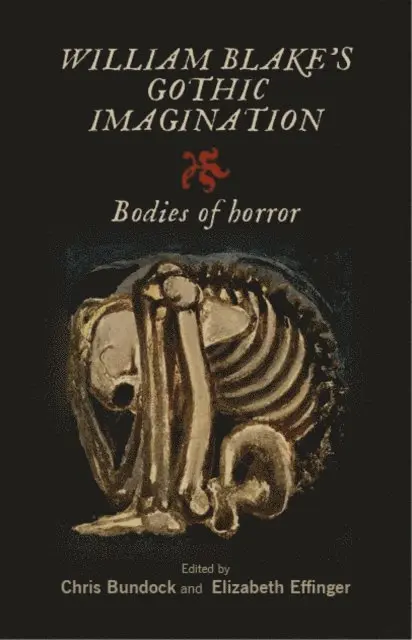
    Scholars of the Gothic have long recognised Blake’s affinity with the genre. Yet, to date, no major scholarly study focused on Blake’s intersection with the Gothic exists. William Blake’s gothic imagination seeks to redress this disconnect. The papers here do not simply identify Blake’s Gothic conventions but, thanks to recent scholarship on affect, psychology, and embodiment in Gothic studies, reach deeper into the tissue of anxieties that take confused form through this notoriously nebulous historical, aesthetic, and narrative mode. The collection opens with papers touching on literary form, history, lineation, and narrative in Blake’s work, establishing contact with major topics in Gothic studies. Then refines its focus to Blake’s bloody, nervous bodies, through which he explores various kinds of Gothic horror related to reproduction, anatomy, sexuality, affect, and materiality. Rather than transcendent images, this collection attends to Blake’s ‘dark visions of torment’.
    Produktinformation

    • Utgivningsdatum:2018-04-12
    • Mått:138 x 216 x 19 mm
    • Vikt:508 g
    • Format:Inbunden
    • Språk:Engelska
    • Antal sidor:312
    • Förlag:Manchester University Press
    • ISBN:9781526121943

    Utforska kategorier

    • Biografier inom Biografier
    • Litteraturvetenskap inom Skönlitteratur

    Mer om författaren

    Chris Bundock is Assistant Professor of English at the University of Regina Elizabeth Effinger is Assistant Professor of English at the University of New Brunswick

    Recensioner i media

    ‘These essays investigate how Blake’s major texts—e.g., Jerusalem, The Marriage of Heaven and Hell, The [First] Book of Urizen, and Visions of the Daughters of Albion—arose in conjunction with the Gothic novel in English literature. Addressing a little-recognized facet of Blake studies, the collection examines Blake’s works from aesthetic, architectural, and political Gothic perspectives. A lucid and accessible introduction precedes the essays, which will stretch nonspecialist readers. Several essays focus on Blake’s visual content: David Baulch’s entry reads Gothic iconography in the illustrations of Blake’s Jerusalem, and Jason Whittaker analyzes Blakean references in films by Ridley Scott, with an emphasis on Prometheus. Peter Otto finds the political and social upheavals of Gothic novels to be similarly contained in Blake’s monstrous present with horrified reactions to the alien bodies in The Book of Urizen. Other essays address philosophical readings of Blake’s Deleuzian multiplicity and his counter-Kantian sublime with sophisticated subtlety. This collection is not for the fainthearted, but neither is Blake. Psychological, mythological, and sociological, this collection will draw the reader into the many layers of Blake’s verbal and visual media.’C. L. Bandish, Bluffton University‘William Blake’s Gothic Imagination is more than it promises to be – a ‘major scholarly study focused on Blake’s intersections with the Gothic’ – it is a landmark in Blake scholarship. While many of us may be familiar with Blake’s popular reception, reading Blake’s art through the lens of the Gothic is a relatively new and rewarding critical undertaking.’ Sibylle Erle Bishop Grosseteste University, British Association of Romantic Studies‘An ambitious and expansive volume, Bundock and Effinger have opened a new field of enquiry relevant to Blake studies, gothic scholarship, and the broader field of aesthetic theory, particularly as it relates to political power and sexuality. It is to be hoped that their call for further scholarship into the intersection of Blakean verse and gothic horror will not go unanswered.’Eighteenth-Century Fiction'Such uncanny moments of uncomfortable intimacy occur throughout Bundock and Effinger’s collection and point to a fascinating, if sometimes unconscious, self-reflexivity that is not often found in many historicist analyses of Blake’s work.’European Romantic Review

    Innehållsförteckning

    • Introduction – Chris Bundock and Elizabeth Effinger Part I: The bounding line of Blake’s Gothic: forms, genres, and contexts1. ‘Living Form’: William Blake’s Gothic relations – David Baulch2. The horror of Rahab: towards an aesthetic context for William Blake’s ‘Gothic’ form – Kiel Shaub3. The Gothic sublime – Claire ColebrookPart II: The misbegotten 4. Dark angels: Blake, Milton, and Lovecraft in Ridley Scott’s Prometheus – Jason Whittaker5. William Blake’s monstrous progeny: anatomy and the birth of horror in The [First] Book of Urizen – Lucy Cogan6. Blake’s Gothic humour: the spectacle of dissection – Stephanie CodsiPart III: Female space and the image7. The horrors of creation: globes, englobing powers, and Blake’s archaeologies of the present – Peter Otto8. Female spaces and the Gothic imagination in The Book of Thel and Visions of the Daughters of Albion – Ana Elena González-TreviñoPart IV: Sex, desire, perversion 9. The horrors of subjectivity/the jouissance of immanence – Mark Lussier10. ‘Terrible Thunders’ and ‘Enormous Joys’: potency and degeneracy in Blake's Visions and James Graham's celestial bed – Tristanne ConnollyBibliography Index