• Fri frakt över 249 kr
  • •
  • Snabba leveranser
  • •
  • Billiga böcker
Kundservice

Du är på sajten för privatpersoner.

Företag, bibliotek eller offentlig verksamhet?

Du handlar på classic.bokus.com, där alla dina funktioner finns intakta.
Till classic.bokus.com
Bokus logotyp. Gå till startsidan.
  • Erbjudanden
  • Nyheter
  • Student
  • Topplistor
  • Barn & ungdom
  • Bokus Play
  • E-böcker
  • Pocketböcker
  • Spel & pussel

10% rabatt på allt med kod NYSTART10 →

Sidfot

Mina sidor

    Hjälp

    • Kundservice
    • Vanliga frågor och svar
    • Frakt och leverans
    • Retur vid ångerrätt
    • Reklamera vara
    • Betalning
    • Köpvillkor
    • Allmänna villkor
    • Information om webbplatsens tillgänglighet

    Om Bokus

    • Om oss
    • Pressrum
    • För studenter
    • För företag
    • För bibliotek och offentlig verksamhet
    • För leverantörer
    • Hållbarhet

    Populärt

    • Aktuella erbjudanden
    • Presentkort
    • Studentlitteratur
    • Nya böcker
    • Topplistor
    • Signerade böcker
    • Engelska böcker

    Inspiration

    • Boktips
    • BookTok
    • Populära bokserier
    • Barnbokskaraktärer
    • Populära författare
    Logotyp för Bokus
    Följ oss på Facebook (extern länk)Följ oss på Instagram (extern länk)Följ oss på YouTube (extern länk)Följ oss på TikTok (extern länk)
    bokus @ CookiesAnpassa cookiesIntegritetspolicyKöpvillkor
    Till Citymail hemsida (extern länk)Till Budbee hemsida (extern länk)Till Postnord hemsida (extern länk)Till Schenker hemsida (extern länk)Till Early Bird hemsida (extern länk)Till Walleys hemsida (extern länk)
    1. Kultur
    2. Arkitektur

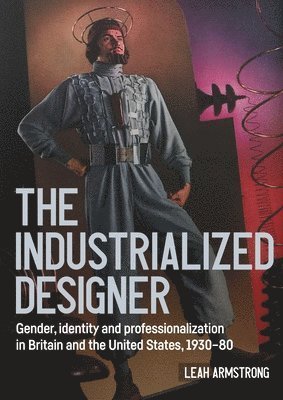
    'The Industrialized Designer'

    Gender, Identity and Professionalization in Britain and the United States, 1930-80

    AvLeah Armstrong

    Inbunden, Engelska, 2024

    Del i serien Studies in Design and Material Culture

    1 216 kr

    Skickas . Fri frakt över 249 kr.

    Fler format och utgåvor

    Häftad

    364 kr

    Beskrivning

    What does it mean to be called an industrial designer? This book traces the remarkable rise of this professional identity in historical perspective from a position of anonymity in the early twentieth century, to mid-century professionalisation, to decline and disintegration by 1980. Drawing on new, extensive, original archival research, it uncovers the history of a profession in a state of re-invention, 1930-1980 in Britain and the United States. The book tests assumptions about the relationship between the professions in the two countries, bringing them into comparative historical perspective for the first time. The gendered dynamics of professionalisation and their interaction with the representation of the heroic male designer are interrogated and critically examined. Building on new gender perspectives to the history of the industrial design profession, the book calls for a re-examination of the limits and boundaries of what constitutes professional identity and work.

    Produktinformation

    • Utgivningsdatum:2024-11-05
    • Mått:170 x 240 x 21 mm
    • Vikt:728 g
    • Format:Inbunden
    • Språk:Engelska
    • Serie:Studies in Design and Material Culture
    • Antal sidor:240
    • Förlag:Manchester University Press
    • ISBN:9781526141033

    Utforska kategorier

    • Arkitektur inom Kultur
    • Konsthistoria inom Kultur
    • Designböcker inom Kultur

    Mer om författaren

    Leah Armstrong is FWF Elise Richter Senior Post-Doctoral Research Fellow in the department of Design History and Theory at the University of Applied Arts Vienna

    Recensioner i media

    'In this important contribution to design history scholarship, the object of study is that of the design profession itself. Armstrong deftly charts the evolution of the design industry’s identity as a social construction and argues how a historiographical focus on the processes of professionalization can help in redressing the design’s constitutional gender disparity.'— Dr Alice Twemlow, Kingston University'a marvellous addition to the discipline of design history. It is thoroughly researched and meticulous, full of nuance and careful analysis… Armstrong’s engagement with issue of gender, feminism and patriarchy are subtle and careful – she steps well beyond the older feminist narrative of uncovering “hidden” histories of women designers'— Dr Jesse Adams Stein, University of Technology, Sydney‘Relying on deep archival research, Leah Armstrong traces how industrial designers defined and defended their professional status in the twentieth century. Her nuanced history posits the centrality of women in many design firms and organizations. Almost in passing, she reveals unexpected institutional relationships among individual designers we thought we knew.’— Professor Emeritus Jeffrey L. Meikle, University of Texas, Austin'This beautifully written book offers a unique perspective on the making of a profession that became crucial to the cultural economies of industrialized societies. Drawing on a wealth of new sources, it will be essential reading for anyone interested in the history of professionalization and gender in the 20th century.'— Professor Svava Riesto, University of Copenhagen'Leah Armstrong’s book brings together the histories of gender, design and professionalisation in beautifully crafted narrative. It makes the usually overlooked actors and their hidden labour seen and celebrated. It is a crucial work, that offers us another frame through which we can understand what ‘design’ and the ‘design process’ is.'— Professor Luca Csepely-Knorr, University of Liverpool'Compellingly written, theoretically rich and historiographically astute, The industrialized designer shows the development of the anglophone and male-dominated world of design consultancy to be a recursive, slow-moving and continually unfolding process. While design discourse is beset by myths of ‘ruptures’ and ‘renegades’, Armstrong provides a set of historical correctives by unpicking the design profession’s longue durée.'— Professor Guy Julier, Aalto University, Finland

    Innehållsförteckning

    • Introduction1 A new profession2 The (general) consultant designer3 Women’s work4 Professional codes5 Crisis of professionalism6 Social responsibility and the industrial designerEpilogueIndex