• Fri frakt över 249 kr
  • •
  • Snabba leveranser
  • •
  • Billiga böcker
Kundservice

Du är på sajten för privatpersoner.

Företag, bibliotek eller offentlig verksamhet?

Du handlar på classic.bokus.com, där alla dina funktioner finns intakta.
Till classic.bokus.com
Bokus logotyp. Gå till startsidan.
  • Erbjudanden
  • Nyheter
  • Student
  • Topplistor
  • Barn & ungdom
  • Bokus Play
  • E-böcker
  • Pocketböcker
  • Spel & pussel

10% rabatt på allt med kod: NYSTART10 →

Sidfot

Mina sidor

    Hjälp

    • Kundservice
    • Vanliga frågor och svar
    • Frakt och leverans
    • Retur vid ångerrätt
    • Reklamera vara
    • Betalning
    • Köpvillkor
    • Allmänna villkor
    • Information om webbplatsens tillgänglighet

    Om Bokus

    • Om oss
    • Pressrum
    • För studenter
    • För företag
    • För bibliotek och offentlig verksamhet
    • För leverantörer
    • Hållbarhet

    Populärt

    • Aktuella erbjudanden
    • Presentkort
    • Studentlitteratur
    • Nya böcker
    • Topplistor
    • Signerade böcker
    • Engelska böcker

    Inspiration

    • Boktips
    • BookTok
    • Populära bokserier
    • Barnbokskaraktärer
    • Populära författare
    Logotyp för Bokus
    Följ oss på Facebook (extern länk)Följ oss på Instagram (extern länk)Följ oss på YouTube (extern länk)Följ oss på TikTok (extern länk)
    bokus @ CookiesAnpassa cookiesIntegritetspolicyKöpvillkor
    Till Citymail hemsida (extern länk)Till Budbee hemsida (extern länk)Till Postnord hemsida (extern länk)Till Schenker hemsida (extern länk)Till Early Bird hemsida (extern länk)Till Walleys hemsida (extern länk)
    1. Historia och arkeologi
    2. Historia
    3. Historia: särskilda händelser och ämnen
    4. Kolonialism och imperialism

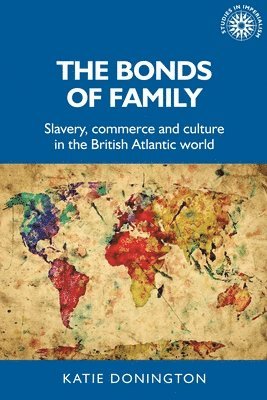
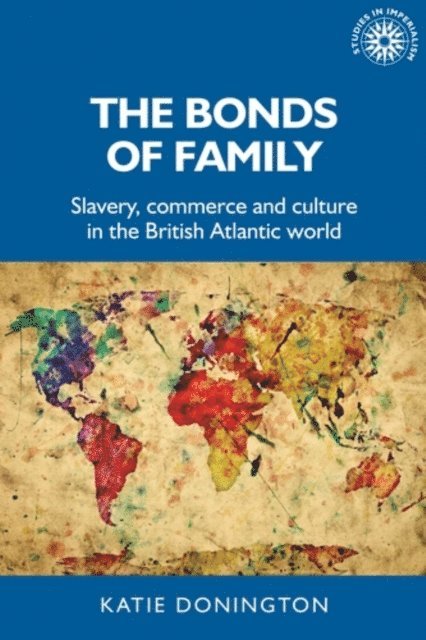
    Bonds of Family

    Slavery, Commerce and Culture in the British Atlantic World

    AvKatie Donington

    Häftad, Engelska, 2021

    Del 172 i serien Studies in Imperialism

    434 kr

    Skickas . Fri frakt över 249 kr.

    Fler format och utgåvor

    Inbunden

    1 224 kr

    E-bok

    370 kr

    E-bok

    370 kr

    Beskrivning

    Moving between Britain and Jamaica The bonds of family reconstructs the world of commerce, consumption and cultivation sustained through an extended engagement with the business of slavery. Transatlantic slavery was both shaping of and shaped by the dynamic networks of family that established Britain’s Caribbean empire. Tracing the activities of a single extended family – the Hibberts – this book explores how slavery impacted on the social, cultural, economic and political landscape of Britain. It is a history of trade, colonisation, enrichment and the tangled web of relations that gave meaning to the transatlantic world. The Hibberts’s trans-generational story imbricates the personal and the political, the private and the public, the local and the global. It is both the intimate narrative of a family and an analytical frame through which to explore Britain’s history and legacies of slavery.

    Produktinformation

    • Utgivningsdatum:2021-07-06
    • Mått:156 x 234 x 18 mm
    • Vikt:472 g
    • Format:Häftad
    • Språk:Engelska
    • Serie:Studies in Imperialism
    • Antal sidor:336
    • Förlag:Manchester University Press
    • ISBN:9781526157515

    Utforska kategorier

    • Kolonialism och imperialism inom Historia och arkeologi
    • Slaveri inom Historia och arkeologi

    Mer om författaren

    Katie Donington is Senior Lecturer in Black, African and Caribbean History at The Open University

    Recensioner i media

    'Katie Donington’s fascinating, formidably researched and very important investigation of the manifold ways in which the Hibbert family established its wealth through slave trading and slavery and its outsized role in important aspects of British history, including philanthropy and proslavery, is a book for our times. It deserves a wide readership.'Family and Community History'The Bonds of Family is an engaging, methodically-presented study that brings a unique perspective on the British Atlantic and promises to contribute significantly to studies of Caribbean and British history.'New West Indian Guide'Through its focus on a single family, The bonds of family thus offers a refreshingly human view of how Britain’s slave economy was made, operated, justified and sustained by its perpetrators. Atlantic slavery, Donington shows, was created not by abstract market forces, but through the actions of individuals such as the Hibberts: ambitious people who elevated themselves through the ruthless exploitation of enslaved people.'Continuity and Change'The Bonds of Family is a book about power. [...] Donington’s work, as suggested by the title, is also a book about those bonds that are able to cross geographical and temporal boundaries and connect the past with the present, the inside with the outside, the private and intimate story of a family with the public history of the nation and the empire.'Matilde Cazzola, American Journal of Legal History'Donington’s book is a fascinating read that builds upon a rich literature on the history of families and family enterprise in the British Atlantic world over the long eighteenth century. Yet Donington goes beyond earlier studies in her thorough assessment of the family’s cultural accumulation, physical legacies and investments in Britain and, crucially, her close attention paid to the role of free women – both white women and women of colour – in the cultural economy of West Indian family enterprise. A thoroughly researched and well written book that resonates with contemporary politics, this book contributes to literature on the legacies of slavery in Britain as well as to histories of families, race, and slavery in the Atlantic world.'Erin Trahey, Slavery & Abolition

    Innehållsförteckning

    • Introduction: Family matters - slavery, commerce, and culture Part I: Family business - commerce, commodities, and credit 1. Manchester 2. Jamaica 3. London Part II: Family politics - defending the slave trade and slavery4. Defending the slave trade 5. Defending slavery Part III: Family culture - domesticating slavery6. Intimate relations: the colony and the metropole7. Consuming passions: Collecting and connoisseurship 8. The culture of refinement: Country houses and philanthropy Epilogue: Family legacies - after abolition Select bibliography Index