• Fri frakt över 249 kr
  • •
  • Snabba leveranser
  • •
  • Billiga böcker
Kundservice

Du är på sajten för privatpersoner.

Företag, bibliotek eller offentlig verksamhet?

Du handlar på classic.bokus.com, där alla dina funktioner finns intakta.
Till classic.bokus.com
Bokus logotyp. Gå till startsidan.
  • Erbjudanden
  • Student
  • Topplistor
  • Barn & ungdom
  • Bokus Play
  • E-böcker
  • Ljudböcker
  • Pocketböcker
  • Spel & pussel

10% rabatt på allt med kod NYSTART10 →

Sidfot

Mina sidor

    Hjälp

    • Kundservice
    • Vanliga frågor och svar
    • Frakt och leverans
    • Retur vid ångerrätt
    • Reklamera vara
    • Betalning
    • Köpvillkor
    • Allmänna villkor
    • Information om webbplatsens tillgänglighet

    Om Bokus

    • Om oss
    • Pressrum
    • För studenter
    • För företag
    • För bibliotek och offentlig verksamhet
    • För leverantörer
    • Hållbarhet

    Populärt

    • Aktuella erbjudanden
    • Presentkort
    • Studentlitteratur
    • Nya böcker
    • Topplistor
    • Signerade böcker
    • Engelska böcker

    Inspiration

    • Boktips
    • BookTok
    • Populära bokserier
    • Barnbokskaraktärer
    • Populära författare
    Logotyp för Bokus
    Följ oss på Facebook (extern länk)Följ oss på Instagram (extern länk)Följ oss på YouTube (extern länk)Följ oss på TikTok (extern länk)
    bokus @ CookiesAnpassa cookiesIntegritetspolicyKöpvillkor
    Till Citymail hemsida (extern länk)Till Budbee hemsida (extern länk)Till Postnord hemsida (extern länk)Till Schenker hemsida (extern länk)Till Early Bird hemsida (extern länk)Till Walleys hemsida (extern länk)
    1. Samhälle och politik
    2. Samhälle och kultur
    3. Kultur och medier
    4. Referensverk och tvärvetenskap

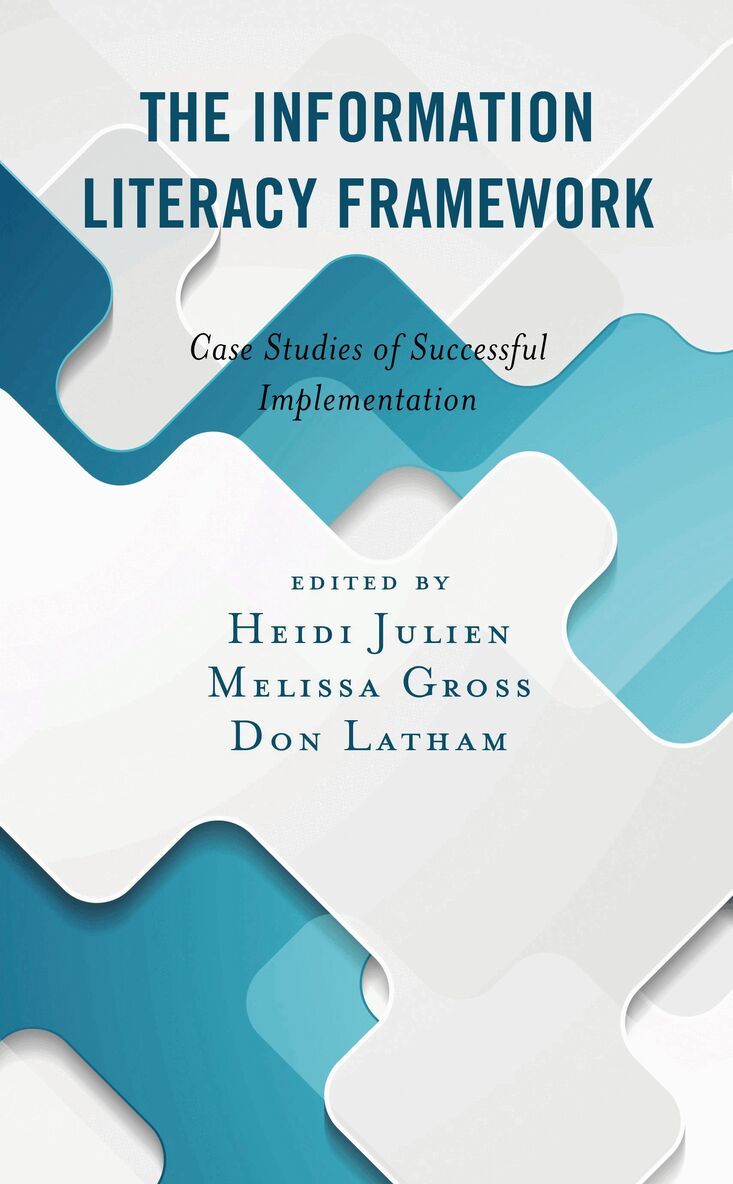
    Information Literacy Framework

    Case Studies of Successful Implementation

    AvHeidi Julien,Melissa Gross

    Inbunden, Engelska, 2020

    Del i serien Association for Library and Information Science Education

    1 510 kr

    Beställningsvara. Skickas inom 10-15 vardagar. Fri frakt över 249 kr.

    Beskrivning

    This book helps demystify how to incorporate ACRL’s Framework for Information Literacy for Higher Education into information literacy instruction in higher education as well as how to teach the new Framework to pre-service librarians as part of their professional preparation. This authoritative volume copublished by the Association for Library and Information Science Education (ALISE) demonstrates professional practice by bringing together current case studies from librarians in higher education who are implementing the Framework for Information Literacy for Higher Education as well as cases from educators in library and information science, who are working to prepare their pre-service students to practice in the new instructional environment. Instructional librarians, administrators, and educators will benefit from the experiences the people on the ground who are actively working to make the transition to the Framework in their professional practice.

    Produktinformation

    • Utgivningsdatum:2020-02-07
    • Mått:159 x 228 x 27 mm
    • Vikt:630 g
    • Format:Inbunden
    • Språk:Engelska
    • Serie:Association for Library and Information Science Education
    • Antal sidor:296
    • Förlag:Bloomsbury Publishing Plc
    • ISBN:9781538121436

    Utforska kategorier

    • Referensverk och tvärvetenskap inom Samhälle och politik

    Mer om författaren

    Heidi Julien is a professor in the Department of Information Science at the University at Buffalo. She holds an MLIS degree from the University of Alberta and a Ph.D. in Library and Information Science from the University of Western Ontario. Her research focuses on digital and information literacy, and information behavior. She has received grants from the Institute of Museum and Library Services, and the Social Sciences and Humanities Research Council of Canada, and she has published and presented her work in a range of venues. She is a past-president of the Association for Library and Information Science Education, and a past-president of the Canadian Association for Information Science.Melissa Gross is a professor in the School of Information at Florida State University and a past president of the Association for Library and Information Science Education (ALISE). She received her Ph.D. from the University of California, Los Angeles in 1998 and was awarded the prestigious American Association of University Women Recognition Award for Emerging Scholars in 2001. She teaches and does research in the areas of Information seeking behavior, resources for youth, research methods, the evaluation of library programs and services, information literacy, and teacher and librarian collaboration. She has published extensively in a variety of peer-reviewed journals and is author, co-author, or co-editor of ten books.Don Latham is a professor in the School of Information at Florida State University. He holds an MLIS degree from Florida State University and a Ph.D. in English from the University of Georgia. His research focuses on information literacy, information literacy instruction, and information practices of young adults. He is the recipient of research grants from the Institute of Museum and Library Services, the Online Computer Library Center and the Association for Library and Information Science Education, and the FSU Council on Research and Creativity. He has published numerous journal articles on information literacy among college undergraduates.

    Recensioner i media

    This book is recommended for academic libraries and library schools. Approaching the 5th year since its adoption, the Framework has been around long enough for the library profession to have developed norms and best practices around its implementation and is a helpful catalog of many of these practices and is a useful resource to librarians teaching information literacy.

    Innehållsförteckning

    • Table of ContentsList of FiguresForewordPrefacePart I. Preparing to use the FrameworkChapter 1. Strategies for Mapping Information Literacy Threshold Concepts to Course Objectives in Political ScienceMohamed BerrayChapter 2. Faculty Workshops: Incorporating the Framework and Embedding Information Literacy in Undergraduate CoursesMelissa Harden and Anna Michelle Martinez-MontavonChapter 3. Are They There Yet? Determining Student Mastery of Learning Outcomes Based on the ACRL FrameworkHolly Hendrigan, Keshav Makunda, and Diana CukiermanChapter 4. Finding Expertise in Your Own Backyard: Creating Communities of Practice to Support Learning about the FrameworkKim Pittman, Amy Mars, and Trent BragerChapter 5. From Standards to Threshold Concepts, Knowledge Practices, and Learner Dispositions: Rethinking Formal Information Literacy Instruction in Higher EducationLeslie M. RossChapter 6. An Idea That Sells Itself: The Framework as a Partnership Guide and Faculty Marketing ToolSarah Steele, Steve Bahnaman, Brooke Taxakis, Ron Epps, and Elizabeth DobbinsPart II. Case studies of instruction using the FrameworkChapter 7. Teaching the Framework Using an Online TutorialLeanna Fry Balci and Peter J. RichChapter 8. Designing a First-Year Foundation Program around the FrameworkBrianna B. BuljungChapter 9. The Framework as Pedagogical Tool: Teaching Source IntegrationGina Calia-LotzChapter 10. Redesigning a Credit Bearing Course using the ACRL Information Literacy FrameworkKelly Diamond and Alyssa WrightChapter 11. The Framework and the Context: Refocusing Information Literacy at a Caribbean UniversityPaulette A. Kerr and Jessica C. LewisChapter 12. The Librarian’s Journey Begins: Finding Pedagogical Authority and Creativity in the ACRL FrameworkLiza OldhamPart III. Educating for the FrameworkChapter 13. Flexible Frameworks, New Paradigms: Examining Beliefs about the ACRL Framework to Grow Teaching PracticeAndrea BaerChapter 14. Chandler-Gilbert Community College Case StudyMary Beth Burgoyne and Kim Chuppa-CornellChapter 15. Exploring Metaliterate Learning through the Frames of Information LiteracyThomas P. MackeyChapter 16. Extending the Framework for the Benefit of Praxis: A Strategic Literacy-Based Approach to Diversity Education (SLADE)Bharat Mehra and Keren DaliChapter 17. Teaching Future Librarian Educators Using the ACRL Framework: A New Graduate-Level iSchool Teaching CertificateCarla Stoffle, Nicole Pagowsky, and Yvonne MeryChapter 18. Rethinking the Reference and Instruction Curriculum Using the Integrated Threshold Concept Knowledge FrameworkSusan Rathbun-GrubbAbout the ContributorsAbout the Editors