• Fri frakt över 249 kr
  • •
  • Snabba leveranser
  • •
  • Billiga böcker
Kundservice

Du är på sajten för privatpersoner.

Företag, bibliotek eller offentlig verksamhet?

Du handlar på classic.bokus.com, där alla dina funktioner finns intakta.
Till classic.bokus.com
Bokus logotyp. Gå till startsidan.
  • Erbjudanden
  • Nyheter
  • Student
  • Topplistor
  • Barn & ungdom
  • Bokus Play
  • E-böcker
  • Pocketböcker
  • Spel & pussel

10% rabatt på allt med kod NYSTART10 →

Sidfot

Mina sidor

    Hjälp

    • Kundservice
    • Vanliga frågor och svar
    • Frakt och leverans
    • Retur vid ångerrätt
    • Reklamera vara
    • Betalning
    • Köpvillkor
    • Allmänna villkor
    • Information om webbplatsens tillgänglighet

    Om Bokus

    • Om oss
    • Pressrum
    • För studenter
    • För företag
    • För bibliotek och offentlig verksamhet
    • För leverantörer
    • Hållbarhet

    Populärt

    • Aktuella erbjudanden
    • Presentkort
    • Studentlitteratur
    • Nya böcker
    • Topplistor
    • Signerade böcker
    • Engelska böcker

    Inspiration

    • Boktips
    • BookTok
    • Populära bokserier
    • Barnbokskaraktärer
    • Populära författare
    Logotyp för Bokus
    Följ oss på Facebook (extern länk)Följ oss på Instagram (extern länk)Följ oss på YouTube (extern länk)Följ oss på TikTok (extern länk)
    bokus @ CookiesAnpassa cookiesIntegritetspolicyKöpvillkor
    Till Citymail hemsida (extern länk)Till Budbee hemsida (extern länk)Till Postnord hemsida (extern länk)Till Schenker hemsida (extern länk)Till Early Bird hemsida (extern länk)Till Walleys hemsida (extern länk)
    1. Samhälle och politik
    2. Krig och försvar

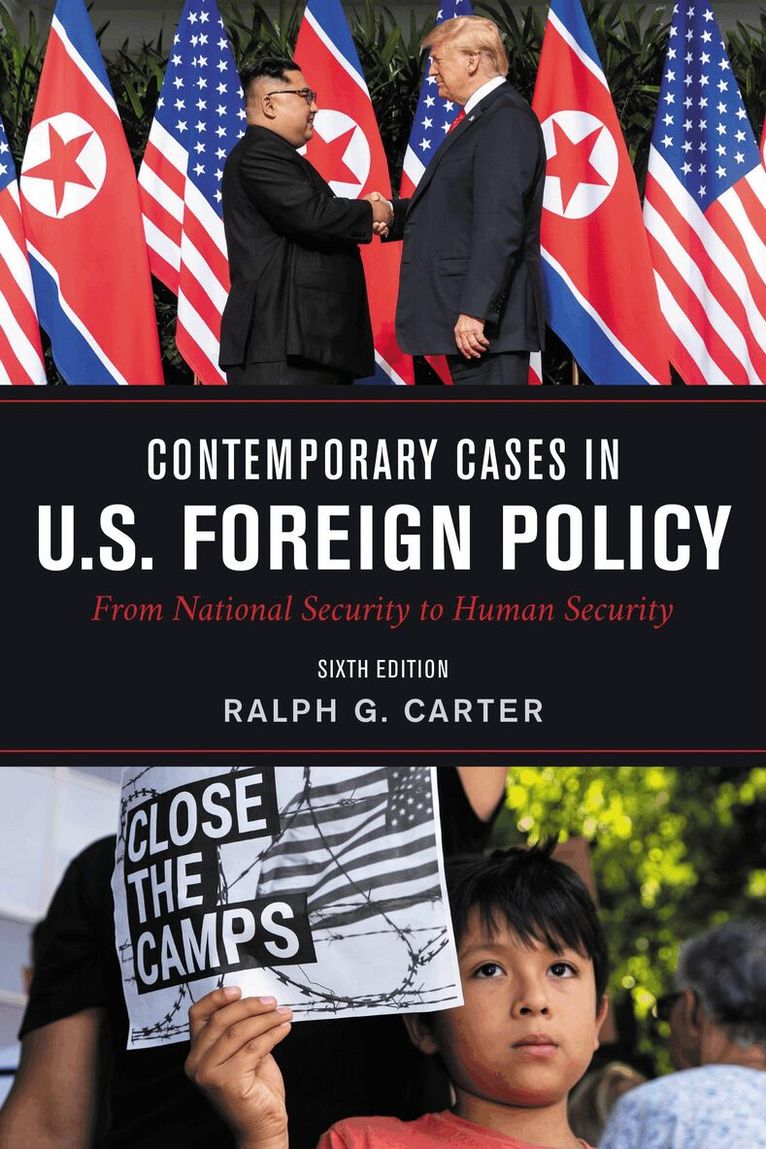
    Contemporary Cases in U.S. Foreign Policy

    From National Security to Human Security

    AvRalph Carter

    Häftad, Engelska, 2021

    590 kr

    Beställningsvara. Skickas inom 10-15 vardagar. Fri frakt över 249 kr.

    Beskrivning

    This engaging case study approach brings together a diverse set of contributors to help students question motives, consider alternatives, and analyze outcomes in many of the most controversial foreign policy issues now confronting the United States. Many actors?from the president and members of Congress to interest groups, NGOs, and the media?compete to shape U.S. foreign policy. While previous editions of this popular text focused more on national security issues in the wake of 9/11 and the War on Terror, the 13 case studies in this edition deal with a wide range of policy areas: national security, homeland security, diplomacy, trade, immigration, epidemics, climate change, and Russian interference in the 2016 presidential election. Many reflect how the demarcation between foreign and domestic policy has become even more blurred and polarization has come to plays a significantly increased role in American foreign policy.

    Produktinformation

    • Utgivningsdatum:2021-03-12
    • Mått:154 x 230 x 25 mm
    • Vikt:649 g
    • Format:Häftad
    • Språk:Engelska
    • Antal sidor:412
    • Upplaga:6
    • Förlag:Bloomsbury Publishing Plc
    • ISBN:9781538141410

    Utforska kategorier

    • Krig och försvar inom Samhälle och politik
    • Internationella relationer inom Samhälle och politik

    Mer om författaren

    Ralph Carter is Piper Professor of Political Science at Texas Christian University where he has been teaching undergraduate IR and foreign policy for more than 30 years.

    Innehållsförteckning

    • ContentsPrefaceContributorsIntroductionRalph G. CarterPART I. The Setting of US Foreign PolicymakingUS in a Turbulent World: US Intervention into the Syrian Civil WarSibel OktayAmong the consequences of the Arab Spring of 2011 was a civil war in Syria. Both Presidents Obama and Trump faced challenges in determining if, and how, to respond to a conflict involving chemical weapons, human rights violations, multiple competing factions, and various states with their own agendas. US Foreign Policy and the Iran Nuclear DealCagla Demirduzen and Özgür ÖzdamarThe Obama administration participated in a multinational agreement to significantly delay the acquisition of nuclear weapons by Iran. The Trump administration challenged Iran and US allies by withdrawing from that agreement, preferring a more aggressive stance toward Iran. PART II. Policymaking Actors and InfluencersDonald Trump and the Border Wall: Policy Continuity with a National Emergency TwistYu Ouyang and Michael A. MorganWhile both the Obama and Trump administrations faced significant political cross-pressures in dealing with border security issues, President Trump made building a wall along the Mexican border a key campaign promise. Despite the presence of a Republican-controlled Congress, Trump was forced to rely on controversial emergency powers to shift budget funds from other departments to fund wall construction.From the Hill with Love: Congress, Donald Trump, and Russian Interference in the 2016 ElectionsFrédérick Gagnon and Vincent BoucherRussian interference in the 2016 presidential election challenged incumbent President Obama and newly-elected President Trump in different ways. Despite President Trump’s denial of Russian interference or campaign collusion with Russians, Congress found bipartisan ways to penalize Russia for its malign actions. The Hollowed State: Managing Trump’s State DepartmentJennifer SelinEach year, the Trump administration sought to reorganize the State Department by reducing its personnel and programs via large budget cuts. Despite the administration’s consistent efforts, each year State Department personnel and their congressional allies successfully resisted this executive effort. President vs. Congress: US Intervention in the Yemeni Civil War Kelly A. McHughAfter initially supporting a Saudi intervention into the civil war in Yemen, Saudi airstrikes on civilian targets caused the Obama administration to change its policies. After President Trump strenuously defended continued US arms sales to the Saudis, Congress sought to limit the president’s actions through the War Powers Resolution. The President vs. the Courts: The Trump Travel BansRalph G. Carter and James M. ScottDonald Trump’s campaign pledge to halt the entry of Muslims into the US resulted in a ban on entry from citizens from a number of Muslim-majority countries. Multiple court challenges resulted, and it took three tries for the administration to enact a travel ban acceptable to the Supreme Court. The US Embassy Move to JerusalemLena Saleh and Mira SucharovSince 1995, all US presidents have used a national security waiver to avoid moving the US Embassy in Israel from Tel Aviv to Jerusalem, due to cross-cutting domestic pressures and concerns about regional stability. With the support of his political base, President Trump changed that practice and had the embassy moved.PART III. Policy DomainsThe Nuclear Standoff Between the United States and North Korea: Searching for Progress During the Obama and Trump AdministrationsThomas PrestonOutgoing President Barack Obama told Donald Trump his most challenging issue would be dealing with North Korea, a rogue regime with nuclear weapons that was also developing ballistic missiles. President Trump tried personal diplomacy initiatives with the North Korean president that other US presidents had long rejected, but to no avail. NATO Adrift? European Security and US Foreign Policy in the Obama and Trump AdministrationsJeffrey S. LantisLike his post-Cold War predecessors, President Obama struggled somewhat in choosing when and how to rely on NATO as an instrument of US foreign policy as well as how to prod its members to spend more on their own defense. President Trump felt no hesitancy in shaking the alliance structure by challenging NATO’s most fundamental assumptions. Economic Security and the US-China Trade WarAmy SkoniecznyDespite long-standing US commitments to an increasingly global free trade regime, free trade agreements generated controversy when progressive Democrats worried about the human costs of globalization and some Republicans worried more about about loss of national control of the economy. President Trump chose the nationalist path by initiating a trade war with China. Comprehensive Immigration Reform, with Piecemeal Policymaking in the MeantimeStephanie N. ShadyBoth Presidents George W. Bush and Barack Obama sought some form of comprehensive immigration reform while still providing appropriate levels of border security. In line with a number of his campaign statements, President Trump tightened access to the US by noncitizens and tried to abolish existing programs that he felt attracted those immigrants in the first place. Executive Power and International Agreements: Trump’s Exit from the Paris Climate AccordAmy Below and Malasia WilliamsCombatting climate change is controversial, but President Obama tried to use the Paris Climate Accord to gain traction on this issue while more progressive Democrats pushed more aggressively for a Green New Deal. President Trump withdrew the US from the Paris Climate Accord and sought to rollback numerous government regulations and environmental policies that hurt economic output.ConclusionsRalph G. CarterIndex