• Fri frakt över 249 kr
  • •
  • Snabba leveranser
  • •
  • Billiga böcker
Kundservice

Du är på sajten för privatpersoner.

Företag, bibliotek eller offentlig verksamhet?

Du handlar på classic.bokus.com, där alla dina funktioner finns intakta.
Till classic.bokus.com
Bokus logotyp. Gå till startsidan.
  • Erbjudanden
  • Nyheter
  • Student
  • Topplistor
  • Barn & ungdom
  • Bokus Play
  • E-böcker
  • Pocketböcker
  • Spel & pussel

10% rabatt på allt med kod NYSTART10 →

Sidfot

Mina sidor

    Hjälp

    • Kundservice
    • Vanliga frågor och svar
    • Frakt och leverans
    • Retur vid ångerrätt
    • Reklamera vara
    • Betalning
    • Köpvillkor
    • Allmänna villkor
    • Information om webbplatsens tillgänglighet

    Om Bokus

    • Om oss
    • Pressrum
    • För studenter
    • För företag
    • För bibliotek och offentlig verksamhet
    • För leverantörer
    • Hållbarhet

    Populärt

    • Aktuella erbjudanden
    • Presentkort
    • Studentlitteratur
    • Nya böcker
    • Topplistor
    • Signerade böcker
    • Engelska böcker

    Inspiration

    • Boktips
    • BookTok
    • Populära bokserier
    • Barnbokskaraktärer
    • Populära författare
    Logotyp för Bokus
    Följ oss på Facebook (extern länk)Följ oss på Instagram (extern länk)Följ oss på YouTube (extern länk)Följ oss på TikTok (extern länk)
    bokus @ CookiesAnpassa cookiesIntegritetspolicyKöpvillkor
    Till Citymail hemsida (extern länk)Till Budbee hemsida (extern länk)Till Postnord hemsida (extern länk)Till Schenker hemsida (extern länk)Till Early Bird hemsida (extern länk)Till Walleys hemsida (extern länk)
    1. Ekonomi och Ledarskap
    2. Företagsekonomi
    3. Försäljning och marknadsföring
    4. Reklam

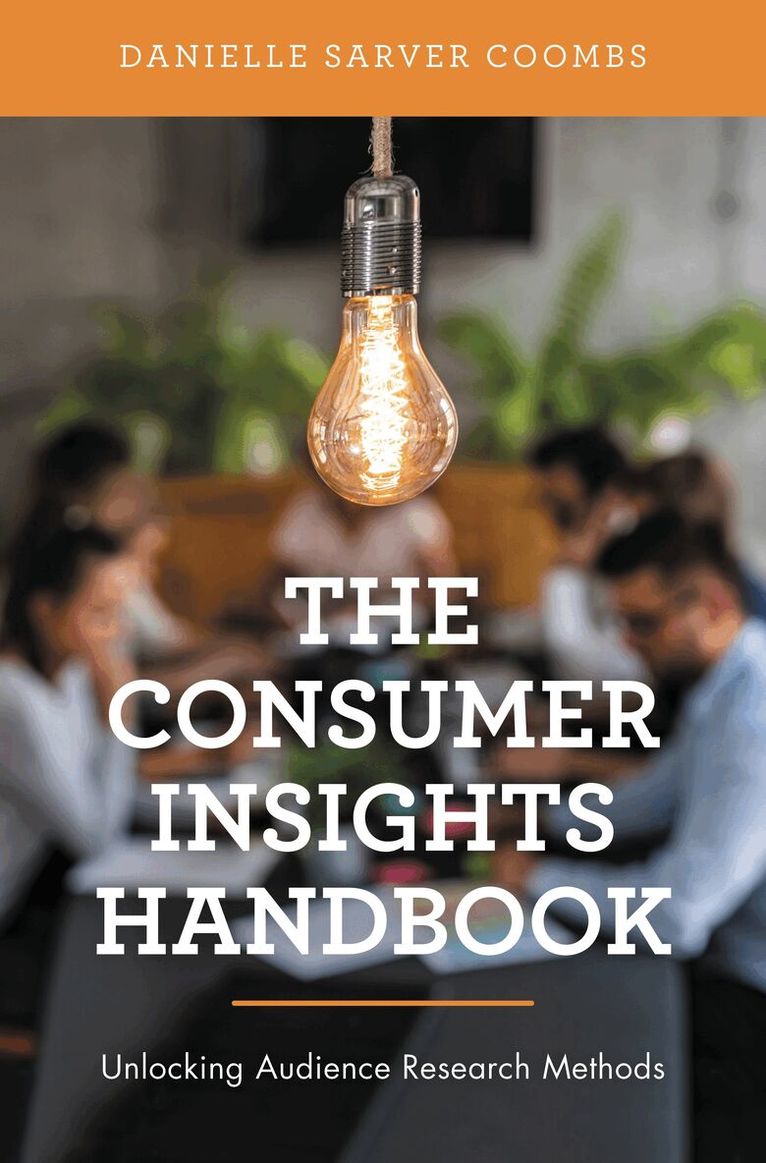
    Consumer Insights Handbook

    Unlocking Audience Research Methods

    AvDanielle Sarver Coombs

    Häftad, Engelska, 2021

    Del i serien Rowman & Littlefield Publishers

    722 kr

    Beställningsvara. Skickas inom 10-15 vardagar. Fri frakt över 249 kr.

    Fler format och utgåvor

    Inbunden

    1 581 kr

    Inbunden

    1 856 kr

    Häftad

    571 kr

    Beskrivning

    At its core, consumer insights research is fun. Fast paced, creative, and exciting, working in this field means constant interaction and engagement with people, concepts, and ideas. The work is dynamic and intellectually challenging, celebrating innovative approaches that lead to unique explanations of and solutions for important problems. Whether you are working on a media product or a strategic communication campaign, successfully reaching your audience and meeting your objectives requires good research. The Consumer Insights Handbook flips the typical model presented in mass communication research textbooks to emphasize that data should be used to understand people as thoughtful, deliberative audiences. As such, research should be done with the goal of better understanding target audiences in a meaningful way. With this orientation in mind, these insight-driven research projects allow media practitioners and strategic communication professionals to tap into audiences’ wants, needs, and desires through messaging and products designed to resonate. Guided by the author’s own experience in the field as well as guidance from current practitioners on the client, boutique, and agency sides, this book offers an accessible, thorough, and compelling perspective on how to plan for and complete consumer insights research projects from the initial RFP to the final presentation of findings. Each chapter includes a guide for how to conduct in-class research, quotes and recommendations from experts in the field, and case studies and real-world examples.

    Produktinformation

    • Utgivningsdatum:2021-06-18
    • Mått:175 x 251 x 15 mm
    • Vikt:477 g
    • Format:Häftad
    • Språk:Engelska
    • Serie:Rowman & Littlefield Publishers
    • Antal sidor:248
    • Förlag:Bloomsbury Publishing Plc
    • ISBN:9781538145524

    Utforska kategorier

    • Reklam inom Ekonomi och Ledarskap
    • Försäljning och marknadsföring inom Ekonomi och Ledarskap

    Mer om författaren

    Danielle Sarver Coombs is professor in the School of Journalism and Mass Communication at Kent State University. She is the co-author of Female Fans of the NFL and author of Last Man Standing: Media, Framing, and the 2012 Republican Primary. Coombs has also co-edited three anthologies—Debates for the Digital Age, We Are What We Sell, and American History through American Sports (2012)—and has published research on sport fans and fandom in journals, including the Howard Journal of Communications, Liminalities, the Journal of Sport & Social Issues, Sport in Society, International Journal of Sport Communication, and Public Relations Research.

    Recensioner i media

    Danielle Coombs has done a wonderful job writing about research techniques that students can actually use, both as student researchers and eventual professionals. Students will enjoy reading this book.

    Innehållsförteckning

    • Table of ContentsPART I: PREPARATIONChapter 1: Introduction and OverviewWhat is Research?How We See the WorldPlanning for Research DesignWorking on TeamsHow to Use this BookKey TermsChapter 2: Working with ClientsGeneral Best PracticesLooking Good (And by “Good,” I Mean Professional)Confidence is Key. So is Humility.Getting Work StartedResponding to RFPsPitching New BusinessUnderstanding and Assessing NeedsBusiness Objectives and Research ObjectivesDeveloping Actionable Research QuestionsEstablishing and Working with BudgetsBest Practices & Key Take-AwaysKey TermsChapter 3: Secondary Research and AnalysisConducting Secondary ResearchSecondary Research SourcesNon-Public SourcesPublic SourcesBest Practices & Key Take-AwaysKey TermsChapter 4: Applied Research EthicsWhy This MattersKey Ethical PrinciplesApplied Research EthicsGaining ConsentAnonymity versus ConfidentialityPrivacy Laws and Legal ImplicationsConducting Research OnlineAccurate Representation of Ideas, or How to Avoid PlagiarismBest Practices & Key Take-AwaysKey TermsPART II: QUALITATIVE RESEARCHChapter 5: Qualitative Research Design and ConsiderationsWhy Do Qualitative Research?BenefitsLimitationsQualitative MethodsInterviewsEthnographiesParticipant ObservationFocus GroupsOnline CommunitiesEnsuring RigorWays to Ensure RigorBest Practices & Key Take-AwaysKey TermsChapter 6: Qualitative Data CollectionWriting an Effective InstrumentGuide StructureTips for WritingGeneral Best PracticesRecord, Record, RecordData Collection: In the FieldConducting InterviewsConducting EthnographiesConducting Focus GroupsConducting Qualitative Research OnlineBest Practices & Key Take-AwaysChapter 7: Using Creative Exercises for Deeper InsightsGeneral Best PracticesGenerating Good DataTypes of Creative ExercisesCollageDrawings and StorytellingBring Brands to LifeFill-In-The-Blank“Magic Wand”Creating Lists and Organizing DataCard SortsMarketing ExecBest Practices & Key Take-AwaysKey TermsChapter 8: Qualitative Data Analysis and ReportingGeneral Best Practices: During FieldingGeneral Best Practices: Post-Collection Data AnalysisIn the DebriefTopline Research ReportBest Practices & Key Take-AwaysPART III: QUANTITATIVE RESEARCHChapter 9: Quantitative Research Design and Best PracticesWhy Do Quantitative Research?BenefitsLimitationsBasic Principles and CharacteristicsCorrelation is Not CausationStandardizationHypotheses versus Research QuestionsSampling and SamplesProbability SamplingNonprobability SamplingError, Margin of Error, and Confidence LevelQuantitative Research for AcademicsBest Practices & Key Take-AwaysKey TermsChapter 10: Quantitative Data CollectionGeneral Best PracticesPreparing to Write Your SurveyStructuring Your SurveyScreenerThe BodyDemographicsEditing Your SurveyWriting Good QuestionsDifferent Types of QuestionsBasic Rules for Writing QuestionsWriting Good ResponsesTrend StudiesBest Practices & Key Take-AwaysKey TermsChapter 11: Quantitative Data Analysis and ReportingGood Preparation, Good DataEnsuring Data AccuracyDescriptive StatisticsWeightingChecking on What Happens in the “Black Box”Statistical Models for the Non-StatisticiansConjoint AnalysisMaximum-Difference Scaling (MaxDiff)Discrete Choice ModelingFactor AnalysisCluster AnalysisData Reports and BannersDebriefing and Data AnalysisPreparing for your DebriefDebriefingReporting Quantitative ResearchBest Practices & Key Take-AwaysKey TermsPART IV: REPORTING FINDINGSChapter 12: Writing Your ReportGoal and PurposeDevelop Your “Elevator Pitch”Organizing Your ThoughtsPreparing your OutlineIntegrate and Synthesize Insights into ThemesPlan your SignpostingBake in TransitionsFlesh out your RecommendationsAlways Come Back to your StoryTelling a StoryKeep the Story MovingShare Data StrategicallyFocus on your FlowStay FocusedReport SectionsReport FormatsBest Practices & Key Take-AwaysKey TermsChapter 13: Developing (and Designing) Your DeliverableDesigning your DeliverableMake Sure your Story is ClearMake Signposts ClearMetaphors MatterDeliverable FormatsDesign Basics (Very, Very Basics)Designing your DeliverableHierarchyConsistencyEffective Use of Color and ContrastPresenting DataForms of Data PresentationGuidelines for Presenting DataBest Practices & Key Take-AwaysKey TermsChapter 14: The Client PresentationGoal and PurposePreparationKnow your AudienceKnow your MaterialInternalizingDuring the PresentationWrapping Up the ProjectBack in the OfficeBest Practices & Key Take-AwaysFinal Thoughts