Häftad, Engelska, 2021
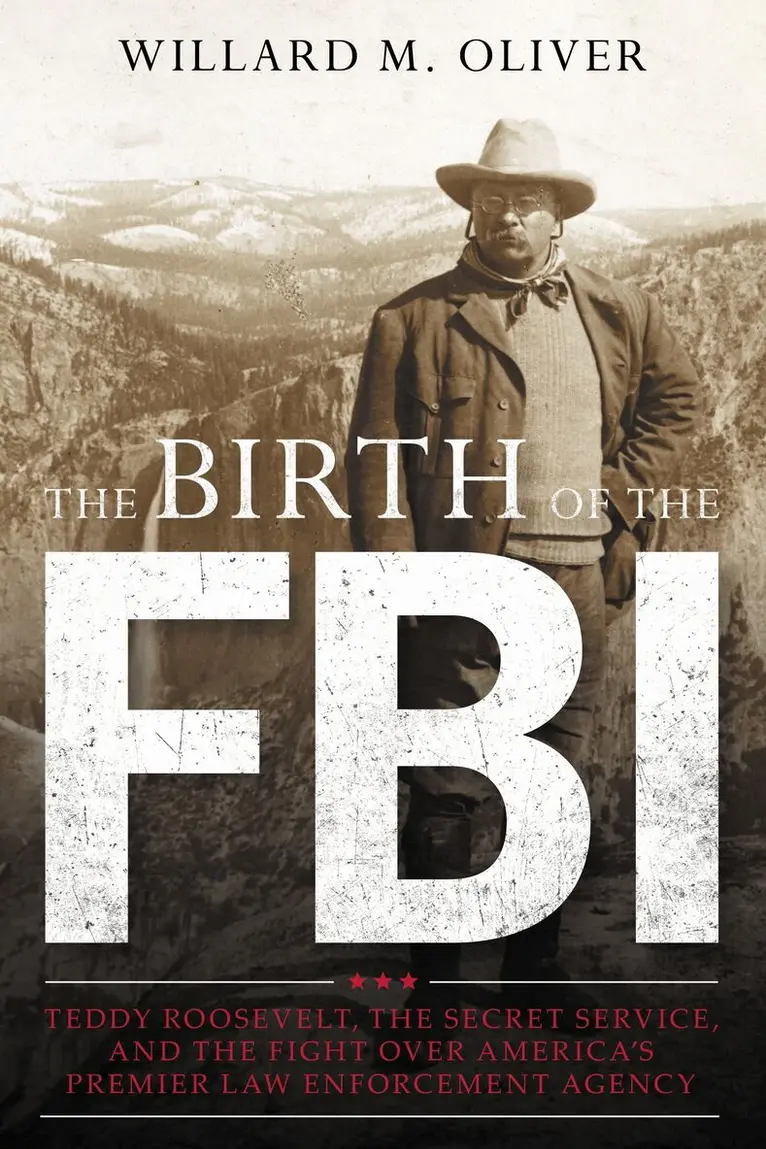
Birth of the FBI
Teddy Roosevelt, the Secret Service, and the Fight Over America's Premier Law Enforcement Agency
283 kr
Beställningsvara. Skickas inom 10-15 vardagar. Fri frakt över 249 kr.
Beskrivning
Produktinformation
- Utgivningsdatum: 2021-08-15
- Mått: 154 x 229 x 26 mm
- Vikt: 513 g
- Format: Häftad
- Språk: Engelska
- Antal sidor: 342
- Förlag: Bloomsbury Publishing Plc
- ISBN: 9781538160602
Utforska kategorier
Mer om författaren
Willard M. Oliver, PhD, is a professor in the College of Criminal Justice at Sam Houston State. His areas of expertise include policing (ex. Police stress, small-town and rural policing, community policing, Homeland Security & policing, etc.), public policy of crime & criminal justice, and the history of criminal justice. He is the author of several other books pertaining to the history of criminal justice (as well as other areas of criminal justice and policing), including August Vollmer: The Father of American Policing (2017), A History of Crime and Criminal Justice in America 3rd ed. (2017), Killing Congress (Lexington, 2014), Introduction to Homeland Security (2014), Crime, History, and Hollywood (2013), and Killing the President (2010).
Recensioner i media
[Oliver] weaves together a wealth of information on the machinations that led to the establishment of the Federal Bureau of Investigation. After the revolution, counterfeiting was one of the most serious crimes plaguing the U.S. The federal government used contractors—the legendary Pinkerton detectives—to ferret out counterfeiters. Eventually, the Treasury Department established its own anticounterfeiting unit, the Secret Service (which wouldn’t assume its current job of protecting the president until after the assassination of William McKinley). Its agents were often “borrowed” by other federal departments to investigate crimes such as the fraudulent federal land deals made by members of Congress in the first years of the 20th century. In 1908, Congress ended the borrowing practice, but, unwilling to lose this key crime-fighting tool, Theodore Roosevelt’s administration used a creative executive maneuver to set up a Bureau of Investigation under the aegis of the Justice Department. This inside-baseball deep dive into early-20th-century congressional-presidential relations is well-written and full of colorful personalities, among them detective Allan Pinkerton and James A. Tawney, Roosevelt’s nemesis in the law enforcement jurisdiction battle. Students of congressional-presidential relations will lap this up.
Betyg & recensioner
0 recensioner
Inga recensioner tillgängliga.