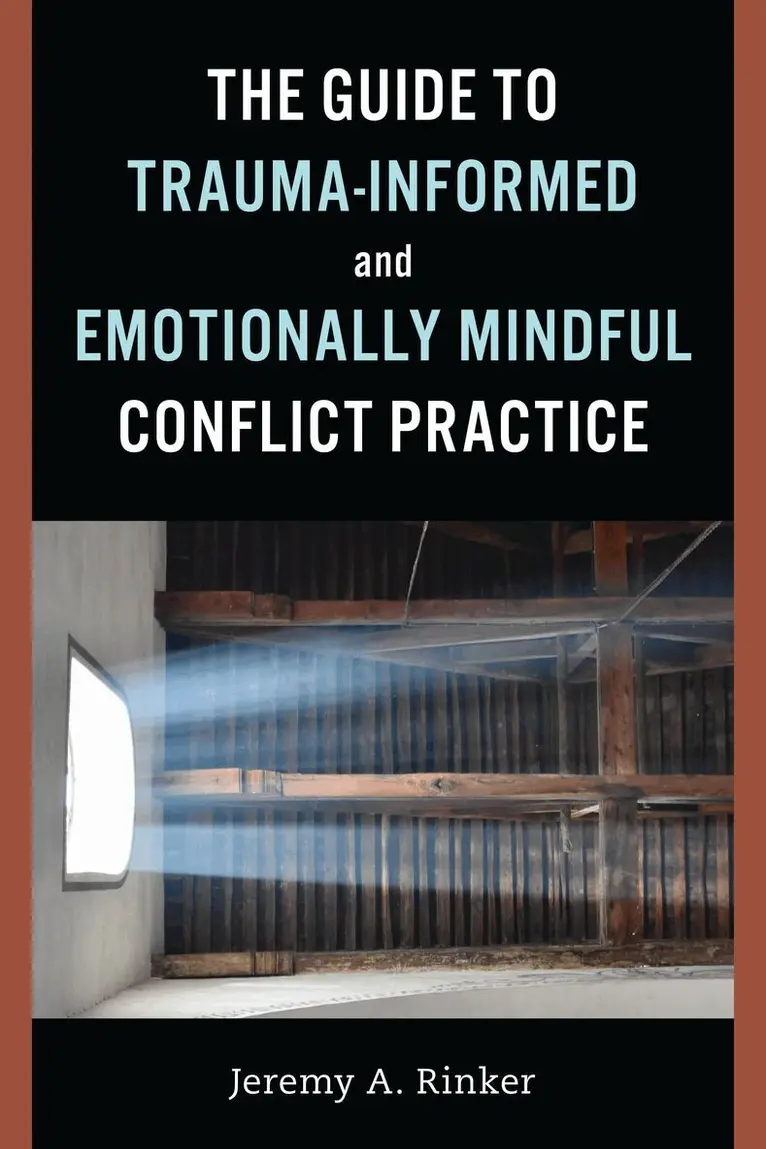
Inbunden, Engelska, 2024
The Guide to Trauma-Informed and Emotionally Mindful Conflict Practice
1065 kr
Beställningsvara. Skickas inom 10-15 vardagar. Fri frakt över 249 kr.
Beskrivning
Produktinformation
- Utgivningsdatum: 2024-11-07
- Mått: 152 x 229 x 17 mm
- Vikt: 486 g
- Format: Inbunden
- Språk: Engelska
- Antal sidor: 200
- Förlag: Bloomsbury Publishing Plc
- ISBN: 9781538168592
Utforska kategorier
Mer om författaren
Jeremy A. Rinker is an associate professor at the University of North Carolina Greensboro’s Department of Peace and Conflict Studies. He is the editor of the Journal of Transdisciplinary Peace Praxis.
Recensioner i media
Jeremy Rinker offers an innovate and refreshing reassessment on trauma and its remedies at personal and societal levels. He argues convincingly that relevant contexts for viewing trauma must be reconceptualized by practitioners working to halt cycles of violence and to promote healing processes, not only to reckon with social injustices but also to acknowledge and engage with emotions as a crucial part of addressing trauma. This book provides invaluable insights for practitioners and theorists from disciplines as diverse as psychology, trauma counseling, social work, sociology, mediation, peacemaking, and peace-buildings. It will provoke useful reflection and reevaluation of widely held assumptions about the nature of trauma and how to prevent and ameliorate trauma-induced suffering.
Betyg & recensioner
0 recensioner
Inga recensioner tillgängliga.