• Fri frakt över 249 kr
  • •
  • Snabba leveranser
  • •
  • Billiga böcker
Kundservice

Du är på sajten för privatpersoner.

Företag, bibliotek eller offentlig verksamhet?

Du handlar på classic.bokus.com, där alla dina funktioner finns intakta.
Till classic.bokus.com
Bokus logotyp. Gå till startsidan.
  • Erbjudanden
  • Nyheter
  • Student
  • Topplistor
  • Barn & ungdom
  • Bokus Play
  • E-böcker
  • Pocketböcker
  • Spel & pussel

10% rabatt på allt med kod: NYSTART10 →

Sidfot

Mina sidor

    Hjälp

    • Kundservice
    • Vanliga frågor och svar
    • Frakt och leverans
    • Retur vid ångerrätt
    • Reklamera vara
    • Betalning
    • Köpvillkor
    • Allmänna villkor
    • Information om webbplatsens tillgänglighet

    Om Bokus

    • Om oss
    • Pressrum
    • För studenter
    • För företag
    • För bibliotek och offentlig verksamhet
    • För leverantörer
    • Hållbarhet

    Populärt

    • Aktuella erbjudanden
    • Presentkort
    • Studentlitteratur
    • Nya böcker
    • Topplistor
    • Signerade böcker
    • Engelska böcker

    Inspiration

    • Boktips
    • BookTok
    • Populära bokserier
    • Barnbokskaraktärer
    • Populära författare
    Logotyp för Bokus
    Följ oss på Facebook (extern länk)Följ oss på Instagram (extern länk)Följ oss på YouTube (extern länk)Följ oss på TikTok (extern länk)
    bokus @ CookiesAnpassa cookiesIntegritetspolicyKöpvillkor
    Till Citymail hemsida (extern länk)Till Budbee hemsida (extern länk)Till Postnord hemsida (extern länk)Till Schenker hemsida (extern länk)Till Early Bird hemsida (extern länk)Till Walleys hemsida (extern länk)
    1. Historia och arkeologi
    2. Historia
    3. Allmän historia och världshistoria

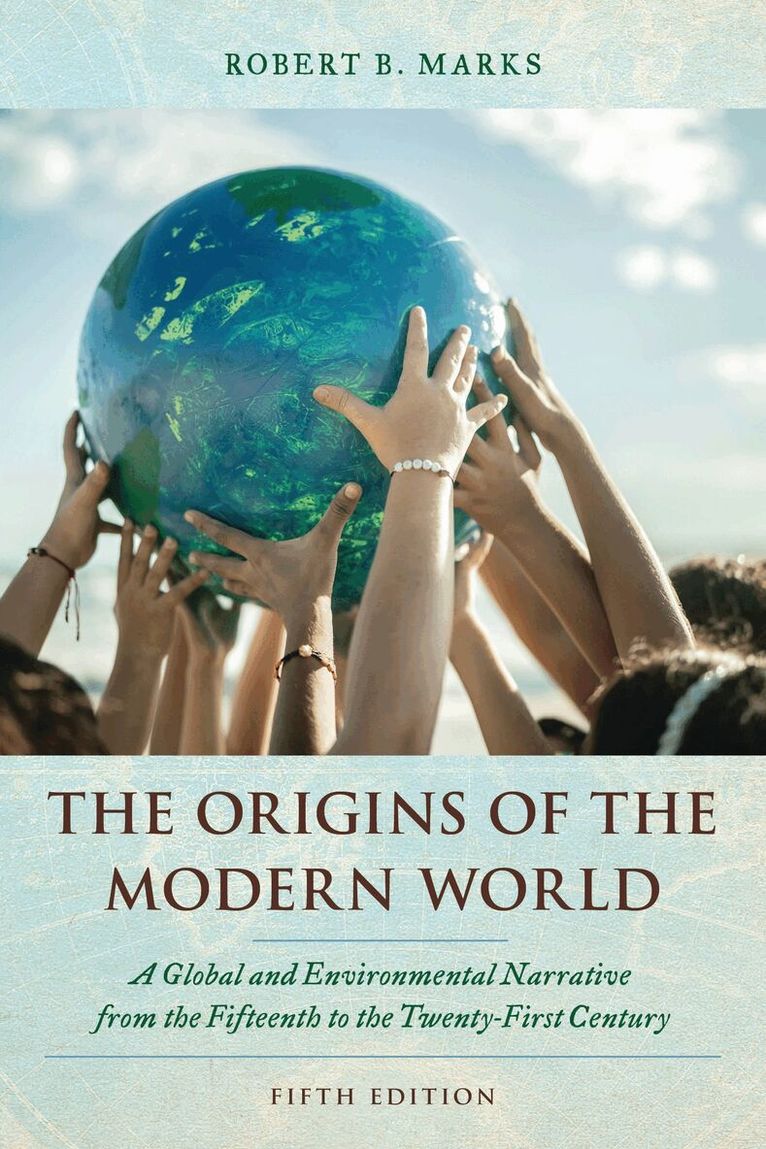
    Origins of the Modern World

    A Global and Environmental Narrative from the Fifteenth to the Twenty-First Century

    AvRobert B. Marks

    Häftad, Engelska, 2024

    Del i serien World Social Change

    424 kr

    Beställningsvara. Skickas inom 10-15 vardagar. Fri frakt över 249 kr.

    Fler format och utgåvor

    Inbunden

    1 150 kr

    E-bok

    498 kr

    Beskrivning

    This clearly written and engrossing book presents a global narrative of the origins of the modern world from 1400 to the present. Unlike most studies, which assume that the “rise of the West” is the story of the coming of the modern world, this history, drawing upon new scholarship on Asia, Africa, and the New World and upon the maturing field of environmental history, constructs a story in which those parts of the world play major roles, including their impacts on the environment. Robert B. Marks defines the modern world as one marked by industry, the nation state, interstate warfare, a large and growing gap between the wealthiest and poorest parts of the world, increasing inequality within the wealthiest industrialized countries, and an escape from the environmental constraints of the “biological old regime.” He explains its origins by emphasizing contingencies (such as the conquest of the New World); the broad comparability of the most advanced regions in China, India, and Europe; the reasons why England was able to escape from common ecological constraints facing all of those regions by the end of the eighteenth century; a conjuncture of human and natural forces that solidified a gap between the industrialized and non-industrialized parts of the world; the mounting environmental crisis that defines the modern world; and the ways in which the forces of globalization stress the economic and political underpinnings of the modern world. Now in a new edition that brings the saga of the modern world to the present in an environmental context, the book considers how and why the United States emerged as a world power in the twentieth century and became the sole superpower by the twenty-first century, and why the changed relationship of humans to the environmental likely will be the hallmark of the modern era—the Anthropocene. Once again arguing that the US rise to global hegemon was contingent, not inevitable, Marks also points to the resurgence of Asia and the vastly changed relationship of humans to the environment that may in the long run overshadow any political and economic milestones of the past hundred years.

    Produktinformation

    • Utgivningsdatum:2024-01-12
    • Mått:152 x 228 x 22 mm
    • Vikt:418 g
    • Format:Häftad
    • Språk:Engelska
    • Serie:World Social Change
    • Antal sidor:328
    • Upplaga:5
    • Förlag:Bloomsbury Publishing Plc
    • ISBN:9781538182772

    Utforska kategorier

    • Allmän historia och världshistoria inom Historia och arkeologi

    Mer om författaren

    Robert B. Marks was Richard and Billie Deihl Professor of History at Whittier College and the author of China: Its Environment and History (R&L 2012) and Tigers, Rice, Silk, and Silt: Environment and Economy in Late Imperial China (CUP 1998). He is the recipient of Whittier College’s Harry W. Nerhood Teaching Excellence Award.

    Recensioner i media

    The fifth edition adds timely discussions of the two deadliest pandemics (1918 and 2019-23) and the Russian invasion of Ukraine. The discussions highlight the reasons and repercussions of the two most recent global catastrophes connected with the larger framework of the book. Students who are keen to comprehend recent affairs will benefit from the additional coverage. The revision also adds three fascinating new sections titled “The China Shock,” “The Financial Crisis of 2008 and the Ensuing ‘Great Recession,” and “Death of Despair.” These three factors, according explain the rise in nationalist, anti-immigrant, and anti-China sentiments in today’s United States. It is a persuasive argument that demonstrates to students the significance of historical perspective and well-rounded analysis from both the US and China viewpoints in understanding the current US vs. China conflict.

    Innehållsförteckning

    • ContentsList of Figures and MapsPreface and AcknowledgmentsIntroduction: The Rise of the West?The Rise of the West“The Gap” and Its ExplanationsEurocentrismStories and Historical NarrativesThe Elements of an Environmentally Grounded Non-Eurocentric NarrativeChapter One: The Material and Trading Worlds, circa 1400The Biological Old RegimeThe Weight of NumbersClimate ChangePopulation Density and CivilizationThe Agricultural RevolutionTowns and Cities in 1400Nomadic PastoralistsWildlifePopulation Growth and LandFamineThe Nitrogen Cycle and World HistoryEpidemic DiseaseThe World and Its Trading System circa 1400The Black Death: A Mid-Fourteenth-Century ConjunctureConclusion: The Biological Old RegimeChapter Two: Starting with ChinaChinaThe Voyages of Zheng He, 1405–33India and the Indian OceanDar al-Islam, “The Abode of Islam”Africa57SlaveryEurope and the Gunpowder EpicArmed Trading on the MediterraneanPortuguese Explorations of the AtlanticArmed Trading in the Indian OceanConclusionChapter Three: Empires, States, and the New World, 1500–1775Empire Builders and ConquerorsRussia and ChinaMughal, Safavid, and Ottoman ExpansionThe Dynamics of EmpireThe AmericasThe Conquest of the Americas and the Spanish EmpireThe Columbian ExchangeThe Great DyingLabor Supply ProblemsSilverThe Spanish Empire and Its CollapseChina’s Demand for SilverThe New World EconomySugar, Slavery, and EcologyHuman Migration and the Early Modern WorldThe Global Crisis of the Seventeenth Century and the European State SystemState BuildingMercantilismThe Seven Years’ War, 1756–63Chapter Four: The Industrial Revolution and Its Consequences, 1750–1850Cotton TextilesIndiaThe New World as a Peculiar PeripheryNew Sources of Energy and PowerChinaMarketsExhausting the EarthEngland, ReduxCoal, Iron, and SteamRecap: Without Colonies, Coal, or State SupportScience and TechnologyTea, Silver, Opium, Iron, and SteamTeaSilverOpiumIron and SteamConclusion: Into the AnthropoceneChapter Five: The GapOpium and Global CapitalismIndiaIndustrialization ElsewhereFranceThe United StatesGermanyRussiaJapanNew Dynamics in the Industrial WorldThe Environmental Consequences of IndustrializationThe Social Consequences of IndustrializationNations and NationalismThe Scrambles for Africa and ChinaAfricaChinaEl Niño Famines and the Making of the Third WorldSocial Darwinism and Self-Congratulatory EurocentrismConclusionChapter Six: The Great DepartureIntroduction to the Twentieth Century and BeyondPart I: Nitrogen, Wars, and the First Deglobalization, 1900–1945World War I and the Beginning of the Thirty-Year Crisis, 1914–45RevolutionsColonial Independence MovementsNormalcy?The Great Depression of the 1930sWorld War IIPart II: The Post–World War II and Cold War Worlds, 1945–91DecolonizationAsian RevolutionsDevelopment and UnderdevelopmentConsumerism versus ProductionismConsumerismThird World DevelopmentalismMigration, Refugees, and StatesGlobal InequalityInequality within Rich CountriesPart III: Globalization and Its Opponents, 1991–PresentThe End of the Cold WarThe End of History?A Clash of Civilizations?Global Free TradeEnergy, Oil, and WarDeterritorializationDoes History Repeat Itself?Part IV: The Great Departure: Into the AnthropoceneConclusionConclusion: Changes, Continuities, and the Shape of the FutureThe Story SummarizedGlobalizationInto the FutureNotesIndexAbout the Author