• Fri frakt över 249 kr
  • •
  • Snabba leveranser
  • •
  • Billiga böcker
Kundservice

Du är på sajten för privatpersoner.

Företag, bibliotek eller offentlig verksamhet?

Du handlar på classic.bokus.com, där alla dina funktioner finns intakta.
Till classic.bokus.com
Bokus logotyp. Gå till startsidan.
  • Erbjudanden
  • Nyheter
  • Student
  • Topplistor
  • Barn & ungdom
  • Bokus Play
  • E-böcker
  • Pocketböcker
  • Spel & pussel

10% rabatt på allt med kod: NYSTART10 →

Sidfot

Mina sidor

    Hjälp

    • Kundservice
    • Vanliga frågor och svar
    • Frakt och leverans
    • Retur vid ångerrätt
    • Reklamera vara
    • Betalning
    • Köpvillkor
    • Allmänna villkor
    • Information om webbplatsens tillgänglighet

    Om Bokus

    • Om oss
    • Pressrum
    • För studenter
    • För företag
    • För bibliotek och offentlig verksamhet
    • För leverantörer
    • Hållbarhet

    Populärt

    • Aktuella erbjudanden
    • Presentkort
    • Studentlitteratur
    • Nya böcker
    • Topplistor
    • Signerade böcker
    • Engelska böcker

    Inspiration

    • Boktips
    • BookTok
    • Populära bokserier
    • Barnbokskaraktärer
    • Populära författare
    Logotyp för Bokus
    Följ oss på Facebook (extern länk)Följ oss på Instagram (extern länk)Följ oss på YouTube (extern länk)Följ oss på TikTok (extern länk)
    bokus @ CookiesAnpassa cookiesIntegritetspolicyKöpvillkor
    Till Citymail hemsida (extern länk)Till Budbee hemsida (extern länk)Till Postnord hemsida (extern länk)Till Schenker hemsida (extern länk)Till Early Bird hemsida (extern länk)Till Walleys hemsida (extern länk)
    1. Kultur
    2. Musikböcker

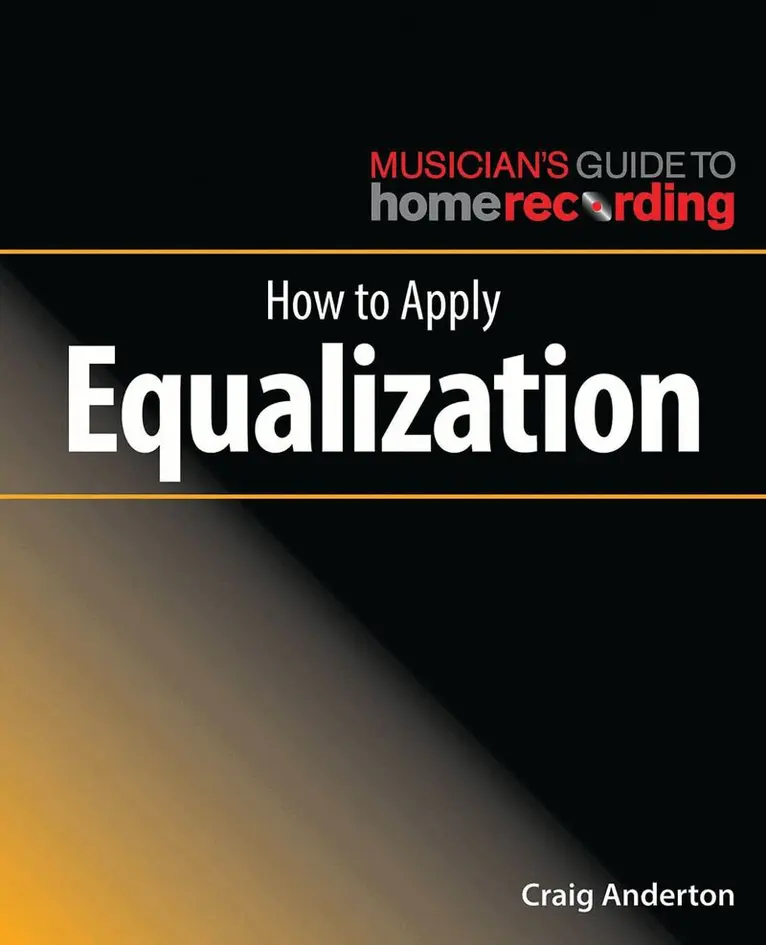
    How to Apply Equalization

    AvCraig Anderton

    Häftad, Engelska, 2018

    Del i serien Musician's Guide to Home Recording

    365 kr

    Beställningsvara. Skickas inom 10-15 vardagar. Fri frakt över 249 kr.

    Beskrivning

    Equalization is one of the most important signal processors – perhaps the most important signal processor – for mixing and mastering. This book goes beyond explaining equalization to giving essential tips on how to use equalization to make better music. Written in a clear, practical, non-intimidating style, topics include:• Equalizer parameters• When to use different equalizer responses• Linear vs. non-linear phase EQ• Plug-in formats, mid/side equalization• Typical equalizer controls• Real-world examples of EQ in products from Ableton, Apple, Avid, iZotope, Steinberg, Propellerheads, Cakewalk, Softube, Studio One, Waves, Universal Audio, and moreThe book then covers general tips (solving problems with EQ, emphasizing instruments, when to apply EQ, applying mid/side EQ, understanding EQ curves, and more), then segues into EQ curves associated with musical styles, and presents a variety of EQ presets for drums, guitar, piano, voice, and bass. The book closes out with typical equalizer mastering presets, a special section on equalization tips for guitar, and includes an appendix on understanding frequency response.Chock full of illustrations and featuring the judicious use of sidebars to give details on selected topics for those who want to know “why” as well as “how,” How to Apply Equalization is essential reading about how to get the most out of this crucial processor for mixing and mastering.

    Produktinformation

    • Utgivningsdatum:2018-08-01
    • Mått:191 x 235 x 14 mm
    • Vikt:635 g
    • Format:Häftad
    • Språk:Engelska
    • Serie:Musician's Guide to Home Recording
    • Antal sidor:112
    • Förlag:Hal Leonard Corporation
    • ISBN:9781540024893

    Utforska kategorier

    • Musikböcker inom Kultur

    Mer om författaren

    Craig Anderton is an internationally recognized authority on music and technology. He has played on, produced, or mastered over 20 major label recordings, did session work in New York in the 1970s on guitar and keyboards, played Carnegie Hall, and more recently, mastered well over a hundred tracks for various artists. His onstage career spans from the 60s to current, EDM-oriented solo performances. As an author, he co-founded Electronic Musician magazine, and has written over 35 books on musical electronics and over a thousand articles. He has also lectured on technology and the arts in 10 countries, 38 U.S. states, and three languages.

    Innehållsförteckning

    • Introduction. About This BookThe Purpose of EqualizationTips and ReferencesChapter 1. Equalization Basics Equalizer Bands The User Interface Common EQ Band Responses Other Equalizer Controls Intelligent Nodes Other Parameter Control Methods Linear-Phase vs. Non-Linear OperationDual Mono vs. Stereo Mid-Side Equalization Parallel Processing and Reality Checks Passive vs. Active EQ TechnologyNative vs. Hardware-Assisted TechnologyPlug-In Formats32-Bit vs. 64-Bit Plug-InsCopy ProtectionDon’t Overlook the DocumentationKey TakeawaysChapter 2. Equalizer ExamplesAbleton Live EQ ThreeAbleton Live EQ EightApple GarageBandApple Logic Pro XAvid Pro Tools EQ and Channel StripCakewalk by BandLab ProChannel Channel Strip with QuadCurve EQ iZotope Neutron Nomad Factory Blue Tubes PEQ322Propellerheads ReasonSoftube Focusing EqualizerSony Paragraphic EQSteinberg Cubase Mixer EQStudio One Pro EQUniversal Audio / Manley Massive Passive Universal Audio SSL E-Series Channel StripWaves Puigtech MEQ-5 Midrange EqualizerWaves Artist Signature SeriesKey TakeawaysChapter 3. General TipsWhy EQ Matters Solving Problems with EQ Taming and Reducing Resonances Finding Target Frequencies Emphasizing InstrumentsNew Sonic PersonalitiesWhen to ApplyWhere to Apply EQThe High-Performance Graphic EqualizerThe Virtual Pop FilterMid-Side EQ: Rocking Your Mixes And Masters Virtual Mics for Acoustic Guitars Understanding EQ Curves—Why Noise Is Your Friend Key TakeawaysChapter 4. EQ Curves and Musical Styles Dance/EDM Classical Rock and Modern Country Rap/Hip-Hop Adult ContemporarySo What Does It All Mean? Key Takeaways Chapter 5. Typical Equalizer Instrument Presets Drum Presets Guitar PresetsPercussion Presets Piano and Keyboard Presets Presets for Voice Bass Presets Key Takeaways Chapter 6. Typical Mastering PresetsSave Your Own Presets When MasteringUnderstanding the “Rule of Half” for EQDefault PresetAir Lift Bass TiltHigh Tilt Big and Bright Bright and Loud Crispy Meets the Bass Deeper Kick High Boost Low Boost Kick and SizzleLess Boxy Less Vocals Make Room for Female Voice Narration Make Room for Male Voice Narration Push Mids Mono Bass More Articulated More Vocals Punch Reduce Honk and Mud Reduce Honk Reduce Mud Reduce Subsonics and DC Offset Scoop with High and Low Boost Too Bassy TrackVinyl Mastering Warm and Clear Widen High-Frequency Image Widen Midrange Image It’s All About the Bass Key Takeaways Appendix. Understanding Frequency Response Frequency Response Basics Why Flat Response Is Good The Role of the Decibel Know Your Speakers