• Fri frakt över 249 kr
  • •
  • Snabba leveranser
  • •
  • Billiga böcker
Kundservice

Du är på sajten för privatpersoner.

Företag, bibliotek eller offentlig verksamhet?

Du handlar på classic.bokus.com, där alla dina funktioner finns intakta.
Till classic.bokus.com
Bokus logotyp. Gå till startsidan.
  • Erbjudanden
  • Nyheter
  • Student
  • Topplistor
  • Barn & ungdom
  • Bokus Play
  • E-böcker
  • Pocketböcker
  • Spel & pussel

10% rabatt på allt med kod NYSTART10 →

Sidfot

Mina sidor

    Hjälp

    • Kundservice
    • Vanliga frågor och svar
    • Frakt och leverans
    • Retur vid ångerrätt
    • Reklamera vara
    • Betalning
    • Köpvillkor
    • Allmänna villkor
    • Information om webbplatsens tillgänglighet

    Om Bokus

    • Om oss
    • Pressrum
    • För studenter
    • För företag
    • För bibliotek och offentlig verksamhet
    • För leverantörer
    • Hållbarhet

    Populärt

    • Aktuella erbjudanden
    • Presentkort
    • Studentlitteratur
    • Nya böcker
    • Topplistor
    • Signerade böcker
    • Engelska böcker

    Inspiration

    • Boktips
    • BookTok
    • Populära bokserier
    • Barnbokskaraktärer
    • Populära författare
    Logotyp för Bokus
    Följ oss på Facebook (extern länk)Följ oss på Instagram (extern länk)Följ oss på YouTube (extern länk)Följ oss på TikTok (extern länk)
    bokus @ CookiesAnpassa cookiesIntegritetspolicyKöpvillkor
    Till Citymail hemsida (extern länk)Till Budbee hemsida (extern länk)Till Postnord hemsida (extern länk)Till Schenker hemsida (extern länk)Till Early Bird hemsida (extern länk)Till Walleys hemsida (extern länk)
    1. Ekonomi och Ledarskap
    2. Ledarskapsböcker
    3. Projektledning

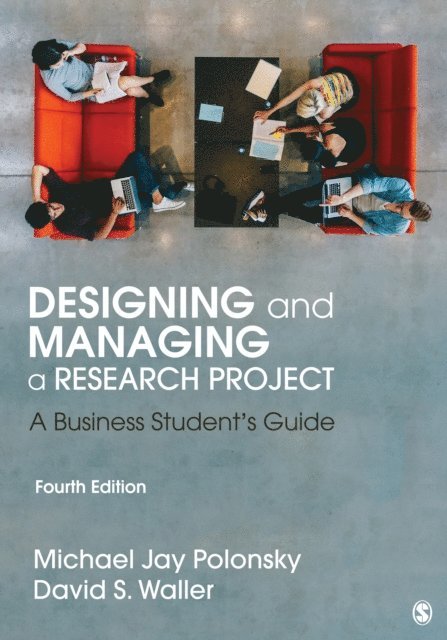
    Designing and Managing a Research Project

    A Business Student's Guide

    AvMichael J. Polonsky,David S. Waller

    Häftad, Engelska, 2019

    1 658 kr

    Beställningsvara. Skickas inom 5-8 vardagar. Fri frakt över 249 kr.

    Beskrivning

    Designing and Managing a Research Project: A Business Student’s Guide is a practical, step-by-step guide that shows business students how to successfully conduct a research project, from choosing the topic to presenting the results. The authors have applied their many years of experience in supervising student projects to provide examples of actual research problems and to offer practical solutions. The inclusion of topics such as supervision, group work and ethics, and both qualitative and quantitative data analysis, along with examples from real student research provide a unique perspective.

    The new Fourth Edition includes broader types of student project examples, such as an Economics thesis, additional international business cases, increased coverage of Questionnaire Design and Institutional Review Boards, and an integrated case throughout the book on “High Performance Shoes” with supporting materials and data.

    Additional resources including case studies, PowerPoint slides, and test bank are available on the authors’ website.


    Produktinformation

    • Utgivningsdatum:2019-02-07
    • Mått:177 x 254 x 19 mm
    • Vikt:630 g
    • Format:Häftad
    • Språk:Engelska
    • Antal sidor:360
    • Upplaga:4
    • Förlag:SAGE Publications
    • ISBN:9781544316468

    Utforska kategorier

    • Projektledning inom Ekonomi och Ledarskap

    Mer om författaren

    Michael Jay Polonsky is an Alfred Deakin Professor and Chair in the Department of Marketing in Deakin Business School. He received his PhD from the Australian Catholic University in 1999. Michael has taught at a number of Australian Universities, as well as into their international programs in China, Malaysia and Singapore. He specialises in teaching business marketing, marketing strategy, and environmental marketing. His research focuses on blood donation, environmental, social and ethical issues in marketing and management, and stakeholder theory. He has published over 135 journal articles in over 70 different academic journals, as well as published numerous conference papers and book chapters. David S. Waller (Ph.D) is a Senior Lecturer in Marketing at the University of Technology Sydney, Australia. David was born and raised in Sydney and, after working in the banking and film industries, taught at a number of universities in Australia, including the University of Newcastle, the University of New South Wales, and Charles Sturt University. David has a Bachelor of Arts from the University of Sydney, a Master of Commerce from the University of New South Wales, and a Ph.D from the University of Newcastle. His research interests include advertising agencies, agency– client relationships, controversial advertising, international advertising, and marketing education. David has published a wide range of journal articles, including the Journal of Advertising, Journal of Advertising Research, European Journal of Marketing, and Journal of Business Ethics, primarily relating to advertising and marketing communication, and is a regular presenter at academic conferences. He has also authored/co-authored a number of university-level textbooks and workbooks which are used in several countries.

    Innehållsförteckning

    • PrefaceAcknowledgmentsPART I. THE FOUNDATIONSCHAPTER 1. IntroductionWhat Is Research?How a Research Project Fits Within Your Business EducationOverview of the BookOnline Support MaterialsCase StudyChapter QuestionsReferencesCHAPTER 2. Choosing a TopicHas the Topic Been Assigned?Steps in Choosing a TopicProject ChecklistCase StudyChapter QuestionsReferencesCHAPTER 3. The Role of the SupervisorUnderstanding Your SupervisorWhat Is the Role of a Supervisor?Selecting a SupervisorOther Supervisor ArrangementsGround Rules and ExpectationsConclusionProject ChecklistCase StudyChapter QuestionsReferencesCHAPTER 4. Group Work, Group Dynamics, and the Role of ConflictThe Group Work ProcessWhy Assignments Use GroupsThe Complexity of Group WorkGroup Work and ConflictPositive and Negative ConflictGeneral Causes of ConflictConflict StimulationManaging ConflictConclusionProject ChecklistCase StudyChapter QuestionsReferencesCHAPTER 5. Ethical ConsiderationsWhat Is Human Intervention?Codes of Ethical Conduct/PracticeEthical PhilosophiesEthical Issues to ConsiderTechnology IssuesConclusionProject ChecklistCase StudyChapter QuestionsReferencesPART II. UNDERTAKING THE RESEARCHCHAPTER 6. Planning the Research ProjectImportance of PlanningThe Research ProcessThe Research ProposalManaging the Research ProcessBudgetingConclusionProject ChecklistCase StudyChapter QuestionsReferencesCHAPTER 7. Literature ReviewWhat Is a Literature Review?How Can Literature Be Used?Where to Obtain LiteratureHow to Write a Literature ReviewReferencingManaging Your ReferencesProject ChecklistCase StudyChapter QuestionsReferencesCHAPTER 8. Data GatheringFactors to Evaluate Data-Gathering MethodsTypes of Research DataSecondary DataPrimary DataSampling MethodsResearch ErrorsConclusionProject ChecklistCase StudyChapter QuestionsAppendix 8.1: Statistical Agencies that Provide for Up-to-date Demographics and Country DataReferencesCHAPTER 9. Qualitative Data Collection and Issues in AnalysisQualitative Data Collection MethodsImplementationAnalysis and InterpretationConclusionProject ChecklistCase StudyChapter QuestionsReferencesFurther ReadingCHAPTER 10. Quantitative Data AnalysisHypotheses, Errors, and SignificanceBasic AnalysisBasic AssociationsBasic Causal RelationshipIntroducing Advanced TechniquesConclusionProject ChecklistGlossaryCase StudyChapter QuestionsReferencesFurther ReadingPART III. COMMUNICATING THE RESULTSCHAPTER 11. Presenting the ResultsWays to Present Research FindingsNumerical TablesAPA StyleCharts and GraphsPicturesMapsQuotationsReporting Statistical ResultsConclusionProject ChecklistCase StudyChapter QuestionsReferencesCHAPTER 12. Identifying the Implications and Establishing RecommendationsDescribing the ResultsDiscussion and InterpretationResearch ImplicationsRecommendation GuidelinesLimitationsFuture ResearchProject ChecklistCase StudyChapter QuestionsReferencesCHAPTER 13. Writing the ReportWritten CommunicationWhen to Write?Types of ReportsStructure of a Project ReportConclusionProject ChecklistCase StudyChapter QuestionsReferencesCHAPTER 14. Oral PresentationsBefore the PresentationThe PresentationWrapping UpGroups and Group Members in PresentationsConclusionProject ChecklistCase StudyChapter QuestionsReferencesCHAPTER 15. Concluding RemarksSome Final Hints for Those Undertaking a ProjectCase Study (Epilogue)About the AuthorsIndex