• Fri frakt över 249 kr
  • •
  • Snabba leveranser
  • •
  • Billiga böcker
Kundservice

Du är på sajten för privatpersoner.

Företag, bibliotek eller offentlig verksamhet?

Du handlar på classic.bokus.com, där alla dina funktioner finns intakta.
Till classic.bokus.com
Bokus logotyp. Gå till startsidan.
  • Erbjudanden
  • Nyheter
  • Student
  • Topplistor
  • Barn & ungdom
  • Bokus Play
  • E-böcker
  • Pocketböcker
  • Spel & pussel

10% rabatt på allt med kod: NYSTART10 →

Sidfot

Mina sidor

    Hjälp

    • Kundservice
    • Vanliga frågor och svar
    • Frakt och leverans
    • Retur vid ångerrätt
    • Reklamera vara
    • Betalning
    • Köpvillkor
    • Allmänna villkor
    • Information om webbplatsens tillgänglighet

    Om Bokus

    • Om oss
    • Pressrum
    • För studenter
    • För företag
    • För bibliotek och offentlig verksamhet
    • För leverantörer
    • Hållbarhet

    Populärt

    • Aktuella erbjudanden
    • Presentkort
    • Studentlitteratur
    • Nya böcker
    • Topplistor
    • Signerade böcker
    • Engelska böcker

    Inspiration

    • Boktips
    • BookTok
    • Populära bokserier
    • Barnbokskaraktärer
    • Populära författare
    Logotyp för Bokus
    Följ oss på Facebook (extern länk)Följ oss på Instagram (extern länk)Följ oss på YouTube (extern länk)Följ oss på TikTok (extern länk)
    bokus @ CookiesAnpassa cookiesIntegritetspolicyKöpvillkor
    Till Citymail hemsida (extern länk)Till Budbee hemsida (extern länk)Till Postnord hemsida (extern länk)Till Schenker hemsida (extern länk)Till Early Bird hemsida (extern länk)Till Walleys hemsida (extern länk)
    1. Skönlitteratur
    2. Litteraturvetenskap
    3. Litteraturvetenskap

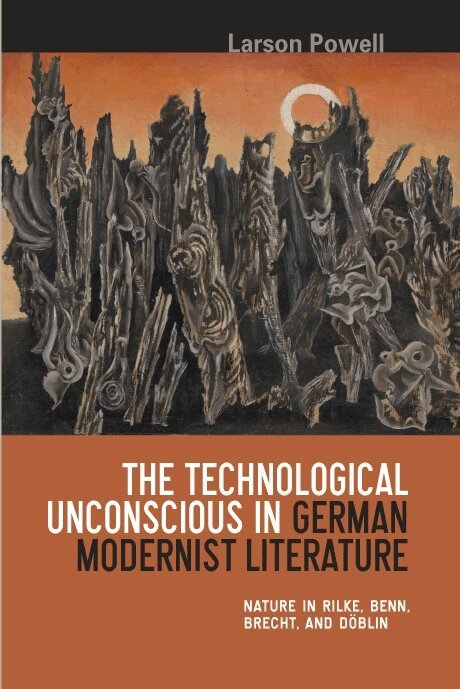
    Technological Unconscious in German Modernist Literature

    Nature in Rilke, Benn, Brecht, and Döblin

    AvLarson Powell

    Inbunden, Engelska, 2008

    Del 20 i serien Studies in German Literature Linguistics and Culture

    892 kr

    Tillfälligt slut

    Beskrivning

    A bold new theoretical analysis of literary modernism and its conception of and relation to nature.Even after the end of modernism and postmodernism, grandiose fantasies of artifice and self-reference still resonate in the "social constructivism" of current literary and cultural theory: in the idea that we can perform or construct "identities" or social roles without external constraint, as if we had consumer choice of self. Larson Powell's book posits nature as a limit to such fantasies, redefining aesthetic modernity's conception of and relation to nature and therefore its relation to reality. Powell's term "the Technological Unconscious" refers both to the intersection between psychoanalysis and theories of modernism and to the philosophical mediation between history and nature, a motif important from Kant to Adorno. The book's four chapters center on the representation of nature in German prose and -- especially -- poetry by Rilke, Benn, Brecht, and Döblin from the years 1900 to 1945. In connection with these works, Powell analyzes the conceptions of subject and system in the theories of Adorno, Luhmann, and Lacan and their relation to their complement, nature. The Technological Unconscious is thus an important polemical intervention both in the debates over interdisciplinarity and in those between eclectic "culturalist" theories such as New Historicism and postcolonialism on the one hand and systems theory and psychoanalysis on the other.Larson Powell is Curator's Professor of Film Studies at University of Missouri, Kansas City.

    Produktinformation

    • Utgivningsdatum:2008-05-01
    • Mått:152 x 229 x 24 mm
    • Vikt:542 g
    • Format:Inbunden
    • Språk:Engelska
    • Serie:Studies in German Literature Linguistics and Culture
    • Antal sidor:264
    • Förlag:Boydell & Brewer Ltd
    • ISBN:9781571133823

    Utforska kategorier

    • Litteraturvetenskap inom Skönlitteratur

    Mer om författaren

    Larson Powell is Curator's Professor of Film Studies at University of Missouri, Kansas City.

    Recensioner i media

    Powell's discussion of these authors is informed throughout by an extensive knowledge of arguments about the nature of modernism.

    Innehållsförteckning

    • IntroductionThe Limits of TechnocracyRilke's Unnatural Things: From the End of Landscape to the DinggedichtNature on Stage: Gottfried Benn -- Beyond the Aesthetics of Shock?The Limits of Violence: Döblin's Colonial NatureNature as Paradox: Brecht's Exile LyricAppendix: Niklas LuhmannBibliographyIndex