Larson Powell - Böcker
Visar alla böcker från författaren Larson Powell. Handla med fri frakt och snabb leverans.
6 produkter
6 produkter
Del 20 - Studies in German Literature Linguistics and Culture
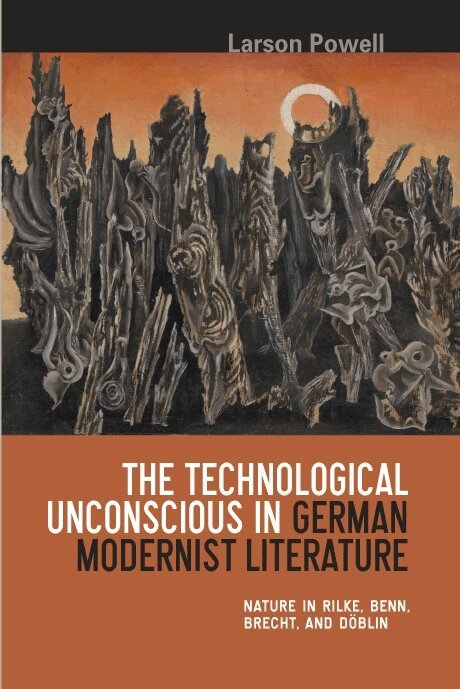
Technological Unconscious in German Modernist Literature
Nature in Rilke, Benn, Brecht, and Döblin
Inbunden, Engelska, 2008
892 kr
Tillfälligt slut
A bold new theoretical analysis of literary modernism and its conception of and relation to nature.Even after the end of modernism and postmodernism, grandiose fantasies of artifice and self-reference still resonate in the "social constructivism" of current literary and cultural theory: in the idea that we can perform or construct "identities" or social roles without external constraint, as if we had consumer choice of self. Larson Powell's book posits nature as a limit to such fantasies, redefining aesthetic modernity's conception of and relation to nature and therefore its relation to reality. Powell's term "the Technological Unconscious" refers both to the intersection between psychoanalysis and theories of modernism and to the philosophical mediation between history and nature, a motif important from Kant to Adorno. The book's four chapters center on the representation of nature in German prose and -- especially -- poetry by Rilke, Benn, Brecht, and Döblin from the years 1900 to 1945. In connection with these works, Powell analyzes the conceptions of subject and system in the theories of Adorno, Luhmann, and Lacan and their relation to their complement, nature. The Technological Unconscious is thus an important polemical intervention both in the debates over interdisciplinarity and in those between eclectic "culturalist" theories such as New Historicism and postcolonialism on the one hand and systems theory and psychoanalysis on the other.Larson Powell is Curator's Professor of Film Studies at University of Missouri, Kansas City.
Del 140 - Studies in German Literature Linguistics and Culture
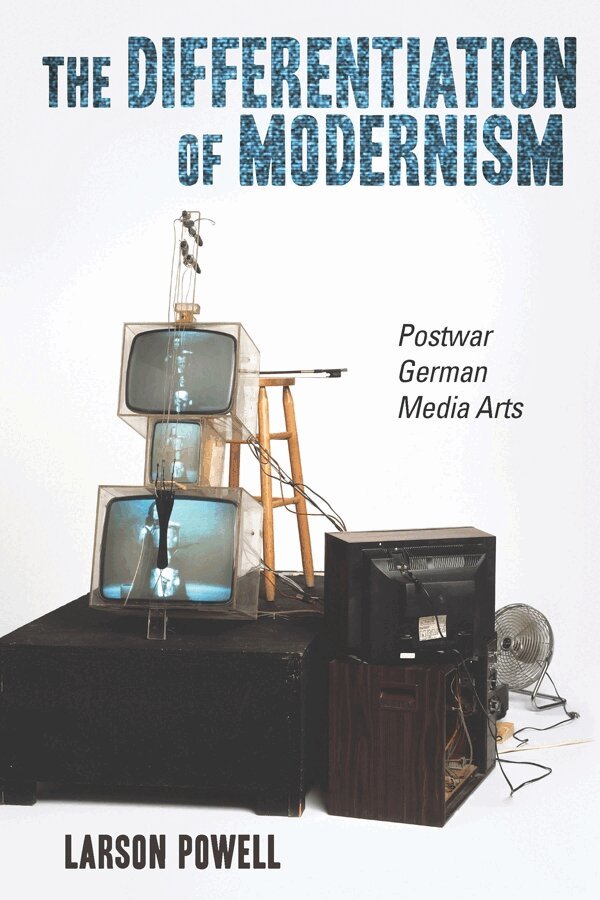
Differentiation of Modernism
Postwar German Media Arts
Inbunden, Engelska, 2013
1 209 kr
Skickas inom 10-15 vardagar
The Differentiation of Modernism analyzes the phenomenon of intermediality in German radio plays, film music, and electronic music of the late modernist period (1945-1980).After 1945, the purist "medium specificity" of high modernism increasingly yielded to the mixed forms of intermediality. Theodor Adorno dubbed this development a "Verfransung," or "fraying of boundaries," between the arts. TheDifferentiation of Modernism analyzes this phenomenon in German electronic media arts of the late modernist period (1945-80): in radio plays, film music, and electronic music. The first part of the book begins with a chapter on Adorno's theory of radio as an instrument of democratization, going on to analyze the relationship of the Hörspiel or radio play to electronic music. In the second part, on film music, a chapter on Adorno and Eisler's Composing for the Film sets the parameters for chapters on the film Das Mädchen Rosemarie (1957) and on the music films of Jean-Marie Straub and Danièle Huillet. The third part examines the music of Karlheinz Stockhausen and its relationship to radio, abstract painting, recording technology, and theatrical happenings. The book's central notion of the "differentiation of culture" suggests that late modernism, unlike high modernism, accepted the contingency of modern mass-media driven society and sought to find new forms for it.Larson Powell is Curator's Professor of Film Studies at University of Missouri, Kansas City. He is the author of The Technological Unconscious in German Modernist Literature (Camden House, 2008).
Del 163 - Studies in German Literature Linguistics and Culture
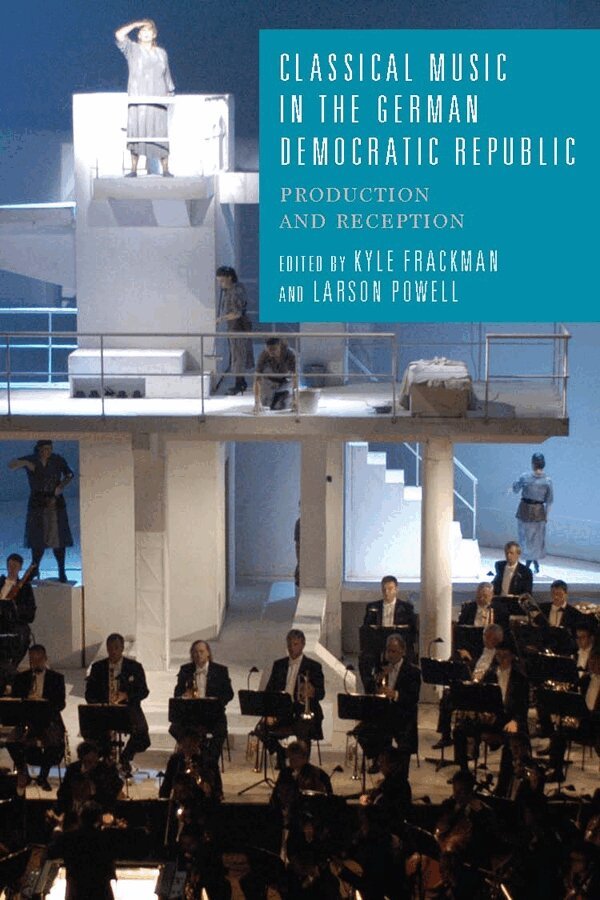
Classical Music in the German Democratic Republic
Production and Reception
Inbunden, Engelska, 2015
1 209 kr
Skickas inom 10-15 vardagar
Approaches the topic of classical music in the GDR from an interdisciplinary perspective, questioning the assumption that classical music functioned purely as an ideological support for the state.Classical music in the German Democratic Republic is commonly viewed as having functioned as an ideological support or cultural legitimization for the state, in the form of the so-called "bourgeois humanist inheritance." The largenumbers of professional orchestras in the GDR were touted as a proof of the country's culture. Classical music could be seen as the polar opposite of Americanizing pop culture and also of musical modernism, which was decried as formalist. Nevertheless, there were still musical modernists in the GDR, and classical music traditions were not only a prop of the state.This collection of new essays approaches the topic of classical music in the GDR from an interdisciplinary perspective, presenting the work of scholars in a number of complementary disciplines, including German Studies, Musicology, Aesthetics, and Film Studies. Contributors to this volume offer a broad examination of classical music in the GDR, while also uncovering nonconformist tendencies and questioning the assumption that classical music in the GDR meant nothing but (socialist) respectability.Contributors: Tatjana Böhme-Mehner, Martin Brady, Lars Fischer, Kyle Frackman, Golan Gur, Peter Kupfer, Albrecht von Massow, Carola Nielinger-Vakil, Jessica Payette, Larson Powell, Juliane Schicker, Martha Sprigge, Matthias Tischer, Jonathan L. Yaeger, Johanna Frances YunkerKyle Frackman is Assistant Professor of Germanic Studies at the University of British Columbia. Larson Powell is Professor of German at the University of Missouri-Kansas City.
Del 22 - Screen Cultures: German Film and the Visual
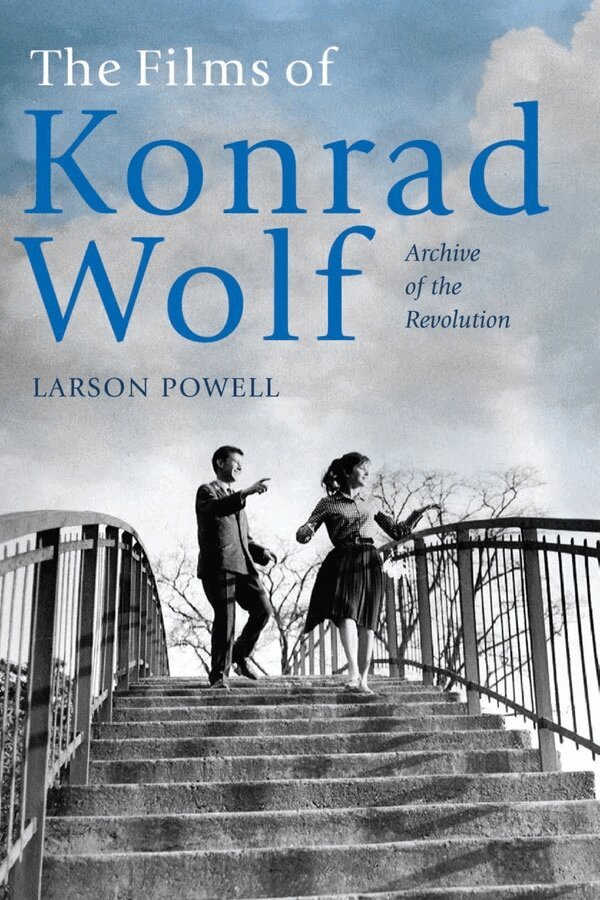
Films of Konrad Wolf
Archive of the Revolution
Inbunden, Engelska, 2020
1 229 kr
Skickas inom 7-10 vardagar
This is the first book in English on the films of Konrad Wolf (1925-1982), East Germany's greatest filmmaker, and puts Wolf in a larger European filmic and historical context.Konrad Wolf (1925-1982) was East Germany's greatest filmmaker and also an influential public figure in his country's political and cultural life. As artist and representative of the GDR, he had to perform a complex balancing act between aesthetic conscience and political function, not unlike Brecht. His work covers almost the whole lifespan of the GDR, in a range of filmic styles and genres, from musicals to antifascist films to films of everyday life.This book, the first in English on Wolf's entire oeuvre, proposes that we understand his work as an archive both of his own personal experience and of the ideology of socialism, embedded in self-reflexive filmic forms and generic references that put Wolf in the vicinity of other filmmakers like Fassbinder, Wajda, and Tarkovsky. The book's comparativist dimension, as well as its larger examination of the problems of a politically committed artist in state socialism, will make it of interest to all readers concerned with late-twentieth-century film history, art under socialism, and the history of East Germany and Eastern Europe.
1 956 kr
Skickas inom 3-6 vardagar
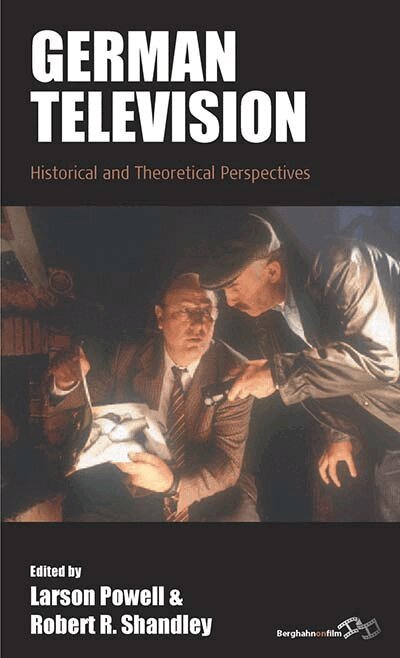
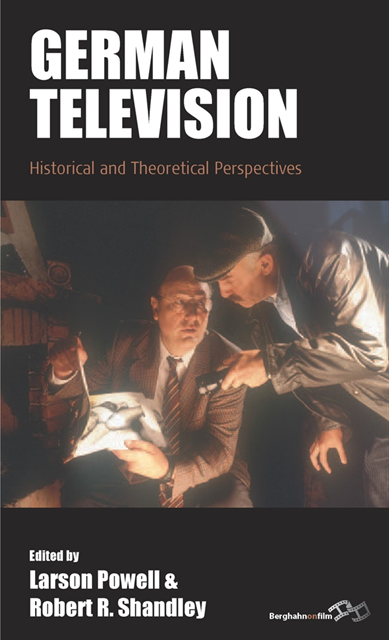
Long overlooked by scholars and critics, the history and aesthetics of German television have only recently begun to attract serious, sustained attention, and then largely within Germany. This ambitious volume, the first in English on the subject, provides a much-needed corrective in the form of penetrating essays on the distinctive theories, practices, and social-historical contexts that have defined television in Germany. Encompassing developments from the dawn of the medium through the Cold War and post-reunification, this is an essential introduction to a rich and varied media tradition.
566 kr
Skickas inom 3-6 vardagar
Long overlooked by scholars and critics, the history and aesthetics of German television have only recently begun to attract serious, sustained attention, and then largely within Germany. This ambitious volume, the first in English on the subject, provides a much-needed corrective in the form of penetrating essays on the distinctive theories, practices, and social-historical contexts that have defined television in Germany. Encompassing developments from the dawn of the medium through the Cold War and post-reunification, this is an essential introduction to a rich and varied media tradition.