• Fri frakt över 249 kr
  • •
  • Snabba leveranser
  • •
  • Billiga böcker
Kundservice

Du är på sajten för privatpersoner.

Företag, bibliotek eller offentlig verksamhet?

Du handlar på classic.bokus.com, där alla dina funktioner finns intakta.
Till classic.bokus.com
Bokus logotyp. Gå till startsidan.
  • Erbjudanden
  • Nyheter
  • Student
  • Topplistor
  • Barn & ungdom
  • Bokus Play
  • E-böcker
  • Pocketböcker
  • Spel & pussel

10% studentrabatt med kod TERM26

Sidfot

Mina sidor

    Hjälp

    • Kundservice
    • Vanliga frågor och svar
    • Frakt och leverans
    • Retur vid ångerrätt
    • Reklamera vara
    • Betalning
    • Köpvillkor
    • Allmänna villkor
    • Information om webbplatsens tillgänglighet

    Om Bokus

    • Om oss
    • Pressrum
    • För studenter
    • För företag
    • För bibliotek och offentlig verksamhet
    • För leverantörer
    • Hållbarhet

    Populärt

    • Aktuella erbjudanden
    • Presentkort
    • Studentlitteratur
    • Nya böcker
    • Topplistor
    • Signerade böcker
    • Engelska böcker

    Inspiration

    • Boktips
    • BookTok
    • Populära bokserier
    • Barnbokskaraktärer
    • Populära författare
    Logotyp för Bokus
    Följ oss på Facebook (extern länk)Följ oss på Instagram (extern länk)Följ oss på YouTube (extern länk)Följ oss på TikTok (extern länk)
    bokus @ CookiesAnpassa cookiesIntegritetspolicyKöpvillkor
    Till Citymail hemsida (extern länk)Till Budbee hemsida (extern länk)Till Postnord hemsida (extern länk)Till Schenker hemsida (extern länk)Till Early Bird hemsida (extern länk)Till Walleys hemsida (extern länk)
    1. Skönlitteratur
    2. Litteraturvetenskap
    3. Litteraturvetenskap

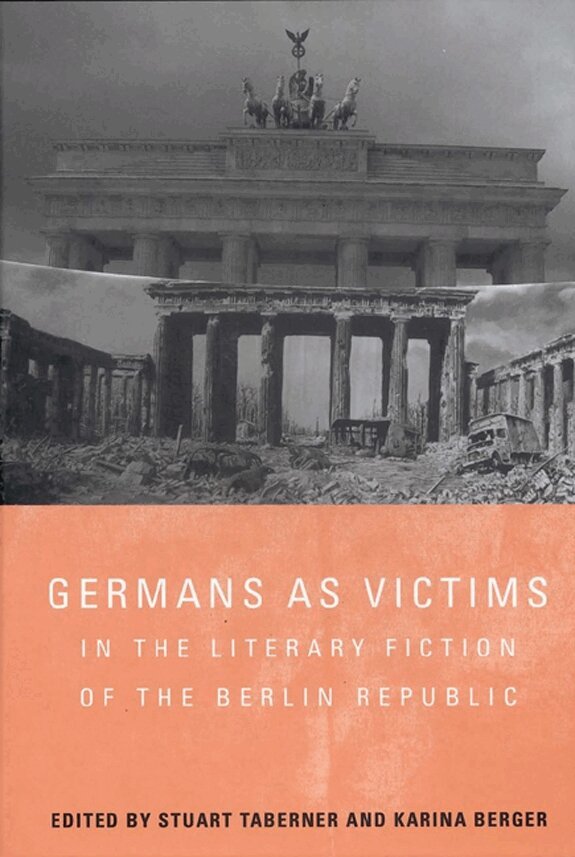
    Germans as Victims in the Literary Fiction of the Berlin Republic

    AvStuart Taberner,Karina Berger

    Häftad, Engelska, 2012

    Del 33 i serien Studies in German Literature Linguistics and Culture

    406 kr

    Beställningsvara. Skickas inom 10-15 vardagar. Fri frakt över 249 kr.

    Beskrivning

    First comprehensive look at how today's German literary fiction deals with questions of German victimhood.In recent years it has become much more accepted in Germany to consider aspects of the Second World War in which Germans were not perpetrators, but victims: the Allied bombing campaign, expulsions of "ethnic" Germans, mass rapes of German women, and postwar internment and persecution. An explosion of literary fiction on these topics has accompanied this trend. Sebald's The Air War and Literature and Grass's Crabwalk are key texts, but there are many others; the great majority seek not to revise German responsibility for the Holocaust but to balance German victimhood and German perpetration. This book of essays is the first in English to examine closely the variety ofthese texts. An opening section on the 1950s -- a decade of intense literary engagement with German victimhood before the focus shifted to German perpetration -- provides context, drawing parallels but also noting differences between the immediate postwar period and today. The second section focuses on key texts written since the mid-1990s shifts in perspectives on the Nazi past, on perpetration and victimhood, on "ordinary Germans," and on the balance between historical empathy and condemnation.Contributors: Karina Berger, Elizabeth Boa, Stephen Brockmann, David Clarke, Mary Cosgrove, Rick Crownshaw, Helen Finch, Frank Finlay, Katharina Hall, Colette Lawson, Caroline Schaumann, Helmut Schmitz, Kathrin Schödel, and Stuart Taberner.Stuart Taberner is Professor of Contemporary German Literature, Culture, and Society at the University of Leeds. Karina Berger holds a PhD in German from the University of Leeds.

    Produktinformation

    • Utgivningsdatum:2012-12-01
    • Mått:152 x 229 x 20 mm
    • Vikt:408 g
    • Format:Häftad
    • Språk:Engelska
    • Serie:Studies in German Literature Linguistics and Culture
    • Antal sidor:268
    • Förlag:Boydell & Brewer Ltd
    • ISBN:9781571135575

    Utforska kategorier

    • Litteraturvetenskap inom Skönlitteratur

    Mer om författaren

    STUART TABERNER is Professor of German at the University of Leeds, UK. He is Research Associate in the Department of Afrikaans and Dutch, German and French at the University of the Free State, South Africa. CAROLINE SCHAUMANN is Professor and Chairperson of German Studies at Emory College, GA. DAVID CLARKE is Professor of Modern German Studies at Cardiff University, UK. HELEN FINCH is Professor of German Literature at the University of Leeds. Mary Cosgrove is Professor in German at Trinity College Dublin. Her research and teaching foci include Holocaust memory and representation in literature and culture; German Jewish writing; the cultural history and theory of melancholia and boredom in European letters; and literaryand narrative economics. Key publications include Born under Auschwitz: Melancholy Traditions in Postwar German Literature (Camden House,2014); German Memory Contests: The Quest for Identity in Literature, Film, and Discourse since 1990 (Camden House, 2006; paperback 2010). STEPHEN BROCKMANN is Professor of German with courtesy appointments in English and History at Carnegie Mellon University. STUART TABERNER is Professor of German at the University of Leeds, UK. He is Research Associate in the Department of Afrikaans and Dutch, German and French at the University of the Free State, South Africa.

    Recensioner i media

    [A]n impressive testament to collaborative research. The . . . essays . . . all offer highly stimulating discussions of individual texts and topics, and can be read as self-contained pieces, but the book is far more than the sum of its parts: the coherence of its argument suggests not only masterly editing, but also the real benefits of scholars with related interests working together over an extended period. [This book] will be of interest to students, specialists, and general readers alike, and given the implications of the topic, deserves the widest possible audience.

    Innehållsförteckning

    • Introduction - Stuart Taberner and Karina BergerW. G. Sebald and German Wartime Suffering - Stephen BrockmannThe Natural History of Destruction: W. G. Sebald, Gert Ledig, and the Allied Bombings - Colette LawsonExpulsion Novels of the 1950s: More than Meets the Eye? - Karina Berger"In this prison of the guard room": Heinrich Böll's Briefe aus dem Krieg 1939-1945 in the Context of Contemporary Debates - Frank FinlayFamily, Heritage, and German Wartime Suffering in Hanns-Josef Ortheil, Stephan Wackwitz, Thomas Medicus, Dagmar Leupold, and Uwe Timm - Helmut SchmitzLost Heimat in Generational Novels by Reinhard Jirgl, Christoph Hein, and Angelika Overath - Elizabeth Boa"A Different Family Story": German Wartime Suffering in Women's Writing by Wibke Bruhns, Ute Scheub, and Christina von Braun - Caroline SchaumannThe Place of German Wartime Suffering in Hans-Ulrich Treichel's Family Texts - David Clarke"Why only now?": The Representation of German Wartime Suffering as a "Memory Taboo" in Günter Grass's Novella Im Krebsgang - Katharina HallRereading Der Vorleser, Remembering the Perpetrator - Rick CrownshawNarrating German Suffering in the Shadow of Holocaust Victimology: W. G. Sebald, Contemporary Trauma Theory, and Dieter Forte's Air Raids Epic - Mary CosgroveGünter Grass's Account of German Wartime Suffering in Beim Häuten der Zwiebel: Mind in Mourning or Boy Adventurer? - Helen FinchJackboots and Jeans: The Private and the Political in Uwe Timm's Am Beispiel meines Bruders - Frank FinlayMemory-Work in Recent German Novels: What (if Any) Limits Remain on Empathy with the "German Experience" of the Second World War? - Stuart Taberner"Secondary Suffering" and Victimhood: The "Other" of German Identity in Bernhard Schlink's "Die Beschneidung" and Maxim Biller's "Harlem Holocaust" - Kathrin Schodel