• Fri frakt över 249 kr
  • •
  • Snabba leveranser
  • •
  • Billiga böcker
Kundservice

Du är på sajten för privatpersoner.

Företag, bibliotek eller offentlig verksamhet?

Du handlar på classic.bokus.com, där alla dina funktioner finns intakta.
Till classic.bokus.com
Bokus logotyp. Gå till startsidan.
  • Erbjudanden
  • Nyheter
  • Student
  • Topplistor
  • Barn & ungdom
  • Bokus Play
  • E-böcker
  • Pocketböcker
  • Spel & pussel

10% rabatt på allt med kod: NYSTART10 →

Sidfot

Mina sidor

    Hjälp

    • Kundservice
    • Vanliga frågor och svar
    • Frakt och leverans
    • Retur vid ångerrätt
    • Reklamera vara
    • Betalning
    • Köpvillkor
    • Allmänna villkor
    • Information om webbplatsens tillgänglighet

    Om Bokus

    • Om oss
    • Pressrum
    • För studenter
    • För företag
    • För bibliotek och offentlig verksamhet
    • För leverantörer
    • Hållbarhet

    Populärt

    • Aktuella erbjudanden
    • Presentkort
    • Studentlitteratur
    • Nya böcker
    • Topplistor
    • Signerade böcker
    • Engelska böcker

    Inspiration

    • Boktips
    • BookTok
    • Populära bokserier
    • Barnbokskaraktärer
    • Populära författare
    Logotyp för Bokus
    Följ oss på Facebook (extern länk)Följ oss på Instagram (extern länk)Följ oss på YouTube (extern länk)Följ oss på TikTok (extern länk)
    bokus @ CookiesAnpassa cookiesIntegritetspolicyKöpvillkor
    Till Citymail hemsida (extern länk)Till Budbee hemsida (extern länk)Till Postnord hemsida (extern länk)Till Schenker hemsida (extern länk)Till Early Bird hemsida (extern länk)Till Walleys hemsida (extern länk)
    1. Medicin
    2. Klinisk medicin och internmedicin
    3. Diagnostiska metoder

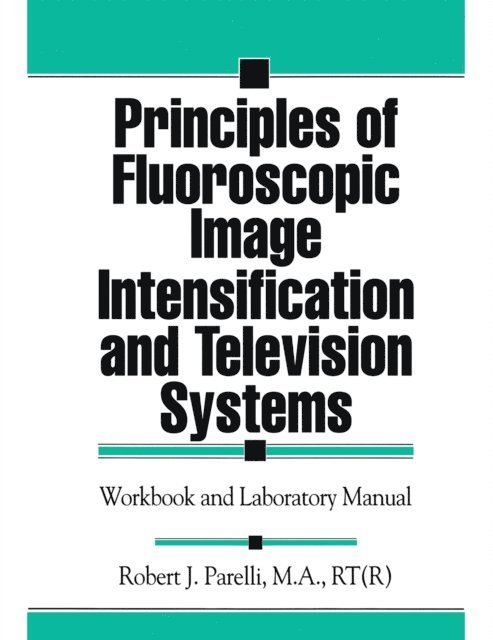
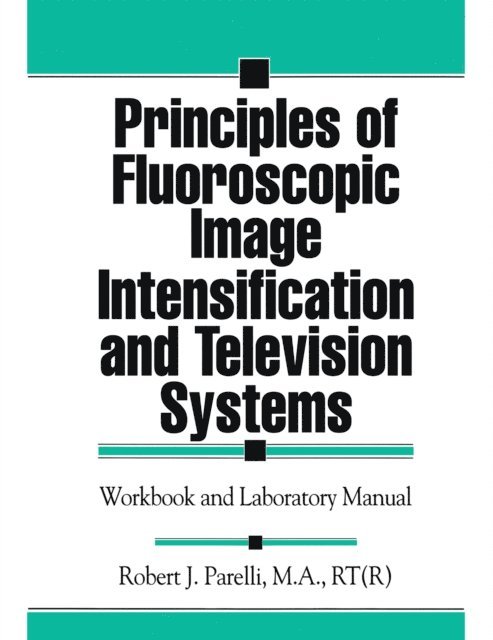
    Principles of Fluoroscopic Image Intensification and Television Systems

    Workbook and Laboratory Manual

    AvRobert J. Parelli

    Häftad, Engelska, 1996

    1 439 kr

    Beställningsvara. Skickas inom 10-15 vardagar. Fri frakt över 249 kr.

    Fler format och utgåvor

    E-bok

    1 709 kr

    E-bok

    1 709 kr

    Inbunden

    3 045 kr

    Beskrivning

    This unique workbook can be used as a stand-alone text or supplemental text for any course designed to enhance the work of radiologic technology students. It will also serve the needs of graduate radiographers as well as the physician in learning specific areas of the Fluoroscopic Image Intensifier such as:

    Produktinformation

    • Utgivningsdatum:1996-11-21
    • Mått:210 x 280 x undefined mm
    • Vikt:630 g
    • Format:Häftad
    • Språk:Engelska
    • Antal sidor:252
    • Förlag:Taylor & Francis Inc
    • ISBN:9781574440829

    Utforska kategorier

    • Diagnostiska metoder inom Medicin

    Recensioner i media

    ". . . written primarily for students enrolled in radiography training programs. . . appealing because few radiographic textbooks provide a . . . discussion of the cameras and closed-circuit television systems used in fluoroscopic imaging."-RadiologyReview:"I highly recommend this book for use by any student or professional seeking to improve their understanding."Beth Graff, Imaging Specialist, Arnold Palmer Hospital for Women & Children, Orlando, Florida

    Innehållsförteckning

    • Preface -- Author -- Chapter 1: Image Intensifier System -- Image Intensifier Tube Design -- Input Phosphor and Photocathode -- Electrostatic Focusing Lens -- Accelerating Anode -- Output Phosphor -- Dual Field Image Intensifier Tubes -- Conversion Factor and Gain -- Flux Gain -- Minification Gain -- Image Quality -- Automatic Brightness Stabilization -- Review Questions -- Chapter 2: Objective and Camera Lenses -- Optics -- Real and Virtual Images -- Review Questions -- Chapter 3: Closed Circuit Television Systems -- Camera Pick-Up Tubes -- Video Signal -- Television Scanning System -- Camera Control Unit -- Synchronization -- Television Monitor -- Television Image Quality -- Plumbicon and Image-Orthicon Cameras -- Review Questions -- Chapter 4: Recording the Television Image -- Magnetic Recorders -- Video Tape Recorders -- Cinefluororadiography -- Spot-Film Camera System -- Film /Screen Spot-Film Device -- Equipment Requirements -- Review Questions -- Chapter 5: Computerized Fluoroscopic Image Intensification -- Computerized Fluoroscopy -- Mask Mode Image Intensification -- Time Interval Difference (TID) Mode -- K-Edge Image Intensification -- Combination vs. Unmixed Digital Techniques -- X-ray Exposure with Computerized Image -- Intensification -- The Future of Computerized Image Intensification. -- Review Questions -- Chapter 6: Fluoroscopic Image Production -- Electromagnetic Radiation -- Production of X-radiation -- X-ray Interaction with Matter -- Review Questions -- Chapter 7: Factors Affecting Patient and Operator Exposure -- Review Questions -- Chapter 8: Health Effects of Low Level X-ray Exposure -- Somatic Dose Indicators -- Genetic Dose Indicators -- Genetically Significant Dose -- Review Questions -- Chapter 9: Biological Effects and Significance of X-ray Exposure -- Cellular Amplification -- Gross Cellular Effects of Radiation -- Latent Period -- Dose Effect Curves -- Radiosensitivity of the Cell -- Short-Term Effects -- Long-Term Effects -- Review Questions -- Chapter 10: Personnel Radiation Protection -- ALARA -- Operator Protection during Image Intensification Procedures -- Other Protective Devices and Accessories -- Review Questions -- Chapter 11: Personnel Monitoring -- Film Badge -- Thermoluminescent Dosimeter (TLD) -- Pocket Ionization Chambers -- Maximum Permissible Dose (MPD) -- Occupational and General Dose Equivalent Limits -- Frequency of Exposure Recording -- Overexposure of a Personnel Monitoring Device -- Cumulative Occupational Dose Equivalent -- Location of Personnel Monitoring Device -- Who Must Be Monitored -- Review Questions -- Chapter 12: Pediatric Fluoroscopy -- Motion -- Personnel and Parental Protection -- Gonadal Shielding -- Automatic Exposure Control (AEC) -- Other Technical Considerations -- Review Questions -- Chapter 13: Mobile Image Intensification Equipment -- Structural Provisions -- Equipment Provisions (Mobile C-Arm) -- Boost Position (High-Level Control Button) -- Mobile Fluoroscope Quality Control -- Review Questions -- Chapter 14: California Radiation Control Regulations— -- Responsibility of the Supervisor and Operator -- Restrictions -- Display of Documents -- Record Keeping Requirements -- Incident Notification Requirements -- Required Training and Information Provided to X-ray Users -- X-ray Equipment Safety Provisions -- Supervision of Radiologic Technology Personnel -- Technologists’ Fluoroscopy Clinical Instruction -- Reduction in Dose -- Scheduling Radiologic Examinations for Women of Child-Bearing Years -- Therapeutic Abortions -- Occupationally Exposed Women of Procreative Age -- Summary of Gonad Shielding in Diagnostic Radiology -- Visual Physiology -- Half Value Layer (HVL) -- Review Questions -- Chapter 15: Three-Dimensional Fluorographic Anatomy -- Fluoroscopic Localization Techniques -- Gallbladder Fluoroscopy -- Terminal Ileum Fluoroscopy -- Knee Arthrography -- Review Questions -- Chapter 16: Fluoroscopy Quality Assurance and Quality Control Program -- Principles of a Quality Assurance Program -- Quality Assurance Program for Fluoroscopic -- Systems and Associated Equipment -- Acceptance Testing -- Establishment of ALARA -- Fluoroscopy Equipment Quality Control Tests and Frequency -- Review Questions -- Appendix A: Answers to Review Questions -- Appendix B: Statement of Competency -- Appendix C: Review Test /Answers -- Appendix D: Laboratory Experiments -- Lab # 1: Scatter Radiation -- Lab #2: Source-to-Table-Top Distance -- Lab #3: Grid Alignment -- Lab #4: Fluoroscopic Resolution Test -- Lab #5: Maximum Fluoroscopic Exposure Rate -- Lab #6: Fluoroscopy Low Contrast Performance -- Lab #7: Automatic Exposure Control Evaluation for Film Recording System /Reproducibility -- Appendix E: Glossary -- Appendix F: Bibliography -- Index.