• Fri frakt över 249 kr
  • •
  • Snabba leveranser
  • •
  • Billiga böcker
Kundservice

Du är på sajten för privatpersoner.

Företag, bibliotek eller offentlig verksamhet?

Du handlar på classic.bokus.com, där alla dina funktioner finns intakta.
Till classic.bokus.com
Bokus logotyp. Gå till startsidan.
  • Erbjudanden
  • Nyheter
  • Student
  • Topplistor
  • Barn & ungdom
  • Bokus Play
  • E-böcker
  • Pocketböcker
  • Spel & pussel

10% rabatt på allt med kod NYSTART10 →

Sidfot

Mina sidor

    Hjälp

    • Kundservice
    • Vanliga frågor och svar
    • Frakt och leverans
    • Retur vid ångerrätt
    • Reklamera vara
    • Betalning
    • Köpvillkor
    • Allmänna villkor
    • Information om webbplatsens tillgänglighet

    Om Bokus

    • Om oss
    • Pressrum
    • För studenter
    • För företag
    • För bibliotek och offentlig verksamhet
    • För leverantörer
    • Hållbarhet

    Populärt

    • Aktuella erbjudanden
    • Presentkort
    • Studentlitteratur
    • Nya böcker
    • Topplistor
    • Signerade böcker
    • Engelska böcker

    Inspiration

    • Boktips
    • BookTok
    • Populära bokserier
    • Barnbokskaraktärer
    • Populära författare
    Logotyp för Bokus
    Följ oss på Facebook (extern länk)Följ oss på Instagram (extern länk)Följ oss på YouTube (extern länk)Följ oss på TikTok (extern länk)
    bokus @ CookiesAnpassa cookiesIntegritetspolicyKöpvillkor
    Till Citymail hemsida (extern länk)Till Budbee hemsida (extern länk)Till Postnord hemsida (extern länk)Till Schenker hemsida (extern länk)Till Early Bird hemsida (extern länk)Till Walleys hemsida (extern länk)
    1. Psykologi och pedagogik
    2. Pedagogik

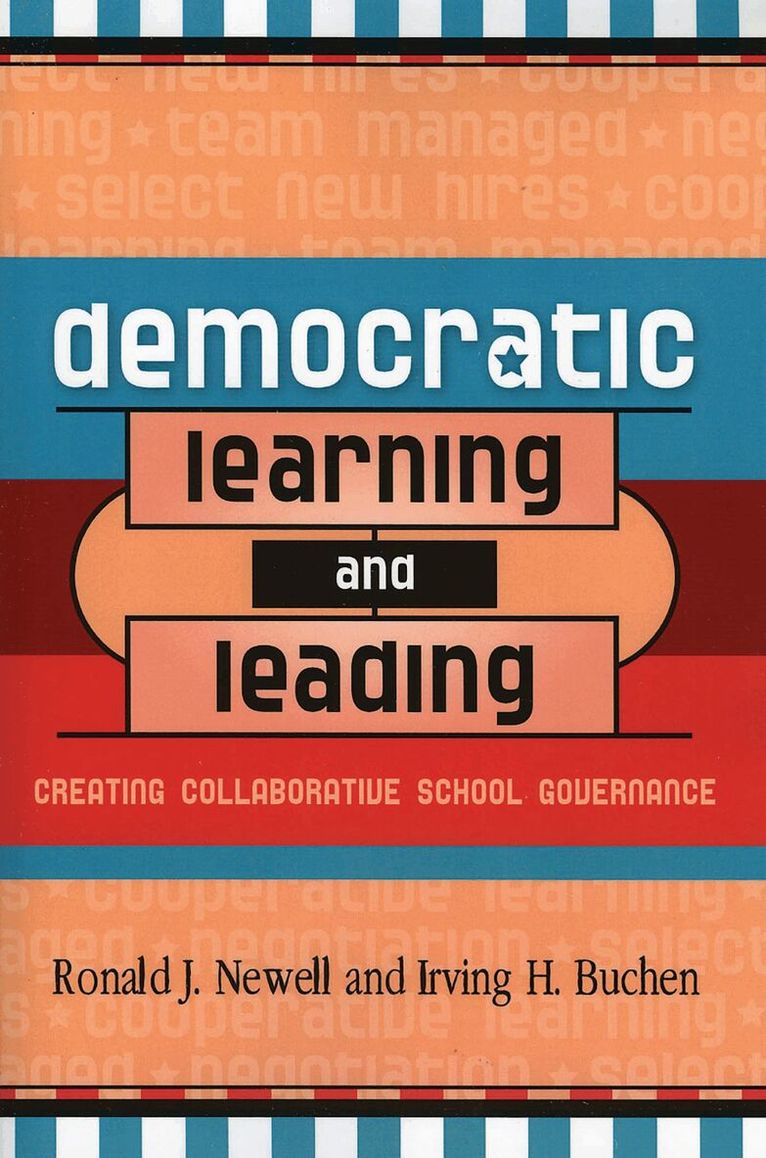
    Democratic Learning and Leading

    Creating Collaborative School Governance

    AvRonald J. Newell,Irving H. Buchen

    Häftad, Engelska, 2004

    Del i serien R&L Education

    533 kr

    Beställningsvara. Skickas inom 10-15 vardagar. Fri frakt över 249 kr.

    Beskrivning

    Here, authors Ronald Newell and Irving Buchen continue the dialogue begun by Roland Barth, Linda Lambert, Carl Glickman and others pertaining to democratic, teacher-led schools. Teachers are capable of managing schools, without designated principals and/or superintendents. A number of practitioners have taken up the gauntlet and have created collaborative cultures in order to fulfill the need for creating teacher-controlled environments. These environments are necessary to carry out the as-of-yet unfulfilled reform of practices that benefit students at the most elemental level of education—the relationship of teacher and learner. In teacher-managed schools, teachers have control of budgets, management, personnel, and all other decision-making. It is not enough for teachers to be willing to democratically control schools. The culture of schooling is not inherently democratic, and a collaborative culture must be cultivated by creating the community, the collective, the consensual, the consultative, and the coaching commitment. Newell and Buchen show how the experience of a group of practitioners has lighted the way for continual development of the elements of the collaborative culture by living them. They also discuss the problems and promises of creating and living this collaborative, democratic culture.

    Produktinformation

    • Utgivningsdatum:2004-05-21
    • Mått:165 x 227 x 9 mm
    • Vikt:186 g
    • Format:Häftad
    • Språk:Engelska
    • Serie:R&L Education
    • Antal sidor:112
    • Förlag:Bloomsbury Publishing Plc
    • ISBN:9781578861293

    Utforska kategorier

    • Pedagogik inom Psykologi och pedagogik

    Mer om författaren

    Ronald J. Newell spent 27 years as a high school history teacher and coach, 4 years in teacher preparation programs at the university level, helped begin the Minnesota New Country School, and now works with the Gates-EdVisions Project replicating the project-based model. He is also the author of Passion for Learning (ScarecrowEducation, 2003).Irving H. Buchen is Associate Vice President of Academic Affairs and Director of International Programs for IMPAC University, a member of the doctoral business faculty of Capella University, a Senior Principal of Canis Learning Systems, and training editor of The Futurist, the official publication of the World Future Society.

    Recensioner i media

    Truly, this is a book whose time has come. The wave of major transformation for school systems has finally begun to crest and can no longer be ignored by the observers on the old traditional shore. Irving Buchen and Ron Newell bring insight, knowledge and, most importantly, experience about the conditions pushed forth in this upswell of change. Schools need to pull students forward into the future, not tie them down in the past. Schools can no longer mirror the Command and Control models of the old Industrial Age. The Knowledge Work era has arrived and requires both schools and organizations in the larger economy become much more democratic and collaborative to survive. The key players in the future success of American schools are those who are most oftenoverlooked, undervalued and ignored in the present educational system ? teachers, parents and students. This book distributes leadership roles to all. A globalized economy is re-writing the rules for American business organizations. The source for the future workforce that will create a successful new American economy currently resides in the schools of today. To create a powerful future in the United States the changes need to happen in the present. Buchen and Newell bring this reality clearly into the

    Innehållsförteckning

    • Chapter 1 ForewordChapter 2 IntroductionChapter 3 1. The Future of School GovernanceChapter 4 2. The Teacher Culture of the Past and PresentChapter 5 3. The Past Creates the Future: Democratic SchoolsChapter 6 4. The Future in the Present: The Visions of EdVisionsChapter 7 5. Educational Collaboratives: The Five Facets of MasteryChapter 8 6. Obstacles and Opportunities: Feedback from PractitionersChapter 9 7. Creating the Culture of Collaborative GovernanceChapter 10 Appendix A: Practitioner Responses to the Five Aspects of CollaborationChapter 11 Appendix B: Practitioner Responses to the Four StatementsChapter 12 ReferencesChapter 13 IndexChapter 14 About the Authors