• Fri frakt över 249 kr
  • •
  • Snabba leveranser
  • •
  • Billiga böcker
Kundservice

Du är på sajten för privatpersoner.

Företag, bibliotek eller offentlig verksamhet?

Du handlar på classic.bokus.com, där alla dina funktioner finns intakta.
Till classic.bokus.com
Bokus logotyp. Gå till startsidan.
  • Erbjudanden
  • Nyheter
  • Student
  • Topplistor
  • Barn & ungdom
  • Bokus Play
  • E-böcker
  • Pocketböcker
  • Spel & pussel

10% rabatt på allt med kod NYSTART10 →

Sidfot

Mina sidor

    Hjälp

    • Kundservice
    • Vanliga frågor och svar
    • Frakt och leverans
    • Retur vid ångerrätt
    • Reklamera vara
    • Betalning
    • Köpvillkor
    • Allmänna villkor
    • Information om webbplatsens tillgänglighet

    Om Bokus

    • Om oss
    • Pressrum
    • För studenter
    • För företag
    • För bibliotek och offentlig verksamhet
    • För leverantörer
    • Hållbarhet

    Populärt

    • Aktuella erbjudanden
    • Presentkort
    • Studentlitteratur
    • Nya böcker
    • Topplistor
    • Signerade böcker
    • Engelska böcker

    Inspiration

    • Boktips
    • BookTok
    • Populära bokserier
    • Barnbokskaraktärer
    • Populära författare
    Logotyp för Bokus
    Följ oss på Facebook (extern länk)Följ oss på Instagram (extern länk)Följ oss på YouTube (extern länk)Följ oss på TikTok (extern länk)
    bokus @ CookiesAnpassa cookiesIntegritetspolicyKöpvillkor
    Till Citymail hemsida (extern länk)Till Budbee hemsida (extern länk)Till Postnord hemsida (extern länk)Till Schenker hemsida (extern länk)Till Early Bird hemsida (extern länk)Till Walleys hemsida (extern länk)
    1. Psykologi och pedagogik
    2. Pedagogik
    3. Utbildningsstrategier och utbildningspolitik

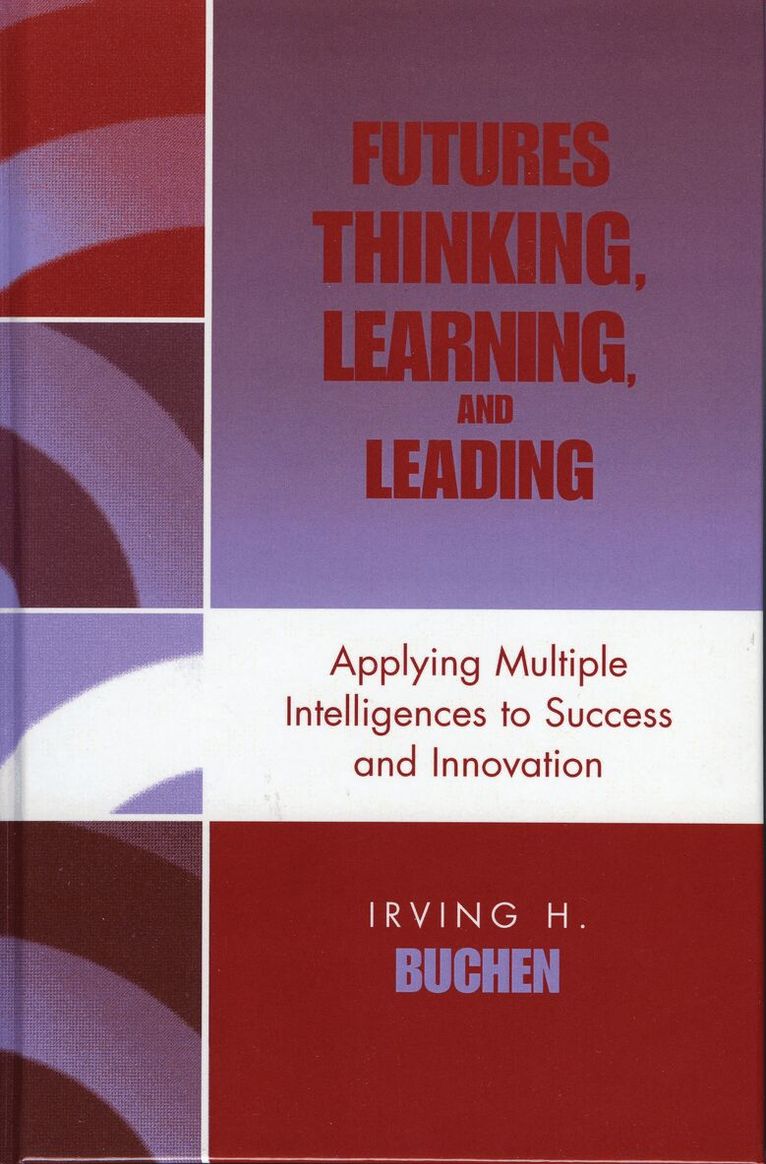
    Futures Thinking, Learning, and Leading

    Applying Multiple Intelligences to Success and Innovation

    AvIrving H. Buchen

    Häftad, Engelska, 2006

    682 kr

    Beställningsvara. Skickas inom 10-15 vardagar. Fri frakt över 249 kr.

    Beskrivning

    Futures Thinking, Learning, and Leading: Applying Multiple Intelligences to Success and Innovation explores the extent to which our thinking, learning, and leading are influenced and shaped by the future. In the process, professionals and organizations are classified into three basic types: future-oriented, future-poised, and future-driven. The last group typically includes divergent and convergent thinking and planning and routinely integrates, rather than separates, thinking, learning, and leading. The net results are the new norms of anticipatory management, holistic 360-degree forecasting and planning, and the productivity of innovation. Finally, leading has to epitomize the whole—it must be alive to the future and understand and incorporate into decision making how the future itself thinks, behaves, and learns.Buchen provides: · a comprehensive survey of contemporary work environments · an evaluation of their future learning and unlearning training systems· a series of recommendations for developing a future-driven organization and workforce Also, Futures Thinking, Learning, and Leading identifies innovation strategies and the major new thinking systems, describes the steep learning and leading curves of the 21st century, and explores transition training. This book is suitable for business leaders and managers, human resource professionals, personnel recruiters, professional trainers and coaches, and colleges and professors of business.

    Produktinformation

    • Utgivningsdatum:2006-03-17
    • Mått:149 x 231 x 20 mm
    • Vikt:372 g
    • Format:Häftad
    • Språk:Engelska
    • Antal sidor:252
    • Förlag:Bloomsbury Publishing Plc
    • ISBN:9781578863556

    Utforska kategorier

    • Utbildningsstrategier och utbildningspolitik inom Psykologi och pedagogik

    Mer om författaren

    Irving H. Buchen is Associate Vice President of Academic Affairs and Director of International Programs for IMPAC University, a member of the doctoral business faculty of Capella University, a Senior Principal of Canis Learning Systems, and training editor of The Futurist, the official publication of the World Future Society.

    Recensioner i media

    Buchen illustrates via examples, stories, metaphors, and similes and uses first-person point of view to invite reader engagement and aid comprehension. Recommended.

    Innehållsförteckning

    • Part 1 Section I: Defining a New FutureChapter 2 Disturbing the Future: Millenarian Ignorance and ArroganceChapter 3 Future Agendas: The Science Fiction ModelChapter 4 Shaping Future Agendas: The Futurists' ModelChapter 5 "The Great Convergence": Visionary Illusion or MegatrendChapter 6 Putting Forecasts on TrialChapter 7 Overview of Future-Driven ApplicationsChapter 8 The Anticipatory Servant LeaderChapter 9 Proactive Management of Human CapitalChapter 10 Chief Learning Officers as Leaders of Universities: Redundant? Or Renewing?Chapter 11 Transition Training as Future TrainingChapter 12 Anticipatory Performance ReviewChapter 13 Future Management Metamorphosis: Employees as ManagersChapter 14 Testing -Embedded Training: Predictive MetricsChapter 15 Work Covenants as Progressive EmpowermentChapter 16 Learning Theory-Therapy Crossover: A Future Training Direction?Part 17 Section II: FTLL, Multiple Intelligences, and Learning DiversityChapter 18 Progressive and Circular Problem SolvingChapter 19 Multiple Intelligences, Cognitive Science, and GeneticsChapter 20 The Optimal Taxonomy of Human Learning CapacityChapter 21 Multiple Intelligences and Human ControlChapter 22 Executive Coaches and Trusted Advisors: Leveraged Influence, Leadership Paranoia, and MBA GuidanceChapter 23 Understanding and Multiple PortalsChapter 24 Diagnostically Driven TrainingChapter 25 Multiple Intelligences Application: Learning Success CenterChapter 26 The Multimodal Journey of ManagersChapter 27 Business Applications of Multiple IntelligencesPart 28 Section III: InnovationChapter 29 Innovation Rites of PassageChapter 30 Creative ThresholdsChapter 31 Radical BreakthroughsChapter 32 Innovation TrainingChapter 33 Breaking Up Innovation Log JamsChapter 34 Balancing Innovation and StandardsChapter 35 Imitation, Intuition, and Innovation