• Fri frakt över 249 kr
  • •
  • Snabba leveranser
  • •
  • Billiga böcker
Kundservice

Du är på sajten för privatpersoner.

Företag, bibliotek eller offentlig verksamhet?

Du handlar på classic.bokus.com, där alla dina funktioner finns intakta.
Till classic.bokus.com
Bokus logotyp. Gå till startsidan.
  • Erbjudanden
  • Nyheter
  • Student
  • Topplistor
  • Barn & ungdom
  • Bokus Play
  • E-böcker
  • Pocketböcker
  • Spel & pussel

10% rabatt på allt med kod: NYSTART10 →

Sidfot

Mina sidor

    Hjälp

    • Kundservice
    • Vanliga frågor och svar
    • Frakt och leverans
    • Retur vid ångerrätt
    • Reklamera vara
    • Betalning
    • Köpvillkor
    • Allmänna villkor
    • Information om webbplatsens tillgänglighet

    Om Bokus

    • Om oss
    • Pressrum
    • För studenter
    • För företag
    • För bibliotek och offentlig verksamhet
    • För leverantörer
    • Hållbarhet

    Populärt

    • Aktuella erbjudanden
    • Presentkort
    • Studentlitteratur
    • Nya böcker
    • Topplistor
    • Signerade böcker
    • Engelska böcker

    Inspiration

    • Boktips
    • BookTok
    • Populära bokserier
    • Barnbokskaraktärer
    • Populära författare
    Logotyp för Bokus
    Följ oss på Facebook (extern länk)Följ oss på Instagram (extern länk)Följ oss på YouTube (extern länk)Följ oss på TikTok (extern länk)
    bokus @ CookiesAnpassa cookiesIntegritetspolicyKöpvillkor
    Till Citymail hemsida (extern länk)Till Budbee hemsida (extern länk)Till Postnord hemsida (extern länk)Till Schenker hemsida (extern länk)Till Early Bird hemsida (extern länk)Till Walleys hemsida (extern länk)
    1. Psykologi och pedagogik
    2. Pedagogik

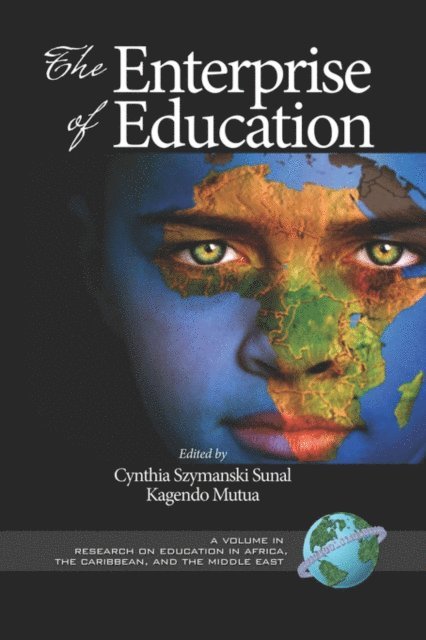
    Enterprise of Education

    AvCynthia Szymanski Sunal,Kagendo Mutua

    Inbunden, Engelska, 2007

    Del i serien Research on Education in Africa, the Caribbean, and the Middle East

    1 137 kr

    Beställningsvara. Skickas inom 5-8 vardagar. Fri frakt över 249 kr.

    Beskrivning

    The Enterprise of Education is Book IV of the research series, Research on Education in Africa, the Caribbean and the Middle East. This book examines the implications of rapid political, sociocultural, and economic change for the enterprise of education within particular countries in the regions of Africa, the Caribbean, and the Middle East—all of which have cultural ties. It provides a space for a critical dialogue about the impact of global issues on the enterprise of education in specific locales or regions within a specific country. Finally, the book identifies trends in the enterprise of education that are occurring across the regions.The Enterprise of Education draws from recent research, summarizing, interpreting, and making connections to address issues/questions that are central to the enterprise of education today in these three world regions. Among the specific questions/issues that are considered include the following: How is the enterprise of education addressing and including the needs of all children including those who are squatters, new immigrants, have special education needs, and who are voiceless in their society? What social structures in these regions mitigate against student learning, especially particular groups of students? What research methodologies enable us to investigate the enterprise of education in these world regions? What role does the learning environment play in schools? Who creates curriculum, and for what purposes? Which issues are found to a greater or lesser extent in education in other world regions? What role do parents play, in economic and social support of schools? How can teachers best be prepared for effective teaching?

    Produktinformation

    • Utgivningsdatum:2007-08-16
    • Mått:156 x 234 x 22 mm
    • Vikt:704 g
    • Format:Inbunden
    • Språk:Engelska
    • Serie:Research on Education in Africa, the Caribbean, and the Middle East
    • Antal sidor:376
    • Förlag:Emerald Publishing Inc
    • ISBN:9781593117115

    Utforska kategorier

    • Pedagogik inom Psykologi och pedagogik

    Innehållsförteckning

    • Chapter 1. The Enterprise of Education in Africa, the Caribbean, and the Middle East: Reports from the Field; Cynthia Sunal and Kagendo Mutua.Chapter 1. Inclusive Education for Inclusive Development in Lesotho: Case of Students with Cognitive Disabilities; Christopher Johnstone.Chapter 2. Attitudes of Families Toward Their Teenaged School Dropouts and the Impact on the Teenagers in Ghana; Cecilia S. Obeng.Chapter 3. School Improvement—It Is Achievable: A Case Study from a South African School; Petros Pashiardis and Jan Heystek.Chapter 4. Research and Practice in Education: Reflections and Hope to Voiceless Constituents in Kenyan Educational System; Mwarumba Mwavita.Chapter 5. Reaching Educational Quality Goals in Sub-Saharan Africa: A Look at Complementary Education Systems; Leslie Casely-Hayford.Chapter 6. Enterprise and Epistemology in the Materials of African Education: The Post-Colonial Dilemma of Culture, Text, and Technology; David S. McCurry.Chapter 7. Evaluating the Impact of the Learning for Living Project on the Development of the Literacy Skills of Learners in Low-Income Communities in South Africa: Lessons Learned; Misty Sailors, James V. Hoffman, Berthus Mathee, P. David Pearson, and S. Natasha Beretvas.Chapter 8. Disclosing an Instance of Self-Provision: Curriculum Development in Boitekong in a Formalization of Informal Squatter Communities, North West Province, South Africa; Ray Basson.Chapter 9. The Impact of a Systemic Reform Initiative on Primary Nigerian Teachers' Instructional Practices: A Longitudinal Study; Fouad Abd-El-Khalick.Chapter 10. Finding the Right Fit in Nassau: A Look at the International Partnership Dedicated to Building Leadership Capacity in Bahamian Schools; Autumn Tooms.Chapter 11. Cultural Identity in Transition: The Experiences of Caribbean Students at U.S. Universities; Dennis A. Conrad and Launcelot Brown.Chapter 12. Transforming the Culture of Violence in Jamaican Schools: An Innovative Intervention Model; Lorna Down, Clement T. M. Lambert, Ceva McPherson-Kerr, and R. Patrick Solomon.Chapter 13. Expectations and Difficulties in Biological Sciences BSc Studies: Faculty and Student Perspectives; Gili Marbach-Ad and Rinat Arviv-Elyashiv.Chapter 14. Turkish Pre-Service Teachers' Views About Manipulative Use in Mathematics Teaching: The Role of Field Experience and Methods Course; Erdinc Cakiroglu and Banu Tuncay Yildiz.Chapter 15. Learning Environments, Teacher Interpersonal Behavior, and Students' Attitudinal Outcomes in Science Classrooms: A Turkish Context; Jale Cakiroglu, Ceren Tekkaya, and Nazan Rakici.Chapter 16. The Role of Academic Language in Understanding Mathematics Achievements of Immigrant Students in Israel; Tamar Levin and Elana Shohamy.Chapter 17. Teacher Evaluation Through Inspection: The Point of View from High School Teachers in Cyprus; Michalis Koutsoulis.Chapter 18. Contextual Educational Reforms: An Epilogue; Billie Eilam.