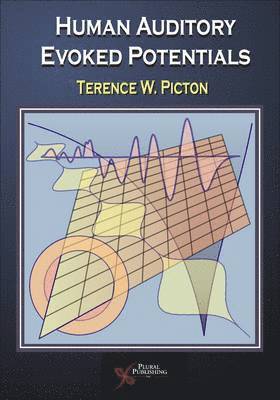
Human Auditory Evoked Potentials
2 846 kr
Tillfälligt slut
Du är på sajten för privatpersoner.
2 846 kr
Tillfälligt slut
Terry Picton has studied the auditory evoked potentials for the past half-century. After his medical training, he obtained a doctorate in Neuroscience with Robert Galambos at the University of California, San Diego. He then devoted his life to research, spending twenty years in the Department of Medicine at the University of Ottawa, and fifteen years in Baycrest's Rotman Research Institute at the University of Toronto. He is now retired.
Ryan McCreery, M.S.(Boys Town National Research Hospital), DOODY'S REVIEWS, (December 2010): "4 STARS! The book is conceptually divided into three major sections. The first section provides in-depth background on the measurement of auditory evoked potentials, including basic physiological concepts and general measurement considerations. The second section outlines specific auditory evoked potentials and the measurement of those responses. The third section covers specific applications of auditory evoked potentials, including infant hearing assessment, neurotology, auditory neuropathy, and cochlear implants. This group of chapters provides a unique perspective on the applications for auditory evoked potentials. This [book] is a comprehensive overview of a wide range of auditory evoked responses for clinicians and researchers. The chapters on applications of auditory evoked potentials for neurotology, auditory neuropathy, and cochlear implants are important elements." Robert Burkard, Journal of the Acoustical Society of America, (July 2012): "This book is much more than a simple summary of what is known about AEPs: it is full of scientific and clinical insights. It includes many discussions of topics that are incompletely understood, and where there is conflicting evidence. This book is a must-read for anyone who is considering a dissertation in the area of AEPs, or anyone else beginning to work in this area...very well written. It is filled with plenty of helpful figures. Robert Burkard, Department of Rehabilitation Science, University of Buffalo Journal of the Acoustical Society of America" Robert Burkard, International Journal of Audiology 2011, (2011): "This book is very well written. Dr. Picton has personal research experience and expertise in most AEP response epochs, which allows him to present difficult concepts in a clear, intuitive manner. His sense of humor is evident throughout the book ... this is an excellent book, providing a good introduction to auditory evoked potentials. This book can easily be used in any introductory course covering AEPs for audiology, hearing science, neuroscience, or psychology students. Dr. Picton not only provides an excellent review of his literature, but he also provides critical comments on areas where dissenting data are present in the literature. He also provides numerous examples of research topics where additional data are needed. Thus, this book will not only serve as a valuable textbook in a course that introduces AEPs, but will as serve as a useful reference text for those who are using (or intend to use) AEPs in their clinical research." Josep Valls-Sole, Neurotology Dept., Hospital Clinic, Barcelona, Spain, Clinical Neurophysiology, (July 2012): "... nothing less than excellent. The book covers most of the aspects in which the study of auditory evoked potentials has contributed to expand our physiological knowledge along the past 35 years ... this book makes an enjoyable reading for those that use some form of auditory evoked potentials for their clinical or research work and are interested in learning about other aspects of such a widespread subject involving neurologists, physiologists, psychologists, neuro-otologists and other specialists and researchers in the field."
Marci Daniels Rosenberg, Wendy Leborgne
819 kr
Julie Barkmeier-Kraemer, Rebecca Leonard
910 kr
Jeannette D Hoit, Gary Weismer
Inbunden, 2017
1 951 kr
Marci Daniels Rosenberg, Wendy Leborgne
819 kr
Du är på sajten för privatpersoner.
2 846 kr
Tillfälligt slut
Terry Picton has studied the auditory evoked potentials for the past half-century. After his medical training, he obtained a doctorate in Neuroscience with Robert Galambos at the University of California, San Diego. He then devoted his life to research, spending twenty years in the Department of Medicine at the University of Ottawa, and fifteen years in Baycrest's Rotman Research Institute at the University of Toronto. He is now retired.
Ryan McCreery, M.S.(Boys Town National Research Hospital), DOODY'S REVIEWS, (December 2010): "4 STARS! The book is conceptually divided into three major sections. The first section provides in-depth background on the measurement of auditory evoked potentials, including basic physiological concepts and general measurement considerations. The second section outlines specific auditory evoked potentials and the measurement of those responses. The third section covers specific applications of auditory evoked potentials, including infant hearing assessment, neurotology, auditory neuropathy, and cochlear implants. This group of chapters provides a unique perspective on the applications for auditory evoked potentials. This [book] is a comprehensive overview of a wide range of auditory evoked responses for clinicians and researchers. The chapters on applications of auditory evoked potentials for neurotology, auditory neuropathy, and cochlear implants are important elements." Robert Burkard, Journal of the Acoustical Society of America, (July 2012): "This book is much more than a simple summary of what is known about AEPs: it is full of scientific and clinical insights. It includes many discussions of topics that are incompletely understood, and where there is conflicting evidence. This book is a must-read for anyone who is considering a dissertation in the area of AEPs, or anyone else beginning to work in this area...very well written. It is filled with plenty of helpful figures. Robert Burkard, Department of Rehabilitation Science, University of Buffalo Journal of the Acoustical Society of America" Robert Burkard, International Journal of Audiology 2011, (2011): "This book is very well written. Dr. Picton has personal research experience and expertise in most AEP response epochs, which allows him to present difficult concepts in a clear, intuitive manner. His sense of humor is evident throughout the book ... this is an excellent book, providing a good introduction to auditory evoked potentials. This book can easily be used in any introductory course covering AEPs for audiology, hearing science, neuroscience, or psychology students. Dr. Picton not only provides an excellent review of his literature, but he also provides critical comments on areas where dissenting data are present in the literature. He also provides numerous examples of research topics where additional data are needed. Thus, this book will not only serve as a valuable textbook in a course that introduces AEPs, but will as serve as a useful reference text for those who are using (or intend to use) AEPs in their clinical research." Josep Valls-Sole, Neurotology Dept., Hospital Clinic, Barcelona, Spain, Clinical Neurophysiology, (July 2012): "... nothing less than excellent. The book covers most of the aspects in which the study of auditory evoked potentials has contributed to expand our physiological knowledge along the past 35 years ... this book makes an enjoyable reading for those that use some form of auditory evoked potentials for their clinical or research work and are interested in learning about other aspects of such a widespread subject involving neurologists, physiologists, psychologists, neuro-otologists and other specialists and researchers in the field."
Marci Daniels Rosenberg, Wendy Leborgne
819 kr
Julie Barkmeier-Kraemer, Rebecca Leonard
910 kr
Jeannette D Hoit, Gary Weismer
Inbunden, 2017
1 951 kr
Marci Daniels Rosenberg, Wendy Leborgne
819 kr
Du är på sajten för privatpersoner.
2 846 kr
Tillfälligt slut
Terry Picton has studied the auditory evoked potentials for the past half-century. After his medical training, he obtained a doctorate in Neuroscience with Robert Galambos at the University of California, San Diego. He then devoted his life to research, spending twenty years in the Department of Medicine at the University of Ottawa, and fifteen years in Baycrest's Rotman Research Institute at the University of Toronto. He is now retired.
Ryan McCreery, M.S.(Boys Town National Research Hospital), DOODY'S REVIEWS, (December 2010): "4 STARS! The book is conceptually divided into three major sections. The first section provides in-depth background on the measurement of auditory evoked potentials, including basic physiological concepts and general measurement considerations. The second section outlines specific auditory evoked potentials and the measurement of those responses. The third section covers specific applications of auditory evoked potentials, including infant hearing assessment, neurotology, auditory neuropathy, and cochlear implants. This group of chapters provides a unique perspective on the applications for auditory evoked potentials. This [book] is a comprehensive overview of a wide range of auditory evoked responses for clinicians and researchers. The chapters on applications of auditory evoked potentials for neurotology, auditory neuropathy, and cochlear implants are important elements." Robert Burkard, Journal of the Acoustical Society of America, (July 2012): "This book is much more than a simple summary of what is known about AEPs: it is full of scientific and clinical insights. It includes many discussions of topics that are incompletely understood, and where there is conflicting evidence. This book is a must-read for anyone who is considering a dissertation in the area of AEPs, or anyone else beginning to work in this area...very well written. It is filled with plenty of helpful figures. Robert Burkard, Department of Rehabilitation Science, University of Buffalo Journal of the Acoustical Society of America" Robert Burkard, International Journal of Audiology 2011, (2011): "This book is very well written. Dr. Picton has personal research experience and expertise in most AEP response epochs, which allows him to present difficult concepts in a clear, intuitive manner. His sense of humor is evident throughout the book ... this is an excellent book, providing a good introduction to auditory evoked potentials. This book can easily be used in any introductory course covering AEPs for audiology, hearing science, neuroscience, or psychology students. Dr. Picton not only provides an excellent review of his literature, but he also provides critical comments on areas where dissenting data are present in the literature. He also provides numerous examples of research topics where additional data are needed. Thus, this book will not only serve as a valuable textbook in a course that introduces AEPs, but will as serve as a useful reference text for those who are using (or intend to use) AEPs in their clinical research." Josep Valls-Sole, Neurotology Dept., Hospital Clinic, Barcelona, Spain, Clinical Neurophysiology, (July 2012): "... nothing less than excellent. The book covers most of the aspects in which the study of auditory evoked potentials has contributed to expand our physiological knowledge along the past 35 years ... this book makes an enjoyable reading for those that use some form of auditory evoked potentials for their clinical or research work and are interested in learning about other aspects of such a widespread subject involving neurologists, physiologists, psychologists, neuro-otologists and other specialists and researchers in the field."
Marci Daniels Rosenberg, Wendy Leborgne
819 kr
Julie Barkmeier-Kraemer, Rebecca Leonard
910 kr
Jeannette D Hoit, Gary Weismer
Inbunden, 2017
1 951 kr
Marci Daniels Rosenberg, Wendy Leborgne
819 kr