- 10% rabatt på allt
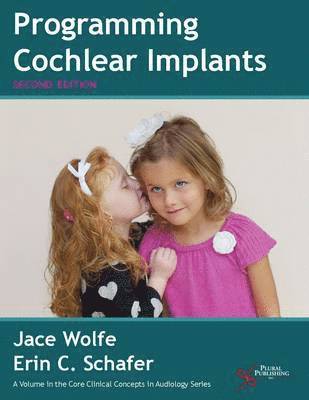
Programming Cochlear Implants
1 330 kr
Tillfälligt slut
Du är på sajten för privatpersoner.
1 330 kr
Tillfälligt slut
Jace Wolfe, PhD, is the Director of Audiology at the Hearts for Hearing Foundation. He also is an adjunct Assistant Professor in the Audiology Department at the University of Oklahoma Health Sciences Center. He serves as the editor for the American Speech Language Hearing Association's Division 9 journal. His areas of interests are pediatric cochlear implantation, personal FM systems, and signal processing for children. He provides clinical services for children and adults with hearing loss and is also actively engaged in research in several areas pertaining to cochlear implants and personal FM systems. Erin C. Schafer, PhD is an Assistant Professor in the Department of Speech and Hearing Sciences at the University of North Texas, where she has held an academic appointment since August 2005. She teaches graduate courses in the areas of aural rehabilitation, pediatric habilitation, diagnostic audiology, and research methods, and she serves as an Educational Audiology consultant for local school districts. Her current research focuses on strategies to enhance communication abilities of children and adults who have hearing loss, hearing aids, and cochlear implants. Dr. Schafer received her B.S. degree in Communication Sciences from Texas Woman's University, and her M.S. and Ph.D. degrees in Audiology from The University of Texas at Dallas. She is active in professional organizations, serves as an Associate Editor for the Journal of Educational Audiology, and is past president of the Scott Haug Audiology Foundation.
Nancy Cambron, International Journal of Audiology 2011, (2011): "[***FIRST EDITION***]...a practical straightforward text that delivers what it advertises - a thorough description of how to program cochlear implant processors...Bold headings invite the reader to flip through the chapters to the topic of his or her interest. Large photographs, figures, and tables are clear, easy to read, and apply directly to the text. The descriptions are up-to-date and the photographs show current devices. The authors do a great job of explaining the most recent technology as well as previous strategies and devices that clinicians may encounter...Overall, I heartily recommend this book as a useful resource in the audiology classroom as well as in the cochlear implant clinic. Drs. Wolfe and Schafer ambitiously cover the current cochlear implant technology to date, and I look forward to seeing new editions as technology emerges." Dan Schwartz, The Hearing Blog, (May 20, 2012): "[***FIRST EDITION***] Programming Cochlear Implants is a pretty darned good book for a college educated CI candidate, CI "power user", or even the parents of a "CI kiddie", as it provides a nicely detailed view of CI's, rather than what you can extract from the "FDA-sanitized" marketing hype from the CI manufacturers. This book has some very nice troubleshooting tips, especially for parents and school audiologists. Also, Chapter 7 on hearing assistance technology (HAT), which is mostly all on FM, is very good, as it lays out how configuring FM assistive devices with CI's differs from hearing aids: In the opinion of The Hearing Blog, this chapter is worth the price of the book alone... Where this book is quite helpful to the CI user community is pointing out where Best Practices can be (and often are) skimped to speed things along in busy clinics; and when these shortcuts are taken, should serve as Warning Flags to the astute user or parent. A large part of these shortcuts are due to poor 3rd party reimbursement; but also it's a bit troubling that the ramifications of the CI audiologist taking these shortcuts in terms of patient performance is not fully discussed in this book, i.e. it's OK if the CI audiologist has an attitude of "it's good enough for government work", which, as an Engineer, this reviewer finds a bit lacking. Most notably, the common shortcut of assuming T levels of 10% of M levels on the AB and Med-El systems will result in an incorrect input dynamic range (IDR) being displayed: It will work, but in an unpredictable manner depending on the actual (measured) T levels the patient has...Overall, we give Programming Cochlear Implants a 41/2 Star rating; and we highly recommend it to CI users, parents of CI kiddies, and to CI candidates."
Erin C. Schafer, Jace Wolfe, Carol Flexer, Jane R. Madell
1 570 kr
Du är på sajten för privatpersoner.
1 330 kr
Tillfälligt slut
Jace Wolfe, PhD, is the Director of Audiology at the Hearts for Hearing Foundation. He also is an adjunct Assistant Professor in the Audiology Department at the University of Oklahoma Health Sciences Center. He serves as the editor for the American Speech Language Hearing Association's Division 9 journal. His areas of interests are pediatric cochlear implantation, personal FM systems, and signal processing for children. He provides clinical services for children and adults with hearing loss and is also actively engaged in research in several areas pertaining to cochlear implants and personal FM systems. Erin C. Schafer, PhD is an Assistant Professor in the Department of Speech and Hearing Sciences at the University of North Texas, where she has held an academic appointment since August 2005. She teaches graduate courses in the areas of aural rehabilitation, pediatric habilitation, diagnostic audiology, and research methods, and she serves as an Educational Audiology consultant for local school districts. Her current research focuses on strategies to enhance communication abilities of children and adults who have hearing loss, hearing aids, and cochlear implants. Dr. Schafer received her B.S. degree in Communication Sciences from Texas Woman's University, and her M.S. and Ph.D. degrees in Audiology from The University of Texas at Dallas. She is active in professional organizations, serves as an Associate Editor for the Journal of Educational Audiology, and is past president of the Scott Haug Audiology Foundation.
Nancy Cambron, International Journal of Audiology 2011, (2011): "[***FIRST EDITION***]...a practical straightforward text that delivers what it advertises - a thorough description of how to program cochlear implant processors...Bold headings invite the reader to flip through the chapters to the topic of his or her interest. Large photographs, figures, and tables are clear, easy to read, and apply directly to the text. The descriptions are up-to-date and the photographs show current devices. The authors do a great job of explaining the most recent technology as well as previous strategies and devices that clinicians may encounter...Overall, I heartily recommend this book as a useful resource in the audiology classroom as well as in the cochlear implant clinic. Drs. Wolfe and Schafer ambitiously cover the current cochlear implant technology to date, and I look forward to seeing new editions as technology emerges." Dan Schwartz, The Hearing Blog, (May 20, 2012): "[***FIRST EDITION***] Programming Cochlear Implants is a pretty darned good book for a college educated CI candidate, CI "power user", or even the parents of a "CI kiddie", as it provides a nicely detailed view of CI's, rather than what you can extract from the "FDA-sanitized" marketing hype from the CI manufacturers. This book has some very nice troubleshooting tips, especially for parents and school audiologists. Also, Chapter 7 on hearing assistance technology (HAT), which is mostly all on FM, is very good, as it lays out how configuring FM assistive devices with CI's differs from hearing aids: In the opinion of The Hearing Blog, this chapter is worth the price of the book alone... Where this book is quite helpful to the CI user community is pointing out where Best Practices can be (and often are) skimped to speed things along in busy clinics; and when these shortcuts are taken, should serve as Warning Flags to the astute user or parent. A large part of these shortcuts are due to poor 3rd party reimbursement; but also it's a bit troubling that the ramifications of the CI audiologist taking these shortcuts in terms of patient performance is not fully discussed in this book, i.e. it's OK if the CI audiologist has an attitude of "it's good enough for government work", which, as an Engineer, this reviewer finds a bit lacking. Most notably, the common shortcut of assuming T levels of 10% of M levels on the AB and Med-El systems will result in an incorrect input dynamic range (IDR) being displayed: It will work, but in an unpredictable manner depending on the actual (measured) T levels the patient has...Overall, we give Programming Cochlear Implants a 41/2 Star rating; and we highly recommend it to CI users, parents of CI kiddies, and to CI candidates."
Erin C. Schafer, Jace Wolfe, Carol Flexer, Jane R. Madell
1 570 kr
Du är på sajten för privatpersoner.
1 330 kr
Tillfälligt slut
Jace Wolfe, PhD, is the Director of Audiology at the Hearts for Hearing Foundation. He also is an adjunct Assistant Professor in the Audiology Department at the University of Oklahoma Health Sciences Center. He serves as the editor for the American Speech Language Hearing Association's Division 9 journal. His areas of interests are pediatric cochlear implantation, personal FM systems, and signal processing for children. He provides clinical services for children and adults with hearing loss and is also actively engaged in research in several areas pertaining to cochlear implants and personal FM systems. Erin C. Schafer, PhD is an Assistant Professor in the Department of Speech and Hearing Sciences at the University of North Texas, where she has held an academic appointment since August 2005. She teaches graduate courses in the areas of aural rehabilitation, pediatric habilitation, diagnostic audiology, and research methods, and she serves as an Educational Audiology consultant for local school districts. Her current research focuses on strategies to enhance communication abilities of children and adults who have hearing loss, hearing aids, and cochlear implants. Dr. Schafer received her B.S. degree in Communication Sciences from Texas Woman's University, and her M.S. and Ph.D. degrees in Audiology from The University of Texas at Dallas. She is active in professional organizations, serves as an Associate Editor for the Journal of Educational Audiology, and is past president of the Scott Haug Audiology Foundation.
Nancy Cambron, International Journal of Audiology 2011, (2011): "[***FIRST EDITION***]...a practical straightforward text that delivers what it advertises - a thorough description of how to program cochlear implant processors...Bold headings invite the reader to flip through the chapters to the topic of his or her interest. Large photographs, figures, and tables are clear, easy to read, and apply directly to the text. The descriptions are up-to-date and the photographs show current devices. The authors do a great job of explaining the most recent technology as well as previous strategies and devices that clinicians may encounter...Overall, I heartily recommend this book as a useful resource in the audiology classroom as well as in the cochlear implant clinic. Drs. Wolfe and Schafer ambitiously cover the current cochlear implant technology to date, and I look forward to seeing new editions as technology emerges." Dan Schwartz, The Hearing Blog, (May 20, 2012): "[***FIRST EDITION***] Programming Cochlear Implants is a pretty darned good book for a college educated CI candidate, CI "power user", or even the parents of a "CI kiddie", as it provides a nicely detailed view of CI's, rather than what you can extract from the "FDA-sanitized" marketing hype from the CI manufacturers. This book has some very nice troubleshooting tips, especially for parents and school audiologists. Also, Chapter 7 on hearing assistance technology (HAT), which is mostly all on FM, is very good, as it lays out how configuring FM assistive devices with CI's differs from hearing aids: In the opinion of The Hearing Blog, this chapter is worth the price of the book alone... Where this book is quite helpful to the CI user community is pointing out where Best Practices can be (and often are) skimped to speed things along in busy clinics; and when these shortcuts are taken, should serve as Warning Flags to the astute user or parent. A large part of these shortcuts are due to poor 3rd party reimbursement; but also it's a bit troubling that the ramifications of the CI audiologist taking these shortcuts in terms of patient performance is not fully discussed in this book, i.e. it's OK if the CI audiologist has an attitude of "it's good enough for government work", which, as an Engineer, this reviewer finds a bit lacking. Most notably, the common shortcut of assuming T levels of 10% of M levels on the AB and Med-El systems will result in an incorrect input dynamic range (IDR) being displayed: It will work, but in an unpredictable manner depending on the actual (measured) T levels the patient has...Overall, we give Programming Cochlear Implants a 41/2 Star rating; and we highly recommend it to CI users, parents of CI kiddies, and to CI candidates."
Erin C. Schafer, Jace Wolfe, Carol Flexer, Jane R. Madell
1 570 kr