Inbunden, Engelska, 2024
Lumen
Av Kristen Collins, Nancy K. Turner
565 kr
Beställningsvara. Skickas inom 5-8 vardagar. Fri frakt över 249 kr.
Beskrivning
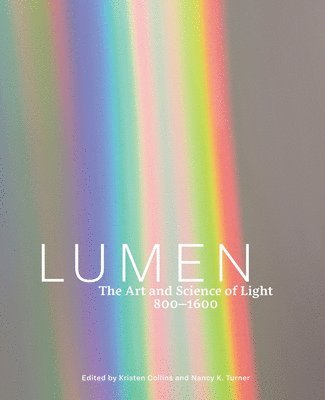
Through the manipulation of materials, such as gold, crystal, and glass, medieval artists created dazzling light-filled environments, evoking, in the everyday world, the layered realms of the divine. While contemporary society separates science and spirituality, the medieval world harnessed the science of light to better perceive and understand the sacred. From 800 to 1600, the study of astronomy, geometry, and optics emerged as a framework that was utilized by theologians and artists to comprehend both the sacred realm and the natural world. Through essays written by contributors from the fields of art history, the history of science, and neuroscience, and with more than two hundred illustrations, including glimmering golden reliquaries, illuminated manuscripts, rock crystal vessels, astronomical instruments, and more, Lumen cuts across religious, political, and geographic boundaries to reveal the ways medieval Christian, Jewish, and Islamic artists, theologians, and thinkers studied light. To convey the sense of wonder created by moving light on precious materials, a number of contemporary artworks are placed in dialogue with historic objects.EXHIBITIONJ. Paul Getty Museum, Getty CenterSeptember 10-December 8, 2024"Among the most labile of media in medieval art, light served as a vehicle as well as a subject of representation. In works of architecture and stained glass to gleaming metalwork and gilded manuscript miniatures, medieval artists manipulated light effects not only to illuminate but also to mystify. Bringing together a dazzling array of objects and a kaleidoscope of scholarly perspectives, Lumen sheds light on medieval art and culture and shows that the Middle Ages were anything but dark." - Jeffrey F. Hamburger, Harvard University Well written and lavishly illustrated, Lumen: The Art and Science of Light, 800-1600 is a brilliant inquiry into the nature of light and human sight. It elucidates the cultural histories involving light in its religious-sacred, scholarly-scientific, and artistic-aesthetic settings and clarifies how light was translated into tangible form. This book reveals how, despite light's invisible structure, and with the help of geometry, it set the ground for the invention of linear perspective, and how, with its law of refraction, it embodied the whole spectrum of colors and even influenced our perception of natural phenomena such as shade and darkness. This is a must-read book for any medievalist, early modern scholar, or anyone who wants to engage with the varied aesthetic, scientific, and cultural facets of light and its meaningful visible forms. -Avinoam Shalem, Riggio Professor of Art History, Arts of Islam, Department of Art History and Archaeology, Columbia UniversityInterdisciplinary and methodologically and theoretically diverse,as well as beautifully illustrated, this book contributes to exciting recentinvestigations into the ephemeral facets of medieval objects and spaces,focusing attention on the meanings of light in Jewish, Muslim, and Christianreligious and secular contexts. It examines how natural, artificial, depicted,and perceived light were used and understood in the long Middle Ages(800–1600), considering the legacy of ancient and medieval scientific texts andinstruments, the dynamics of vision and perception, and the role of light insacred spaces and rituals. From ancient and medieval texts, images, and objectsto contemporary artworks and ideas, the effects and wonder of light shine inthe radiant pages of this book. — Alice Sullivan, Assistant Professor ofMedieval Art and Architecture, Director of Graduate Studies, Department of theHistory of Art and Architecture, Tufts University
Produktinformation
- Utgivningsdatum: 2024-09-02
- Mått: 304 x 228 x 31 mm
- Vikt: 2 026 g
- Format: Inbunden
- Språk: Engelska
- Serie: J. Paul Getty Museum
- Antal sidor: 272
- Förlag: Getty Trust Publications
- ISBN: 9781606069288
Utforska kategorier
Betyg & recensioner
0 recensioner
Inga recensioner tillgängliga.