• Fri frakt över 249 kr
  • •
  • Snabba leveranser
  • •
  • Billiga böcker
Kundservice

Du är på sajten för privatpersoner.

Företag, bibliotek eller offentlig verksamhet?

Du handlar på classic.bokus.com, där alla dina funktioner finns intakta.
Till classic.bokus.com
Bokus logotyp. Gå till startsidan.
  • Erbjudanden
  • Student
  • Topplistor
  • Barn & ungdom
  • Bokus Play
  • E-böcker
  • Ljudböcker
  • Pocketböcker
  • Spel & pussel

10% rabatt på allt med kod NYSTART10 →

Sidfot

Mina sidor

    Hjälp

    • Kundservice
    • Vanliga frågor och svar
    • Frakt och leverans
    • Retur vid ångerrätt
    • Reklamera vara
    • Betalning
    • Köpvillkor
    • Allmänna villkor
    • Information om webbplatsens tillgänglighet

    Om Bokus

    • Om oss
    • Pressrum
    • För studenter
    • För företag
    • För bibliotek och offentlig verksamhet
    • För leverantörer
    • Hållbarhet

    Populärt

    • Aktuella erbjudanden
    • Presentkort
    • Studentlitteratur
    • Nya böcker
    • Topplistor
    • Signerade böcker
    • Engelska böcker

    Inspiration

    • Boktips
    • BookTok
    • Populära bokserier
    • Barnbokskaraktärer
    • Populära författare
    Logotyp för Bokus
    Följ oss på Facebook (extern länk)Följ oss på Instagram (extern länk)Följ oss på YouTube (extern länk)Följ oss på TikTok (extern länk)
    bokus @ CookiesAnpassa cookiesIntegritetspolicyKöpvillkor
    Till Citymail hemsida (extern länk)Till Budbee hemsida (extern länk)Till Postnord hemsida (extern länk)Till Schenker hemsida (extern länk)Till Early Bird hemsida (extern länk)Till Walleys hemsida (extern länk)
    1. Ekonomi och Ledarskap
    2. Nationalekonomi

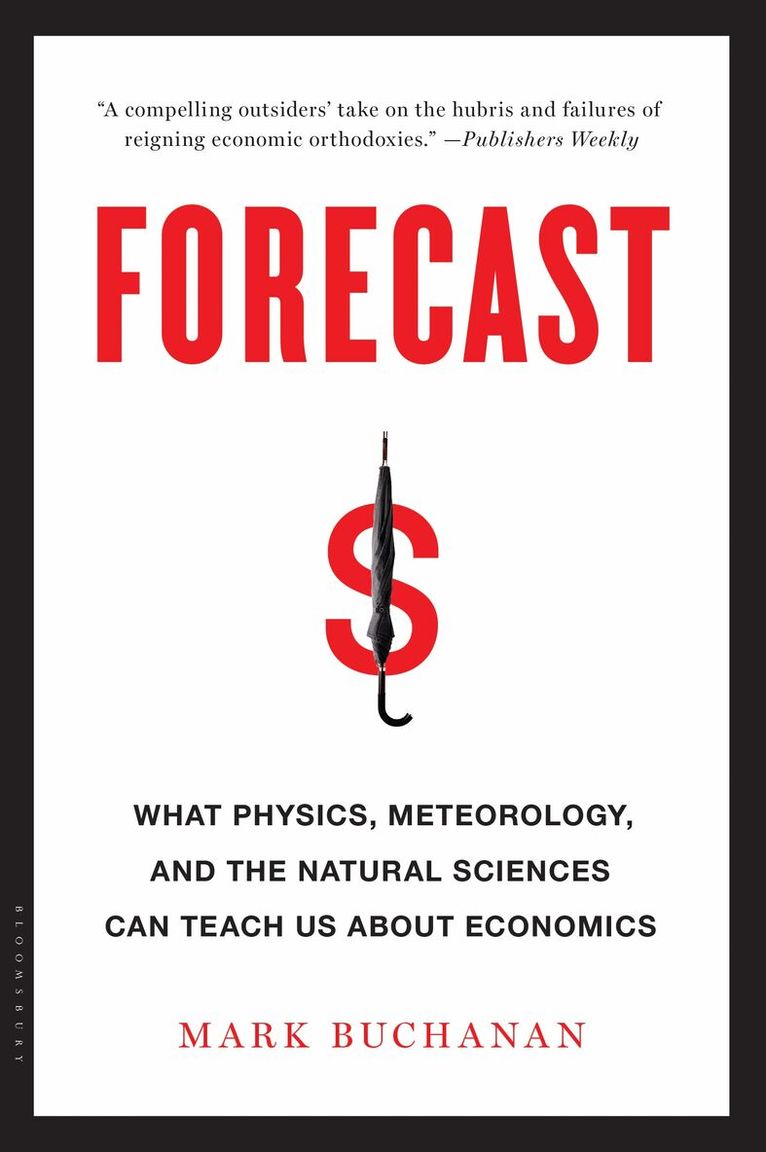
    Forecast

    What Physics, Meteorology, and the Natural Sciences Can Teach Us About Economics

    AvMark Buchanan

    Häftad, Engelska, 2014

    182 kr

    Beställningsvara. Skickas inom 10-15 vardagar. Fri frakt över 249 kr.

    Fler format och utgåvor

    E-bok

    178 kr

    Beskrivning

    Positive feedback—when A produces B, which in turn produces even more A—drives not only abrupt climate changes, but also the most important and disruptive events in economics and finance, from asset bubbles to debt crises, bank runs, even corporate corruption. But economists, with few exceptions, have ignored this reality for fifty years, holding onto the unreasonable belief in the wisdom of the market. It’s past time to be asking how do markets really work? Can we replace economic magical thinking with a better means of predicting what the financial future holds, in order to prepare for, or even avoid the next extreme economic event?In Forecast, physicist and acclaimed science writer Mark Buchanan answers these questions and more in building a new model for economics, one that accepts that markets act much like the weather does. While centuries of classical financial thought has trained us to understand “the market” as something that always returns to equilibrium, economies work more like our atmosphere—a loose surface balance riding on a deeper torrent of fluctuation. Market instability is as natural—and dangerous—as a prairie twister. With Buchanan’s help, we can better govern the markets and weather their storms.

    Produktinformation

    • Utgivningsdatum:2014-08-14
    • Mått:138 x 216 x 20 mm
    • Vikt:360 g
    • Format:Häftad
    • Språk:Engelska
    • Antal sidor:272
    • Förlag:Bloomsbury Publishing Plc
    • ISBN:9781608198535

    Utforska kategorier

    • Nationalekonomi inom Ekonomi och Ledarskap

    Mer om författaren

    Mark Buchanan is a physicist and science writer. He is the author of three previous books, Ubiquity, Nexus, and The Social Atom, and has been an editor of the science journal Nature as well as New Scientist. His articles have appeared in Science, Wired, the New York Times, the Independent, and the Harvard Business Review. He currently writes columns for Bloomberg View, as well as for Nature Physics. He lives in Dorset, England, with his wife and two dogs.

    Recensioner i media

    The 2008 crash created not just a crisis in the economy, but also a crisis in economic thinking. Ideas of market stability and efficiency lost their value faster than a sub-prime mortgage. In this compelling and lively account, Mark Buchanan tells the story of the new ideas that are revolutionizing the field. We may not be able to perfectly forecast the economic weather, but we can be better prepared for storms to come.