• Fri frakt över 249 kr
  • •
  • Snabba leveranser
  • •
  • Billiga böcker
Kundservice

Du är på sajten för privatpersoner.

Företag, bibliotek eller offentlig verksamhet?

Du handlar på classic.bokus.com, där alla dina funktioner finns intakta.
Till classic.bokus.com
Bokus logotyp. Gå till startsidan.
  • Erbjudanden
  • Nyheter
  • Student
  • Topplistor
  • Barn & ungdom
  • Bokus Play
  • E-böcker
  • Pocketböcker
  • Spel & pussel

10% rabatt på allt med kod NYSTART10 →

Sidfot

Mina sidor

    Hjälp

    • Kundservice
    • Vanliga frågor och svar
    • Frakt och leverans
    • Retur vid ångerrätt
    • Reklamera vara
    • Betalning
    • Köpvillkor
    • Allmänna villkor
    • Information om webbplatsens tillgänglighet

    Om Bokus

    • Om oss
    • Pressrum
    • För studenter
    • För företag
    • För bibliotek och offentlig verksamhet
    • För leverantörer
    • Hållbarhet

    Populärt

    • Aktuella erbjudanden
    • Presentkort
    • Studentlitteratur
    • Nya böcker
    • Topplistor
    • Signerade böcker
    • Engelska böcker

    Inspiration

    • Boktips
    • BookTok
    • Populära bokserier
    • Barnbokskaraktärer
    • Populära författare
    Logotyp för Bokus
    Följ oss på Facebook (extern länk)Följ oss på Instagram (extern länk)Följ oss på YouTube (extern länk)Följ oss på TikTok (extern länk)
    bokus @ CookiesAnpassa cookiesIntegritetspolicyKöpvillkor
    Till Citymail hemsida (extern länk)Till Budbee hemsida (extern länk)Till Postnord hemsida (extern länk)Till Schenker hemsida (extern länk)Till Early Bird hemsida (extern länk)Till Walleys hemsida (extern länk)
    1. Skönlitteratur
    2. Litteraturvetenskap
    3. Litteraturvetenskap

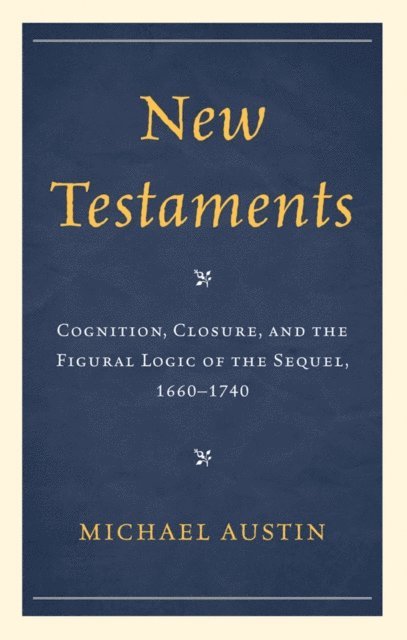
    New Testaments

    Cognition, Closure, and the Figural Logic of the Sequel, 1660–1740

    AvMichael Austin

    E-bok
    Engelska, 2011

    1 475 kr

    Läs direkt i Bokus Reader – eller ladda ned till din enhet

    Fler format och utgåvor

    Inbunden

    1 366 kr

    Beskrivning

    In the seventeenth and eighteenth centuries, popular works of literature attracted—as they attract today—sequels, prequels, franchises, continuations, and parodies. Sequels of all kinds demonstrate the economic realities of the literary marketplace. This represents something fundamental about the way human beings process narrative information. We crave narrative closure, but we also resist its finality, making such closure both inevitable and inadequate in human narratives. Many cultures incorporate this fundamental ambiguity towards closure in the mythic frameworks that fuel their narrative imaginations. New Testaments: Cognition, Closure and the Figural Logic of the Sequel, 1660-1740 examines both the inevitability and the inadequacy of closure in the sequels to four major works of literature written in England between 1660 and 1740: Paradise Lost, The Pilgrim’s Progress, Robinson Crusoe, and Pamela. Each of these works spawned sequels, which—while often different from the original works—connected themselves through rhetorical strategies that can be loosely defined as figural. Such strategies came directly from the culture’s two dominant religious narratives: the Old and New Testaments of the Christian Bible—two vastly dissimilar works seen universally as complementary parts of a unified and coherent narrative.

    Produktinformation

    • Utgivningsdatum:2011-11-25
    • Språk:Engelska
    • Antal sidor:192
    • Filformat:EPUB
    • Kopieringsskydd:LCP
    • ISBN:9781611493658
    • Förlag:Bloomsbury Publishing Plc

    Utforska kategorier

    • Litteraturvetenskap inom Skönlitteratur