• Fri frakt över 249 kr
  • •
  • Snabba leveranser
  • •
  • Billiga böcker
Kundservice

Du är på sajten för privatpersoner.

Företag, bibliotek eller offentlig verksamhet?

Du handlar på classic.bokus.com, där alla dina funktioner finns intakta.
Till classic.bokus.com
Bokus logotyp. Gå till startsidan.
  • Erbjudanden
  • Nyheter
  • Student
  • Topplistor
  • Barn & ungdom
  • Bokus Play
  • E-böcker
  • Pocketböcker
  • Spel & pussel

10% rabatt på allt med kod: NYSTART10 →

Sidfot

Mina sidor

    Hjälp

    • Kundservice
    • Vanliga frågor och svar
    • Frakt och leverans
    • Retur vid ångerrätt
    • Reklamera vara
    • Betalning
    • Köpvillkor
    • Allmänna villkor
    • Information om webbplatsens tillgänglighet

    Om Bokus

    • Om oss
    • Pressrum
    • För studenter
    • För företag
    • För bibliotek och offentlig verksamhet
    • För leverantörer
    • Hållbarhet

    Populärt

    • Aktuella erbjudanden
    • Presentkort
    • Studentlitteratur
    • Nya böcker
    • Topplistor
    • Signerade böcker
    • Engelska böcker

    Inspiration

    • Boktips
    • BookTok
    • Populära bokserier
    • Barnbokskaraktärer
    • Populära författare
    Logotyp för Bokus
    Följ oss på Facebook (extern länk)Följ oss på Instagram (extern länk)Följ oss på YouTube (extern länk)Följ oss på TikTok (extern länk)
    bokus @ CookiesAnpassa cookiesIntegritetspolicyKöpvillkor
    Till Citymail hemsida (extern länk)Till Budbee hemsida (extern länk)Till Postnord hemsida (extern länk)Till Schenker hemsida (extern länk)Till Early Bird hemsida (extern länk)Till Walleys hemsida (extern länk)
    1. Psykologi och pedagogik
    2. Psykologi

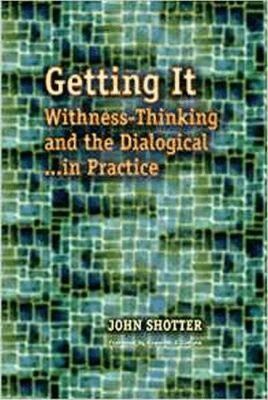
    Getting It

    Withness-Thinking and the Dialogical in Practice

    AvJohn Shotter

    Häftad, Engelska, 2011

    290 kr

    Beställningsvara. Skickas inom 10-15 vardagar. Fri frakt över 249 kr.

    Fler format och utgåvor

    Inbunden

    600 kr

    Beskrivning

    This is a book for reflective practitioners, for people wishing to inquire into what is involved in thinking "in the moment" when encountering unique, "first-time" events. It is also a book about complexity considered as a third realm of mysterious events subsisting between those we call problems which we can solve by rational thought, and those we call ineffable which we cannot at all describe in words–for we can, with the help of Wittgenstein’s methods, Shotter claims, find our "way about" within this realm of the mysterious, even though we may never fully understand it.Thus, instead of thinking about the difficulties we encounter in life, as if they are objects "over there" in the world about us, Shotter argues that if we can "relate to" and "enter into" our difficulties in an exploratory fashion–a process that he calls withness-thinking–then felt action-guiding anticipations will in fact emerge within us as to how we might next act in relation to overcoming each unique difficulty we face.Thus Shotter’s inquiry is not to do theories, with any general ways of thinking. His focus is on our living, bodily activities, and the ways in which they are always spontaneously responsive to their particular surroundings, as well as always being expressive in some way to others.But more than this. When two or more of us gather together in meetings, and our activities intertwine, something novel, an "it", characteristic of our situation as an integrated whole is always created between us. This is why the book is called "Getting It": for it is the unique nature of these situated "its" that we must sense, and do detailed justice to, if we are to fit our practices to the requirements of our always unique circumstances.

    Produktinformation

    • Utgivningsdatum:2011-08-30
    • Vikt:333 g
    • Format:Häftad
    • Språk:Engelska
    • Antal sidor:242
    • Förlag:Hampton Press Inc
    • Medarbetare:KennethJ. Gergen
    • ISBN:9781612890357

    Utforska kategorier

    • Psykologi inom Psykologi och pedagogik

    Innehållsförteckning

    • Foreword, Kenneth J. Gergen. Series Editor’s Preface, Wendy Leeds-Hurwitz. Prologue: A ‘New’ Realm of Inquiry. Where the Action Is. ‘Withness’-Thinking and the Dialogical. The Dialogical, Joint Nature of Human Activity. Wittgenstein’s Remarks: The Role of Reminders. Wittgenstein’s Methods: Withness-Thinking and Grammar. Living Expression, Entanglement, Chiasmic Entanglement, and Time. Cartesianism and “Losing the Phenomena”. Styles of Writing: Withness– and Aboutness–Writing. Writing on the Edge: The Expression of Unique Moments. Rethinking Truth in Practice: The Recovery of Truthfulness. Epilogue – Oh Brave New World. References. Author Index. Subject Index