• Fri frakt över 249 kr
  • •
  • Snabba leveranser
  • •
  • Billiga böcker
Kundservice

Du är på sajten för privatpersoner.

Företag, bibliotek eller offentlig verksamhet?

Du handlar på classic.bokus.com, där alla dina funktioner finns intakta.
Till classic.bokus.com
Bokus logotyp. Gå till startsidan.
  • Erbjudanden
  • Student
  • Topplistor
  • Barn & ungdom
  • Bokus Play
  • E-böcker
  • Ljudböcker
  • Pocketböcker
  • Spel och pussel

Pocketfynda! Hundratals böcker för 49 kr/st →

Sidfot

Mina sidor

    Hjälp

    • Kundservice
    • Vanliga frågor och svar
    • Frakt och leverans
    • Retur vid ångerrätt
    • Reklamera vara
    • Betalning
    • Köpvillkor
    • Allmänna villkor
    • Information om webbplatsens tillgänglighet

    Om Bokus

    • Om oss
    • Pressrum
    • För studenter
    • För företag
    • För bibliotek och offentlig verksamhet
    • För leverantörer
    • Hållbarhet

    Populärt

    • Aktuella erbjudanden
    • Presentkort
    • Studentlitteratur
    • Nya böcker
    • Topplistor
    • Signerade böcker
    • Engelska böcker

    Inspiration

    • Boktips
    • BookTok
    • Barnbokskaraktärer
    • Populära författare
    Logotyp för Bokus
    Följ oss på Facebook (extern länk)Följ oss på Instagram (extern länk)Följ oss på YouTube (extern länk)Följ oss på TikTok (extern länk)
    bokus @ CookiesAnpassa cookiesIntegritetspolicyKöpvillkor
    Till Citymail hemsida (extern länk)Till Budbee hemsida (extern länk)Till Postnord hemsida (extern länk)Till Schenker hemsida (extern länk)Till Early Bird hemsida (extern länk)Till Walleys hemsida (extern länk)
    1. Historia och arkeologi
    2. Historia
    3. Historia: särskilda händelser och ämnen
    4. Socialhistoria och kulturhistoria

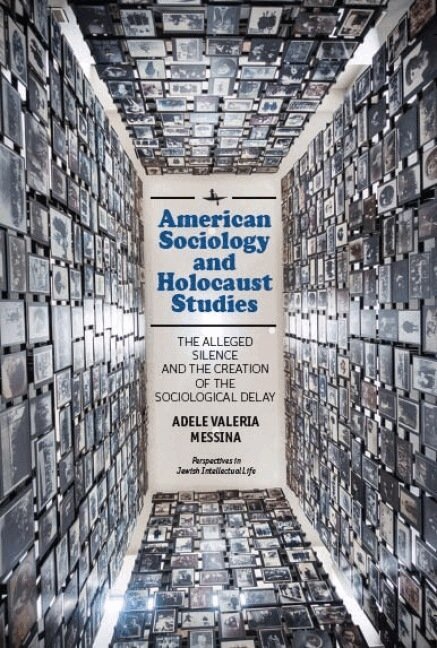
    American Sociology and Holocaust Studies

    The Alleged Silence and the Creation of the Sociological Delay

    AvAdele Valeria Messina

    Inbunden, Engelska, 2017

    Del i serien Perspectives in Jewish Intellectual Life

    1 510 kr

    Beställningsvara. Skickas inom 5-8 vardagar. Fri frakt över 249 kr.

    Fler format och utgåvor

    Häftad

    403 kr

    Beskrivning

    Filled with new elements that challenge common scholarly theses, this book acquaints the reader with the “Jewish problem” of sociology and provides what this academic discipline urgently needs: a one-volume history of the Sociology of the Holocaust. The story of why and how sociologists as well as the schools of sociological thought came to confront the Holocaust has never been entirely told. The volume offers original insights on the nature of American sociology with implications for the post-Holocaust sociology development.

    Produktinformation

    • Utgivningsdatum:2017-02-23
    • Mått:155 x 234 x 31 mm
    • Vikt:870 g
    • Format:Inbunden
    • Språk:Engelska
    • Serie:Perspectives in Jewish Intellectual Life
    • Antal sidor:498
    • Förlag:Academic Studies Press
    • ISBN:9781618115478

    Utforska kategorier

    • Socialhistoria och kulturhistoria inom Historia och arkeologi
    • Andra världskriget inom Historia och arkeologi
    • Amerikas historia inom Historia och arkeologi

    Mer om författaren

    Adele Valeria Messina is an Italian historian and a member of the Research Laboratory in History, Philosophy, and Politics at the Department of Political and Social Sciences of the Calabria University where she received her doctorate in Politics, Society and Culture in 2013. Her research interests include the Holocaust, Sociology, and anti-Semitism.

    Recensioner i media

    "Adele Valeria Messina’s American Sociology and Holocaust Studies is a detailed examination of a broad range of social science traditions and their relationship to the study of the Holocaust. With a close reading of virtually every scholar who has ever written anything pertinent to the subject Messina supports her thesis that the alleged delay on the part of American sociology to come to grips with the Holocaust is, in fact, mistaken. Using a variety of methodologies, she unearths many less-known figures who had, even in the years prior to World War II, presaged the events of the war years. She then utilizes numerous sources, including biographical, to illustrate some of the controversies about how the day-to-day machinery of the Holocaust actually worked. Her work is evidence of an enormous command of sociological and historical research. Messina examines the many debates concerning what led up to the Holocaust, in particular controversies about its German roots, and how the events of those years should be understood. In this context she provides useful surveys of the histories of Germany and Eastern European countries as these pertain to the treatment of minorities, especially the Jews. Dr. Messina has fully succeeded in giving us, in her words, ‘a one-volume history of the sociology of the Holocaust."

    Innehållsförteckning

    • Acknowledgments Introduction The Famous October 2001 Conference: The Sociological Turning Point Methodology English-Language Sources Chronology Outline of the Book 1. Sociological Thinking about the Holocaust in the Postwar Years, 1945–1960s 1.1. A Preliminary 1.2. A Totalitarian Order 1.3. Reflections on Anti-Semitism: Frankfurt School Reactions to Nazi Atrocities 1.4. An Open Case: Talcott Parsons and National Socialism, from Active Political Engagement to the Years of Silence 1.4.1. Parsons’s Seven Published Papers 1.4.2. The Seven Unpublished Writings 1.4.3. Years of Silence (1946–1948) 1.4.4. The Parsons Controversy over His “Role” in Bringing Nazi Sympathizers to the U.S. 1.5. The German Army in Shils and Janowitz 1.6. The NSDAP and the Consensus: Between Heberle and Lipset 1.6.1. The Modern Society behind the Political Man 1.6.2. Lipset’s Election Analysis 1.7. “Good People and Dirty Work”: Hughes 1.7.1. Beyond the Banality of Evil 1.7.2. The Theory of Flow and Empirical Evidence at the Basis of Hughes’s Thinking 1.7.3. Halfway between Modern Industry and National Socialist Society 1.7.4. “Good People” according to Critical Essays and Reviews 1.7.5. “The Gleichshaltung” 1.7.6. A Self-Coördination Case 1.7.7. Hughes’s Delay Roots in the American Sociological Tradition 1.8. Summary 2. The Destruction of the Jews in a Sociological Perspective during the 1970s 2.1. Preface 2.2. Auschwitz in the Light of Anna Pawełczyńska: From Violence to Values 2.2.1. Inside the Time and Space of Auschwitz 2.2.2. The Hodological Space in the Structure of Terror 2.2.3. Resistance as Defense of the Dimension of Life by Group Dynamics 2.2.3.1. Resistance as Communication 2.2.3.2. The Market as Defense Mechanism Par Excellence 2.2.3.3. Resistance as Movement and Organization 2.2.4. The Institutions of the Criminal State 2.2.5. Auschwitz as Modern State 2.3. Jews in Poland 2.3.1. Twenty-one Years after Celia Heller 2.3.1.2. Polish Nationalism during the Soviet Occupation 2.3.1.3. Polish Collaboration during the German Occupation 2.4. Injustice in the Eyes of German Workers 2.4.1. An Obedient Proletariat 2.4.2. “Was du für Volk und Heimat tust, ist immer recht getan!” 2.4.3. The Early Nazists for Abel, Merkl, and Moore 2.4.4. Surrender to Authority in Concentration Camps 2.5. How Many Victims of the Holocaust? 2.5.1. Within a Statistical Framework 2.5.2. Space and Times as Coordinates 2.5.3. Moral Solidarity 2.5.4. Jewish Victims 2.5.5. International Debate after Publication 2.5.6. An Intellectual Diatribe: Horowitz and Fein 2.5.7. Ben-Baruch’s Position 2.5.8. Accounting for Genocide and the Sociological Tradition 2.6. Summary 3. Toward a Sociology of Genocide, 1980–1989 3.1. Genocide as a Government Solution during the 1980s 3.2. The Significance of Genocide 3.3. When States Sponsor Genocide 3.3.1. Between Nation-State and International Law: The Role of International Organizations 3.4. A General Theory on State-Sponsored Genocide: Baum and Horowitz 3.4.1. The Holocaust as Crime of State in Sofsky 3.4.2. The Organization of Work 3.5. The Sociological Frame of Katz 3.5.1. Individuals and the Factory System 3.6. Tec and Sociological Categories of Genocide 3.6.1. The Meaning of Resistance 3.7. “The Holocaust as the test of modernity” 3.7.1. Between England and Poland 3.7.2. From Memories of Class to Modernity and the Holocaust 3.7.3. Suffering in Society 3.7.4. The Holocaust as a Product of Modernity 3.7.5. His Sociological Lesson 3.7.6. A Samizdat Phenomenon 3.7.7. Some Literary Critics 3.7.8. An Open Problem on the Modernity Thesis 3.8. Summary 4. The Problem of the Holocaust after 1989 4.1. After the Fall of the Berlin Wall 4.2. From Collective National Memory to Cosmopolitan Memory 4.2.1. Levy and Sznaider in the Wake of Ulrich Beck 4.3. Between Memory and Political Acting: The Holocaust in Global Society 4.4. Alexander and Durkheim: “What Holds Society Together?” 4.4.1. Τραγῳδία as Interpretation of the Human Condition 4.4.2. Trauma Theory: From Cultural Trauma to Universal Value 4.5. Genre Studies and the Jewish Question 4.6. The Post-Holocaust Sociology of the Social Movements 4.6.1. The Warsaw Ghetto Uprising as Social Movement 4.6.2. The Conditions of Collective Action 4.6.3. Leadership Question: Three Cases in Comparison 4.6.4. The Geography of Resistance in Warsaw, Vilna, and Łódź 4.7. Anti-Semitism in Brustein 4.8. Summary Conclusion: The Alleged Delay Watershed Events Bibliography Index