• Fri frakt över 249 kr
  • •
  • Snabba leveranser
  • •
  • Billiga böcker
Kundservice

Du är på sajten för privatpersoner.

Företag, bibliotek eller offentlig verksamhet?

Du handlar på classic.bokus.com, där alla dina funktioner finns intakta.
Till classic.bokus.com
Bokus logotyp. Gå till startsidan.
  • Erbjudanden
  • Nyheter
  • Student
  • Topplistor
  • Barn & ungdom
  • Bokus Play
  • E-böcker
  • Pocketböcker
  • Spel & pussel

10% rabatt på allt med kod: NYSTART10 →

Sidfot

Mina sidor

    Hjälp

    • Kundservice
    • Vanliga frågor och svar
    • Frakt och leverans
    • Retur vid ångerrätt
    • Reklamera vara
    • Betalning
    • Köpvillkor
    • Allmänna villkor
    • Information om webbplatsens tillgänglighet

    Om Bokus

    • Om oss
    • Pressrum
    • För studenter
    • För företag
    • För bibliotek och offentlig verksamhet
    • För leverantörer
    • Hållbarhet

    Populärt

    • Aktuella erbjudanden
    • Presentkort
    • Studentlitteratur
    • Nya böcker
    • Topplistor
    • Signerade böcker
    • Engelska böcker

    Inspiration

    • Boktips
    • BookTok
    • Populära bokserier
    • Barnbokskaraktärer
    • Populära författare
    Logotyp för Bokus
    Följ oss på Facebook (extern länk)Följ oss på Instagram (extern länk)Följ oss på YouTube (extern länk)Följ oss på TikTok (extern länk)
    bokus @ CookiesAnpassa cookiesIntegritetspolicyKöpvillkor
    Till Citymail hemsida (extern länk)Till Budbee hemsida (extern länk)Till Postnord hemsida (extern länk)Till Schenker hemsida (extern länk)Till Early Bird hemsida (extern länk)Till Walleys hemsida (extern länk)
    1. Språk och ordböcker
    2. Språkvetenskap och lingvistik

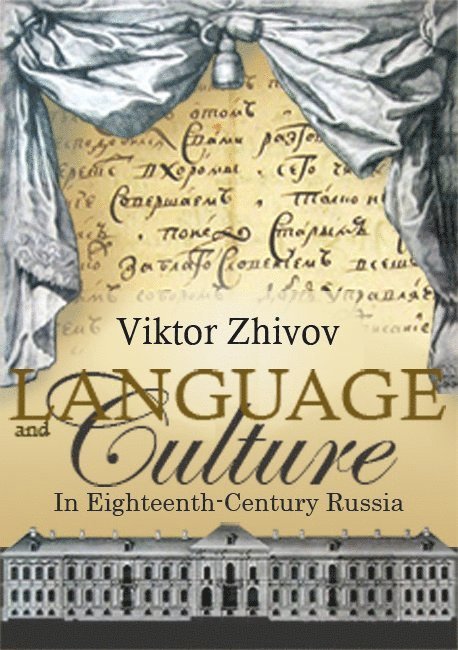
    Language and Culture in Eighteenth-Century Russia

    AvVictor Zhivov

    Häftad, Engelska, 2018

    Del i serien Studies in Russian and Slavic Literatures, Cultures, and History

    421 kr

    Beställningsvara. Skickas inom 5-8 vardagar. Fri frakt över 249 kr.

    Fler format och utgåvor

    Inbunden

    1 940 kr

    Beskrivning

    Victor Zhivov's Language and Culture in Eighteenth-Century Russia is one of the most important studies ever published on eighteenth-century Russia. Historians and students of Russian culture agree that the creation of a Russian literary language was key to the formation of a modern secular culture, and this title traces the growth of a vernacular language from the ""hybrid Slavonic"" of the late seventeenth century through the debates between ""archaists and innovators"" of the early nineteenth century. Zhivov's study is an essential work on the genesis of modern Russian culture; the aim of this translation is to make it available to historians and students of the field.

    Produktinformation

    • Utgivningsdatum:2018-06-14
    • Mått:155 x 234 x 28 mm
    • Vikt:893 g
    • Format:Häftad
    • Språk:Engelska
    • Serie:Studies in Russian and Slavic Literatures, Cultures, and History
    • Antal sidor:524
    • Förlag:Academic Studies Press
    • ISBN:9781618118073
    • Översättare:Marcus Levitt

    Utforska kategorier

    • Språkvetenskap och lingvistik inom Språk och ordböcker

    Mer om författaren

    Viktor Zhivov (PhD Moscow University) was a professor at UC Berkeley and the Russian Language Institute of the Academy of Sciences, Moscow. His publications included Ocherki istoricheskoi morfologii russkogo iazyka XVII—XVIII veka (2004), Razyskaniia voblasti istorii i predystorii russkoi kul’tury (2002), and Jazyk I kul’tura v Rossii XVIII veka. Professor Zhivov passed away in April 2013.

    Recensioner i media

    "Zhivov (Deputy Director, Institute of Russian Language, Russian Academy of Sciences, Russia) connects the histories of language and culture in 18th century Russia, describing his main theme as "language and power," by which he means that "language is not merely a system of signs that makes communication possible but an instrument of human ambitions, desires and passion." He traces the formation of Russian literary language through describing the history of codification, how the need for a polyfunctional liguistic standard came to be realized, and how that standard was modified to meet the needs of the situation. He also addresses the institutional components of this history, discussing the role of the Academy of Sciences in codifying the Russian language, as well as the establishment of popular schools and their impact on literary standards and their general acceptance."

    Innehållsförteckning

    • Translator’s IntroductionPreface to the English EditionIntroductionProblems in the Prehistory of the New Type of Russian Literary Language1 The Literary Language of the New Type as an Object of Social and Cultural History2 The Functional Reconceptualization of Genetically Heterogeneous Elements in the History of Russian Writing3 The Main Registers of the Bookish Language and the Processes of Their Formation4 The Reconceptualization of the Varieties of the Bookish Language5 Linguistic “Simplicity” and the Means of its Realization6 The Secularization of Culture, Its Specifics in Russia, and Its Significance for Rethinking Linguistic UsageChapter 1 The Petrine Language Reform; The Linguistic and Cultural Situation of the Petrine Era1 Tasks of the Language Reform and the Nature of its Realization1.1 The Reform of the Alphabet as the Prototype of Language Reform1.2 Petrine Linguistic Directives1.3 From Hybrid Church Slavonic to the “Simple” Russian Language1.4 Innovation and Continuity in the New Literary Language2 Language Policy and the Conflict of Cultures2.1 Language Reform and Political-Ecclesiastical Conflicts2.2 “Simplicity” and the Semiotic Functions of Civil SpeechChapter 2 The Start of Normalization of the New Literary Language; The Formulation of Linguistic Theories and Literary Practice1 The Formation of Petersburg Culture and the New Conception of the Literary Language1.1 The Linguistic Program of the First Codifiers: New Issues1.2 Classicist Purism and Its Initial Reception1.3 The Actualization of Genetic Parameters: Slavonicisms1.4 Normalization in Morphology and the Use of Genetic Parametersxvii 2 The Conflict Between Linguistic Theory and Actual Practice; The Concept of a Poetic Language2.1 Poetic License and the Church Slavonic Literary and Linguistic Tradition2.2 The Language of the Ode and Church Slavonic Panegyric PoetryChapter 3 The Changed Conception of the Literary Language; The ""Slavenorossiiskii Language” and the Synthesis of Cultural and Linguistic Traditions1 The New Nature of the Russian Literary Language and the Emergence of Slavonicizing Purism1.1 The Polyfunctionism of the New Literary Language1.2 The Single Nature of Russian and Church Slavonic1.3 The New Interpretation of Purist Categories2 Rationalist Purism and the Richness of the Slavenorossiiskii Language2.1 The Richness and “Antiquity” of Russian2.2 The New Stylistic Normalization2.3 Rationalist Purism and Its Russian Metamorphosis3 The Synthesis of Cultural and Linguistic Traditions: The Slavenorossiiskii Language and Its Functioning3.1 The Evolution of the Language of Religious Literature3.2 The Unified Language of a Unified CultureChapter 4 The New Cultural Differentiation; Linguistic Purity as an Ideological Category1 The Emancipation of Culture and the Polemic Between Archaists and Innovators1.1 The Collapse of the Cultural-Linguistic Synthesis and the Karamzinian Program1.2 The Polemic over Language and Problems of Cultural Self-Consciousness2 Slavonicizing Purism and Its Reconceptualization in Religious Literature2.1 The Understanding of Purist Rubrics2.2 The Attitude Toward the Linguistic Sign2.3 The Secularization of Slavonicisms and the Juxtaposition of Religious and Secular TraditionsWorks CitedIndex