• Fri frakt över 249 kr
  • •
  • Snabba leveranser
  • •
  • Billiga böcker
Kundservice

Du är på sajten för privatpersoner.

Företag, bibliotek eller offentlig verksamhet?

Du handlar på classic.bokus.com, där alla dina funktioner finns intakta.
Till classic.bokus.com
Bokus logotyp. Gå till startsidan.
  • Erbjudanden
  • Student
  • Topplistor
  • Barn & ungdom
  • Bokus Play
  • E-böcker
  • Ljudböcker
  • Pocketböcker
  • Spel och pussel

Pocketfynda! Hundratals böcker för 49 kr/st →

Sidfot

Mina sidor

    Hjälp

    • Kundservice
    • Vanliga frågor och svar
    • Frakt och leverans
    • Retur vid ångerrätt
    • Reklamera vara
    • Betalning
    • Köpvillkor
    • Allmänna villkor
    • Information om webbplatsens tillgänglighet

    Om Bokus

    • Om oss
    • Pressrum
    • För studenter
    • För företag
    • För bibliotek och offentlig verksamhet
    • För leverantörer
    • Hållbarhet

    Populärt

    • Aktuella erbjudanden
    • Presentkort
    • Studentlitteratur
    • Nya böcker
    • Topplistor
    • Signerade böcker
    • Engelska böcker

    Inspiration

    • Boktips
    • BookTok
    • Barnbokskaraktärer
    • Populära författare
    Logotyp för Bokus
    Följ oss på Facebook (extern länk)Följ oss på Instagram (extern länk)Följ oss på YouTube (extern länk)Följ oss på TikTok (extern länk)
    bokus @ CookiesAnpassa cookiesIntegritetspolicyKöpvillkor
    Till Citymail hemsida (extern länk)Till Budbee hemsida (extern länk)Till Postnord hemsida (extern länk)Till Schenker hemsida (extern länk)Till Early Bird hemsida (extern länk)Till Walleys hemsida (extern länk)
    1. Skönlitteratur
    2. Litteraturvetenskap
    3. Litteraturvetenskap

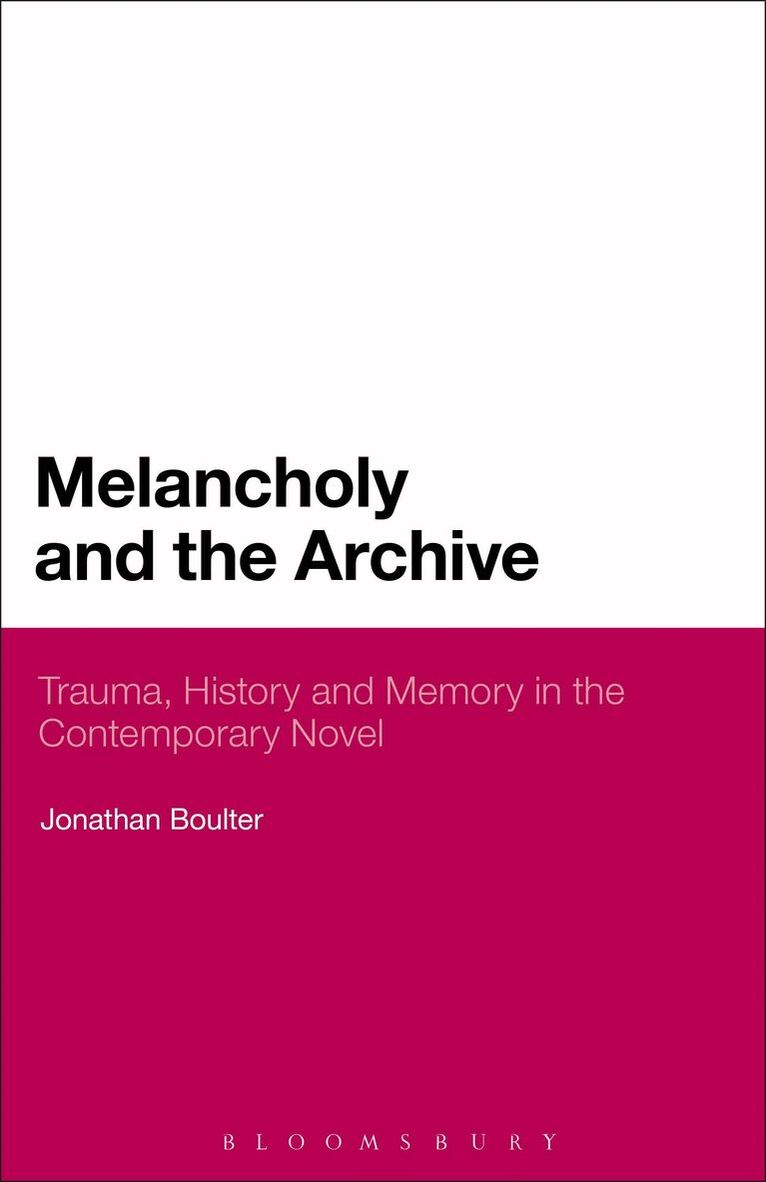
    Melancholy and the Archive

    Trauma, History and Memory in the Contemporary Novel

    AvJonathan Boulter

    Häftad, Engelska, 2012

    628 kr

    Beställningsvara. Skickas inom 10-15 vardagar. Fri frakt över 249 kr.

    Fler format och utgåvor

    Inbunden

    2 233 kr

    E-bok

    677 kr

    E-bok

    677 kr

    Beskrivning

    Melancholy and the Archive examines how trauma, history and memory are represented in key works of major contemporary writers such as David Mitchell, Paul Auster, Haruki Murakami and Jose Saramago. The book explores how these authors construct crucial relationships between sites of memory-the archive becomes a central trope here-and the self that has been subjected to various traumas, various losses. The archive-be it a bureaucratic office (Saramago), an underground bunker (Auster), a geographical space or landscape (Mitchell) or even a hole (Murakami)-becomes the means by which the self attempts to preserve and conserve his or her sense of history even as the economy of trauma threatens to erase the grounds of such preservation: as the subject or self is threatened so the archive becomes a festishized site wherein history is housed, accommodated, created, even fabricated. The archive, in Freudian terms, becomes a space of melancholy precisely as the subject preserves not only a personal history or a culture's history, but also the history of the traumas that necessitates the creation of the archive as such.

    Produktinformation

    • Utgivningsdatum:2012-11-22
    • Mått:156 x 234 x 12 mm
    • Vikt:313 g
    • Format:Häftad
    • Språk:Engelska
    • Antal sidor:224
    • Förlag:Bloomsbury Publishing Plc
    • ISBN:9781623569921

    Utforska kategorier

    • Litteraturvetenskap inom Skönlitteratur

    Mer om författaren

    Jonathan Boulter is Associate Professor of English at the University of Western Ontario, Canada.

    Recensioner i media

    "In this original, lucid and stimulating book Jonathan Boulter provides a fascinating synthesis of work by four major contemporary novelists from different cultures across the globe. His chapter on Saramago is a refreshing and innovative study of three of his major novels and is surely a major new contribution to understanding of his work."

    Innehållsförteckning

    • Introduction \ Part I: The Material Archive \ 1. Archiving Trauma: Paul Auster \ 2. Burying History: Haruki Murakami \ Part II: The Imaginary Archive \ 3. Humanizing History: David Mitchell \ 4. Archiving Melancholy: Jose Saramago \ Conclusion \ Bibliography \ Index