• Fri frakt över 249 kr
  • •
  • Snabba leveranser
  • •
  • Billiga böcker
Kundservice

Du är på sajten för privatpersoner.

Företag, bibliotek eller offentlig verksamhet?

Du handlar på classic.bokus.com, där alla dina funktioner finns intakta.
Till classic.bokus.com
Bokus logotyp. Gå till startsidan.
  • Erbjudanden
  • Nyheter
  • Student
  • Topplistor
  • Barn & ungdom
  • Bokus Play
  • E-böcker
  • Pocketböcker
  • Spel & pussel

Må bättre, för mindre! Upp till 50% rabatt på hälsoböcker

Sidfot

Mina sidor

    Hjälp

    • Kundservice
    • Vanliga frågor och svar
    • Frakt och leverans
    • Retur vid ångerrätt
    • Reklamera vara
    • Betalning
    • Köpvillkor
    • Allmänna villkor
    • Information om webbplatsens tillgänglighet

    Om Bokus

    • Om oss
    • Pressrum
    • För studenter
    • För företag
    • För bibliotek och offentlig verksamhet
    • För leverantörer
    • Hållbarhet

    Populärt

    • Aktuella erbjudanden
    • Presentkort
    • Studentlitteratur
    • Nya böcker
    • Topplistor
    • Signerade böcker
    • Engelska böcker

    Inspiration

    • Boktips
    • BookTok
    • Populära bokserier
    • Barnbokskaraktärer
    • Populära författare
    Logotyp för Bokus
    Följ oss på Facebook (extern länk)Följ oss på Instagram (extern länk)Följ oss på YouTube (extern länk)Följ oss på TikTok (extern länk)
    bokus @ CookiesAnpassa cookiesIntegritetspolicyKöpvillkor
    Till Citymail hemsida (extern länk)Till Budbee hemsida (extern länk)Till Postnord hemsida (extern länk)Till Schenker hemsida (extern länk)Till Early Bird hemsida (extern länk)Till Walleys hemsida (extern länk)
    1. Skönlitteratur
    2. Litteraturvetenskap
    3. Litteraturvetenskap

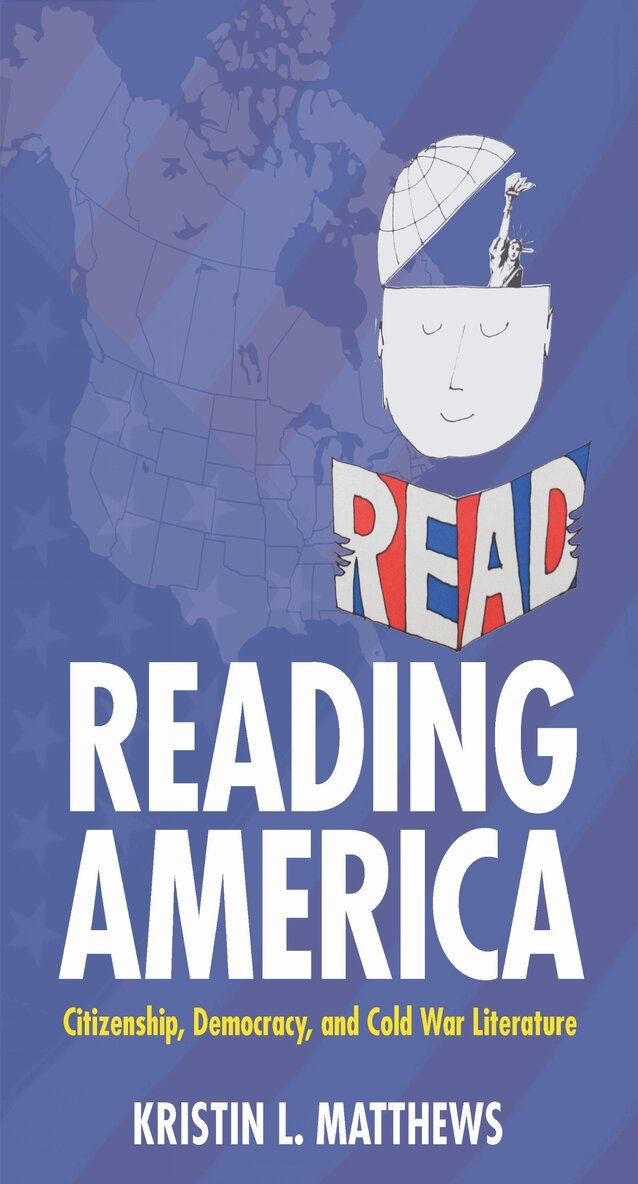
    Reading America

    Citizenship, Democracy, and Cold War Literature

    AvKristin L. Matthews

    Häftad, Engelska, 2016

    Del i serien Studies in Print Culture and the History of the Book

    683 kr

    Beställningsvara. Skickas inom 3-6 vardagar. Fri frakt över 249 kr.

    Beskrivning

    During the Cold War, the editor of Time magazine declared, ""A good citizen is a good reader."" As postwar euphoria faded, a wide variety of Americans turned to reading to understand their place in the changing world. Yet, what did it mean to be a good reader? And how did reading make you a good citizen?In Reading America, Kristin L. Matthews puts into conversation a range of political, educational, popular, and touchstone literary texts to demonstrate how Americans from across the political spectrum - including ""great works"" proponents, New Critics, civil rights leaders, postmodern theorists, neoconservatives, and multiculturalists - celebrated particular texts and advocated particular interpretive methods as they worked to make their vision of ""America"" a reality. She situates the fiction of J. D. Salinger, Ralph Ellison, Thomas Pynchon, John Barth, and Maxine Hong Kingston within these debates, illustrating how Cold War literature was not just an object of but also a vested participant in postwar efforts to define good reading and citizenship.

    Produktinformation

    • Utgivningsdatum:2016-11-04
    • Mått:154 x 233 x 15 mm
    • Vikt:350 g
    • Format:Häftad
    • Språk:Engelska
    • Serie:Studies in Print Culture and the History of the Book
    • Antal sidor:288
    • Förlag:University of Massachusetts Press
    • ISBN:9781625342355

    Utforska kategorier

    • Litteraturvetenskap inom Skönlitteratur

    Mer om författaren

    Kristin L. Matthews is associate professor of English and coordinator of the American Studies Program at Brigham Young University.

    Recensioner i media

    Reading America is a pioneering addition to Cold War literary and cultural studies. For those working in this field, what is perhaps most revelatory about Matthews’s book is how she demonstrates the elasticity of the idea of the “cold war”—she calls the term “simultaneously historical, political, ideological, and romantic” (4)—while still being highly specific when it comes to how this layered concept might have meaning for literature and culture. We often think we know what “political” means—or “aesthetic” or “interpretation”—but by foregrounding Cold War reading as such, Matthews asks us to reconsider our presumptive definitions in light of historical particularities, which in turns demands that we see the era itself anew." — ALH Online Review, XIX.1