- Nyhet
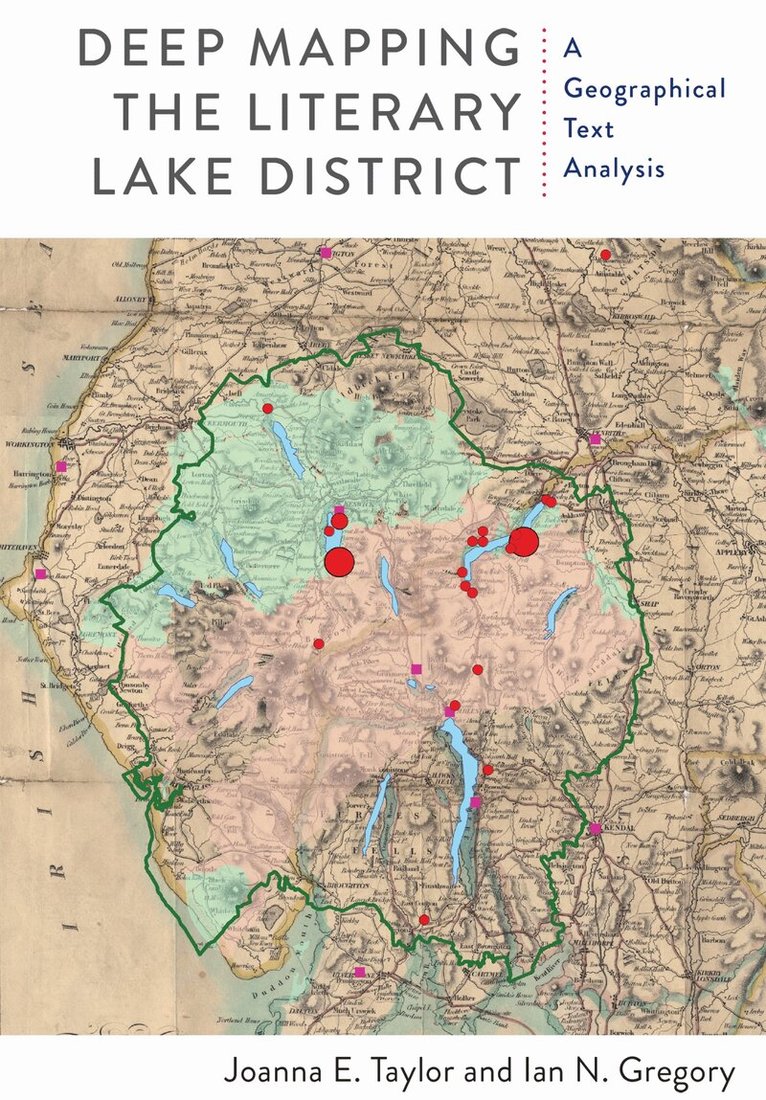
Deep Mapping the Literary Lake District
A Geographical Text Analysis
AvJoanna E. Taylor,Ian N. Gregory
616 kr
Beställningsvara. Skickas inom 5-8 vardagar. Fri frakt över 249 kr.
Du är på sajten för privatpersoner.
AvJoanna E. Taylor,Ian N. Gregory
616 kr
Beställningsvara. Skickas inom 5-8 vardagar. Fri frakt över 249 kr.
JOANNA E. TAYLOR is a presidential fellow in digital humanities at the University of Manchester in the UK. Her research explores the uses of digital technologies at the intersection between literary geographies, cultural heritage, and environmental studies. Digital methodologies and technologies extend the reach of this work. She has published widely on these topics in leading journals across literary studies, digital humanities, and geographical information science.IAN N. GREGORYis a professor in digital humanities at Lancaster University in the UK. He is particularly interested in using Geographical Information Systems (GIS) with texts as well as the more traditional quantitative sources. He has used these approaches to study a range of topics from historical demography to Lake District literature. This research has been the subject of a number of major projects including the European Research Council funded Spatial Humanities: Texts, GIS, Places and the Leverhulme Trust funded Geospatial Innovation in the Digital Humanities.
"It is rare that one book can influence several disciplines. Deep Mapping the Literary Lake District is such a title. Taylor and Gregory offer a compelling case for the spatial humanities, and in the process, make valuable contributions to literary studies, geography, history, and cultural studies. A truly innovative work."— David Bodenhamer, coeditor of Deep Maps and Spatial Narratives"Joanna Taylor and Ian Gregory . . . forge a novel methodology in their compelling and engaging study, Deep Mapping the Literary Lake District: A Geographical Text Analysis, one that employs both close and distant reading, textual and digital analysis, in order to provide different, albeit complimentary, perspectives on Lake District writing from the seventeenth through the nineteenth centuries."— Eighteenth-Century Studies"In this ambitious book, Joanna Taylor and Ian Gregory marry a conventional close reading of literary texts with a 'distant' reading of a large corpus of writing using digital mapping technologies . . . [T]he 'deep maps' presented in this book provide much food for thought [and] the insights [Deep Mapping the Literary Lake District] offers into the emerging field of Geographical Text Analysis point to the technique's potential for historical research."— Northern History"Taylor and Gregory brilliantly demonstrate how digital techniques developed for work at a wide scale can be employed for the full depth of deep mapping. The result is one of the most exciting demonstrations of the value of computational technologies in literary analysis that I've read in a long time."— James Loxley, co-editor of Ben Jonson's Walk to Scotland: An Annotated Edition of the 'Foot Voyage'"Deep Mapping the Literary Lake District will quickly become a new standard in the field of literary geography. Its spatial synthesis of aesthetics, Romanticism, sociology, history, literature, and cartography will excite scholars from across the digital-analog divide. I highly recommend the book to every scholar working in these fields, as well as any reader interested in the Lake District and its rich, layered literature and culture."— Ryan Heuser, King's College, Cambridge University
Ian N. Gregory, Niall A. Cunningham, Paul S. Ell, Christopher D. Lloyd, Ian G. Shuttleworth
Häftad, 2013
493 kr
Du är på sajten för privatpersoner.
AvJoanna E. Taylor,Ian N. Gregory
616 kr
Beställningsvara. Skickas inom 5-8 vardagar. Fri frakt över 249 kr.
JOANNA E. TAYLOR is a presidential fellow in digital humanities at the University of Manchester in the UK. Her research explores the uses of digital technologies at the intersection between literary geographies, cultural heritage, and environmental studies. Digital methodologies and technologies extend the reach of this work. She has published widely on these topics in leading journals across literary studies, digital humanities, and geographical information science.IAN N. GREGORYis a professor in digital humanities at Lancaster University in the UK. He is particularly interested in using Geographical Information Systems (GIS) with texts as well as the more traditional quantitative sources. He has used these approaches to study a range of topics from historical demography to Lake District literature. This research has been the subject of a number of major projects including the European Research Council funded Spatial Humanities: Texts, GIS, Places and the Leverhulme Trust funded Geospatial Innovation in the Digital Humanities.
"It is rare that one book can influence several disciplines. Deep Mapping the Literary Lake District is such a title. Taylor and Gregory offer a compelling case for the spatial humanities, and in the process, make valuable contributions to literary studies, geography, history, and cultural studies. A truly innovative work."— David Bodenhamer, coeditor of Deep Maps and Spatial Narratives"Joanna Taylor and Ian Gregory . . . forge a novel methodology in their compelling and engaging study, Deep Mapping the Literary Lake District: A Geographical Text Analysis, one that employs both close and distant reading, textual and digital analysis, in order to provide different, albeit complimentary, perspectives on Lake District writing from the seventeenth through the nineteenth centuries."— Eighteenth-Century Studies"In this ambitious book, Joanna Taylor and Ian Gregory marry a conventional close reading of literary texts with a 'distant' reading of a large corpus of writing using digital mapping technologies . . . [T]he 'deep maps' presented in this book provide much food for thought [and] the insights [Deep Mapping the Literary Lake District] offers into the emerging field of Geographical Text Analysis point to the technique's potential for historical research."— Northern History"Taylor and Gregory brilliantly demonstrate how digital techniques developed for work at a wide scale can be employed for the full depth of deep mapping. The result is one of the most exciting demonstrations of the value of computational technologies in literary analysis that I've read in a long time."— James Loxley, co-editor of Ben Jonson's Walk to Scotland: An Annotated Edition of the 'Foot Voyage'"Deep Mapping the Literary Lake District will quickly become a new standard in the field of literary geography. Its spatial synthesis of aesthetics, Romanticism, sociology, history, literature, and cartography will excite scholars from across the digital-analog divide. I highly recommend the book to every scholar working in these fields, as well as any reader interested in the Lake District and its rich, layered literature and culture."— Ryan Heuser, King's College, Cambridge University
Ian N. Gregory, Niall A. Cunningham, Paul S. Ell, Christopher D. Lloyd, Ian G. Shuttleworth
Häftad, 2013
493 kr
Du är på sajten för privatpersoner.
AvJoanna E. Taylor,Ian N. Gregory
616 kr
Beställningsvara. Skickas inom 5-8 vardagar. Fri frakt över 249 kr.
JOANNA E. TAYLOR is a presidential fellow in digital humanities at the University of Manchester in the UK. Her research explores the uses of digital technologies at the intersection between literary geographies, cultural heritage, and environmental studies. Digital methodologies and technologies extend the reach of this work. She has published widely on these topics in leading journals across literary studies, digital humanities, and geographical information science.IAN N. GREGORYis a professor in digital humanities at Lancaster University in the UK. He is particularly interested in using Geographical Information Systems (GIS) with texts as well as the more traditional quantitative sources. He has used these approaches to study a range of topics from historical demography to Lake District literature. This research has been the subject of a number of major projects including the European Research Council funded Spatial Humanities: Texts, GIS, Places and the Leverhulme Trust funded Geospatial Innovation in the Digital Humanities.
"It is rare that one book can influence several disciplines. Deep Mapping the Literary Lake District is such a title. Taylor and Gregory offer a compelling case for the spatial humanities, and in the process, make valuable contributions to literary studies, geography, history, and cultural studies. A truly innovative work."— David Bodenhamer, coeditor of Deep Maps and Spatial Narratives"Joanna Taylor and Ian Gregory . . . forge a novel methodology in their compelling and engaging study, Deep Mapping the Literary Lake District: A Geographical Text Analysis, one that employs both close and distant reading, textual and digital analysis, in order to provide different, albeit complimentary, perspectives on Lake District writing from the seventeenth through the nineteenth centuries."— Eighteenth-Century Studies"In this ambitious book, Joanna Taylor and Ian Gregory marry a conventional close reading of literary texts with a 'distant' reading of a large corpus of writing using digital mapping technologies . . . [T]he 'deep maps' presented in this book provide much food for thought [and] the insights [Deep Mapping the Literary Lake District] offers into the emerging field of Geographical Text Analysis point to the technique's potential for historical research."— Northern History"Taylor and Gregory brilliantly demonstrate how digital techniques developed for work at a wide scale can be employed for the full depth of deep mapping. The result is one of the most exciting demonstrations of the value of computational technologies in literary analysis that I've read in a long time."— James Loxley, co-editor of Ben Jonson's Walk to Scotland: An Annotated Edition of the 'Foot Voyage'"Deep Mapping the Literary Lake District will quickly become a new standard in the field of literary geography. Its spatial synthesis of aesthetics, Romanticism, sociology, history, literature, and cartography will excite scholars from across the digital-analog divide. I highly recommend the book to every scholar working in these fields, as well as any reader interested in the Lake District and its rich, layered literature and culture."— Ryan Heuser, King's College, Cambridge University
Ian N. Gregory, Niall A. Cunningham, Paul S. Ell, Christopher D. Lloyd, Ian G. Shuttleworth
Häftad, 2013
493 kr